Introduction
Looking for pink kitchen design inspiration ideas and inspiration for modern homes? Discover how this versatile hue transforms your cooking space from functional to fabulous with these pink kitchen design inspiration ideas and inspiration for modern homes. Pink is no longer just a nursery color—it’s a powerful design statement bringing warmth, style, and personality to contemporary kitchens.
According to recent interior design trends, pink kitchens have seen a 300% increase in popularity on platforms like Pinterest and Instagram. The psychology behind pink suggests it creates a calming, inviting atmosphere, perfect for a room that serves as the heart of the home. From soft blush to vibrant hot pink, this color offers incredible flexibility for any design aesthetic.
This comprehensive guide will show you how to successfully incorporate pink into your kitchen decor. You’ll learn about the best color palettes, essential design elements, step-by-step implementation, and expert tips to avoid common mistakes. Whether you’re planning a full renovation or a simple refresh, these ideas will inspire your perfect pink kitchen makeover.

💖 Why Pink Works Perfectly for Kitchen
Pink offers unique advantages that make it an excellent choice for kitchen interior design. Beyond its aesthetic appeal, this color impacts mood, perception, and functionality in your cooking space. Let’s explore why pink kitchen decor continues to gain traction among designers and homeowners.
- 🎨 Calming Atmosphere: Color psychology studies show pink can reduce stress by up to 20% and lower heart rates. In a busy kitchen environment, this creates a more relaxed cooking and dining experience. Soft pink tones are particularly effective at promoting feelings of comfort and safety.
- ✨ On-Trend Design: Pink kitchens dominate 2024 design forecasts, with major brands like Sherwin-Williams and Benjamin Moore introducing new pink paint collections. Interior designers report a 40% increase in client requests for pink kitchen elements compared to last year. This trend shows no signs of slowing down.
- 💡 Versatile Pairing: Pink pairs beautifully with numerous colors and materials, from classic white and gray to bold black and brass. This versatility allows you to create everything from romantic feminine spaces to sleek contemporary designs. You can easily refresh your look by changing accent colors without repainting.
- 🏠 Space Illusion: Light pink shades reflect more light than darker colors, making small kitchens appear larger and brighter. Strategic use of pink on cabinets or an accent wall can visually expand your space. This is particularly valuable in apartments and urban homes with compact kitchen layouts.
- 💰 Budget-Friendly: You can achieve a pink kitchen transformation for under $500 with strategic updates. Focus on affordable changes like pink accessories, cabinet hardware, or a single accent wall. Even high-impact changes like pink cabinet paint cost significantly less than full cabinet replacement.
🎨 Best Pink Color Palettes for Kitchen
Choosing the right pink color scheme is crucial for achieving your desired look and feel. Each palette creates a distinct mood and works with different kitchen styles. Here are the five most popular pink combinations for modern home decor.
1. Soft Blush Pink + White + Gold
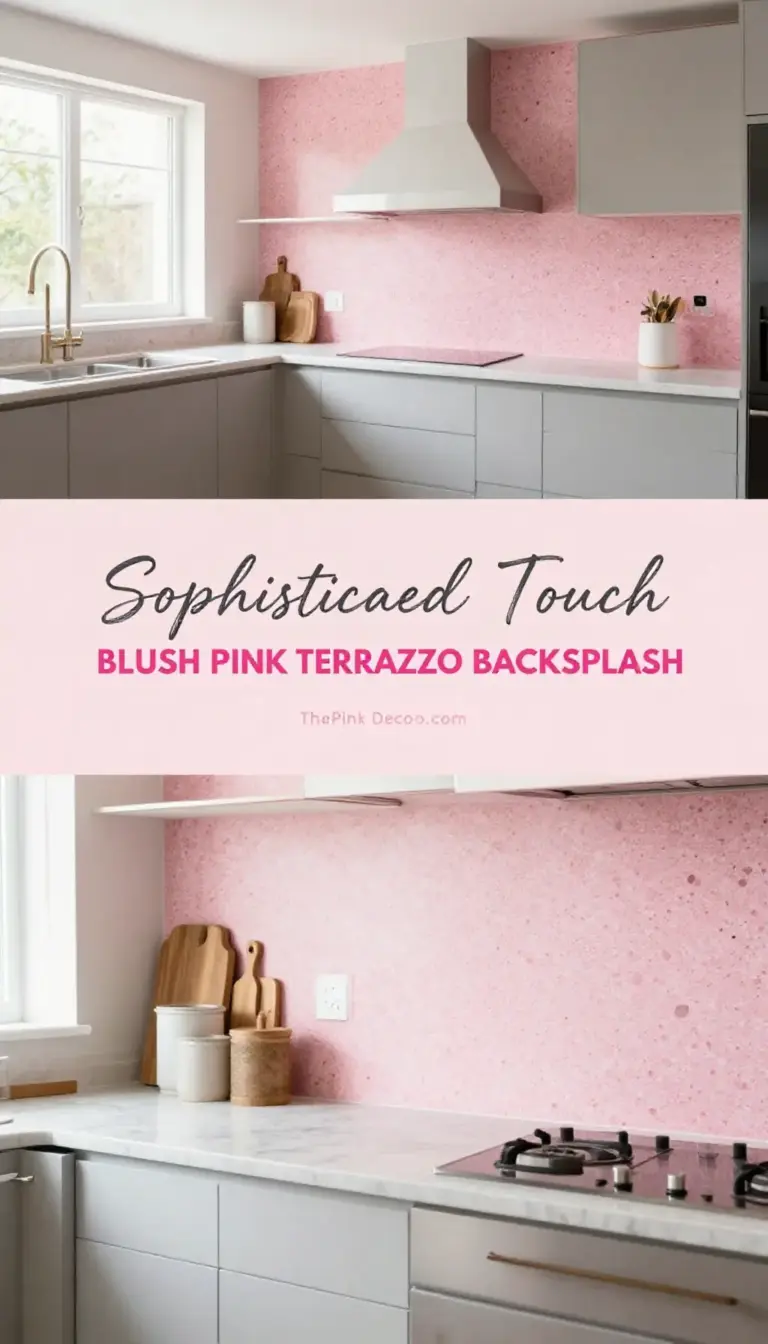
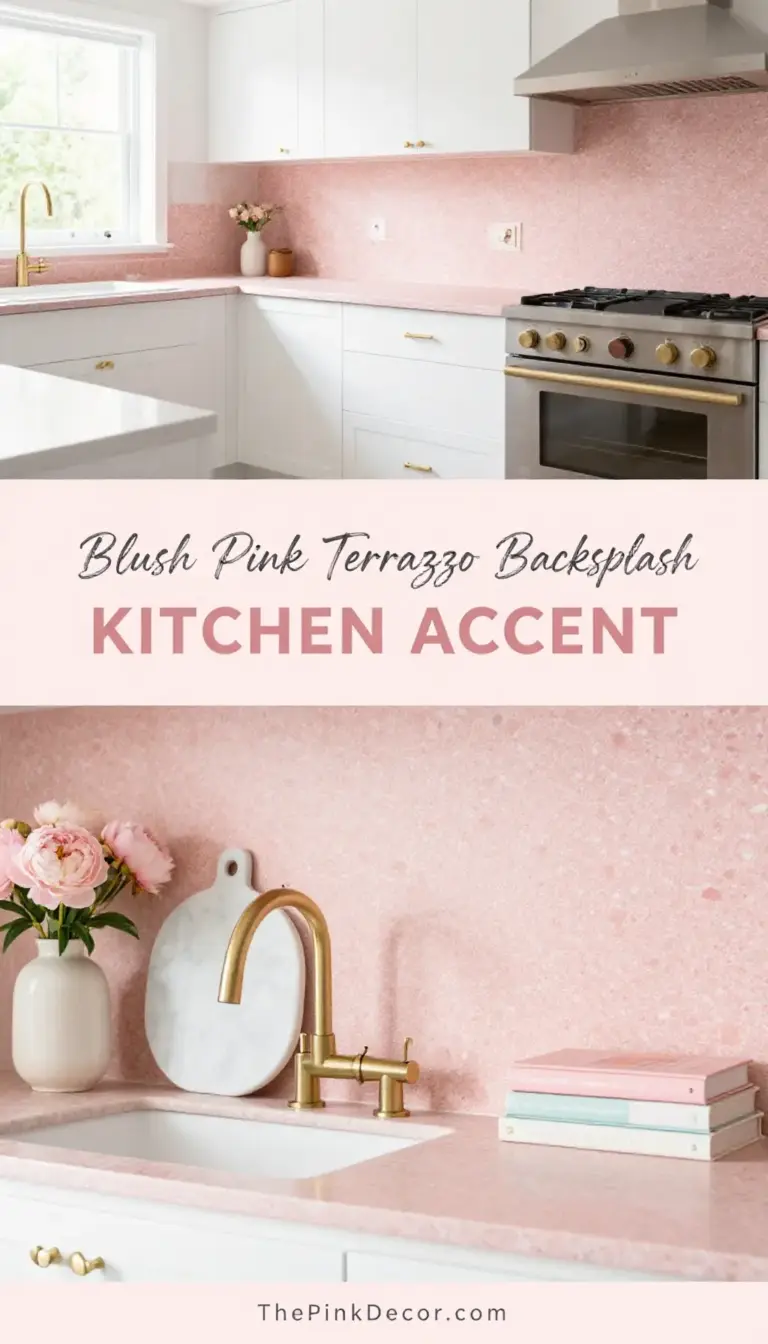
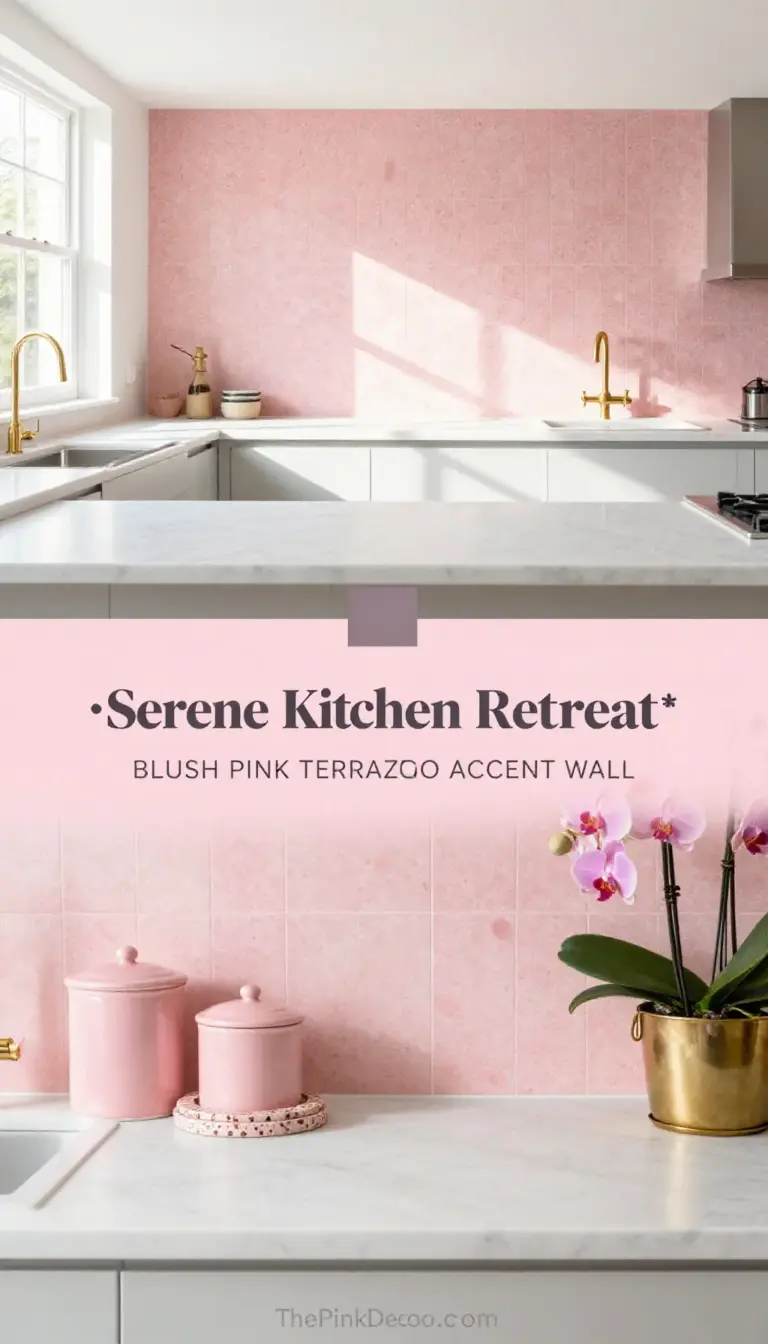
This elegant combination features Benjamin Moore ‘First Light’ OC-2 (hex #F9E5E5) paired with crisp white surfaces and warm gold accents. The soft blush creates a sophisticated, airy feel perfect for traditional and transitional kitchens. Use gold hardware, light fixtures, and faucets to add luxurious touches against white marble or quartz countertops.
2. Dusty Rose + Gray + Marble
Sherwin-Williams ‘Touching White’ SW 6609 (hex #E8B4B4) offers a muted dusty rose that pairs beautifully with charcoal gray and veined marble. This palette works exceptionally well in modern farmhouse or industrial-style kitchens. The gray provides grounding while marble adds natural elegance—perfect for creating a balanced, gender-neutral pink kitchen design.
3. Millennial Pink + Brass Accents
Pantone 13-1520 ‘Millennial Pink’ creates a contemporary, slightly dusty pink tone that pairs perfectly with unlacquered brass finishes. This combination dominates modern and mid-century inspired kitchens. The brass develops a beautiful patina over time, adding character to your space while complementing the pink’s warm undertones.
4. Hot Pink Statement + Black Contrast
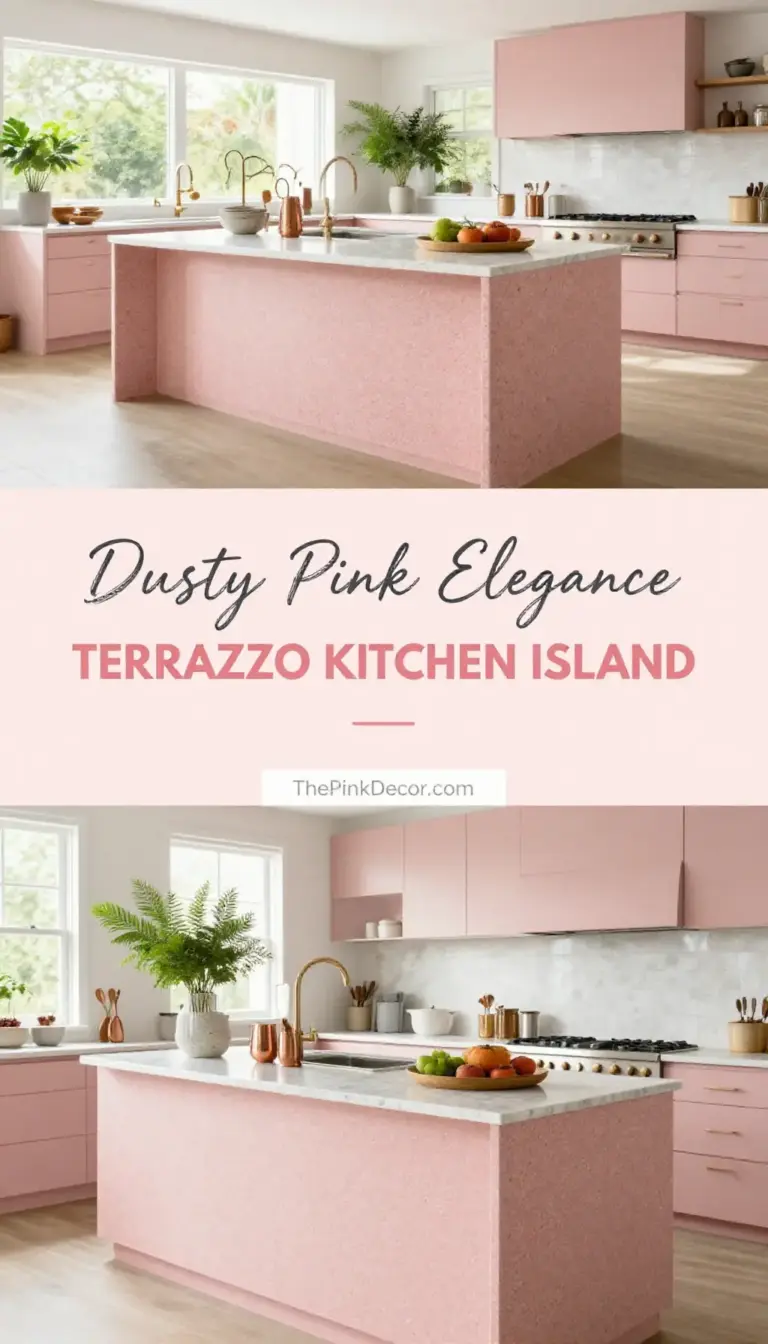
For bold contemporary kitchens, try Benjamin Moore ‘Razzle Dazzle’ (hex #D42D5F) paired with matte black elements. This high-contrast approach makes a dramatic statement perfect for modern lofts and urban apartments. Balance the intensity by limiting hot pink to one focal element—like lower cabinets or a kitchen island—against black countertops and fixtures.
5. Pale Pink Monochromatic
Create a serene, cohesive look by layering multiple shades of pale pink from Sherwin-Williams ‘Innocence’ SW 6588 (hex #F5E3E3) to ‘Barely Pink’ SW 6590 (hex #E8CDC4). This monochromatic approach relies heavily on texture variation—think pink velvet barstools against pink lacquered cabinets with matte pink walls. Add depth with natural wood elements to prevent the space from feeling flat.
🛋️ Essential Design Elements for Pink Kitchen Design Inspiration
Successful pink kitchen design requires careful consideration of several key elements. These components work together to create a cohesive, functional, and beautiful space that reflects your personal style.
Color Scheme Foundation
Apply the 60-30-10 rule: 60% dominant color (often white or neutral), 30% secondary color (your chosen pink), and 10% accent color (like gold or black). This creates visual balance while allowing pink to shine without overwhelming the space. Always consider undertones—warm pinks pair with warm woods and brass, while cool pinks complement gray and chrome.
Balance pink with sufficient neutral surfaces to prevent visual fatigue. Professional designers recommend keeping at least 40% of visible surfaces in neutral tones. This might include white walls, natural wood floors, or stone countertops that provide breathing room around pink elements.
Furniture Selection & Layout
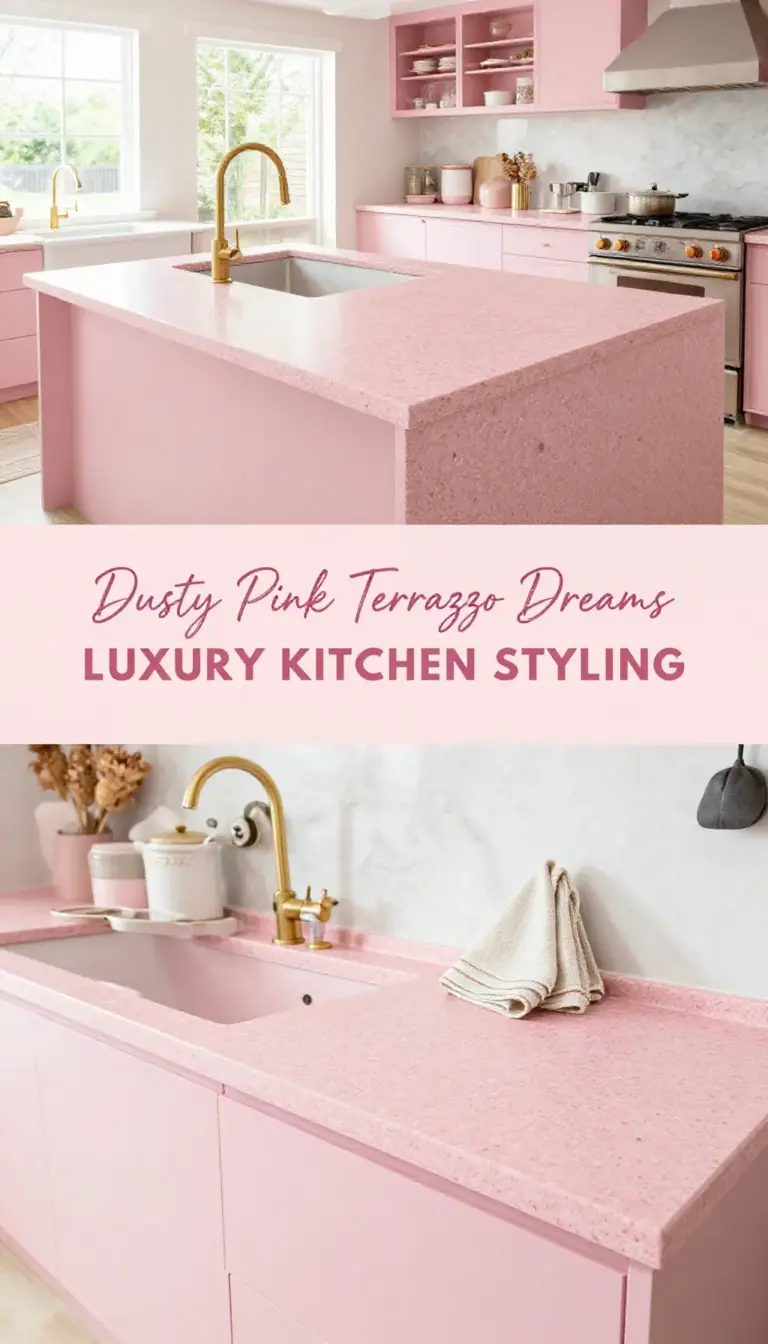
Key furniture pieces in a pink kitchen include the island, barstools, and any freestanding storage like baker’s racks or china cabinets. Choose one or two pink statement pieces rather than making everything pink. A pink kitchen island makes an excellent focal point, especially when surrounded by neutral cabinetry.
Consider workflow when planning your layout—the classic kitchen triangle between sink, stove, and refrigerator should remain functional regardless of your color choices. Allow 36-42 inches of walkway space around islands and between countertops. For small kitchens, consider a peninsula instead of a full island to save space.
Decide whether you want pink furniture or pink accents. Painting existing cabinets pink creates maximum impact, while pink accessories offer flexibility. If renting or frequently changing your style, focus on removable pink elements like small appliances, textiles, and decorative objects.
Lighting Strategy
Natural light dramatically affects how pink appears throughout the day. North-facing rooms with cool light benefit from pinks with yellow or peach undertones. South-facing rooms with warm light can handle cooler, bluer pinks without looking washed out. Observe your space at different times before finalizing paint choices.
Choose light fixtures that complement your pink palette. Gold and brass fixtures warm up cool pinks, while chrome and nickel cool down warm pinks. For bulb temperature, 2700K-3000K (warm white) enhances pink’s coziness, while 3500K-4000K (neutral white) creates a cleaner, more modern look. Always install dimmers for flexibility.
Implement a layered lighting approach with ambient, task, and accent lighting. Recessed cans provide general illumination, under-cabinet lights aid food preparation, and pendant lights over islands create visual interest. Consider pink glass or rose-tinted shades for subtle color integration in your lighting scheme.
Textures & Materials
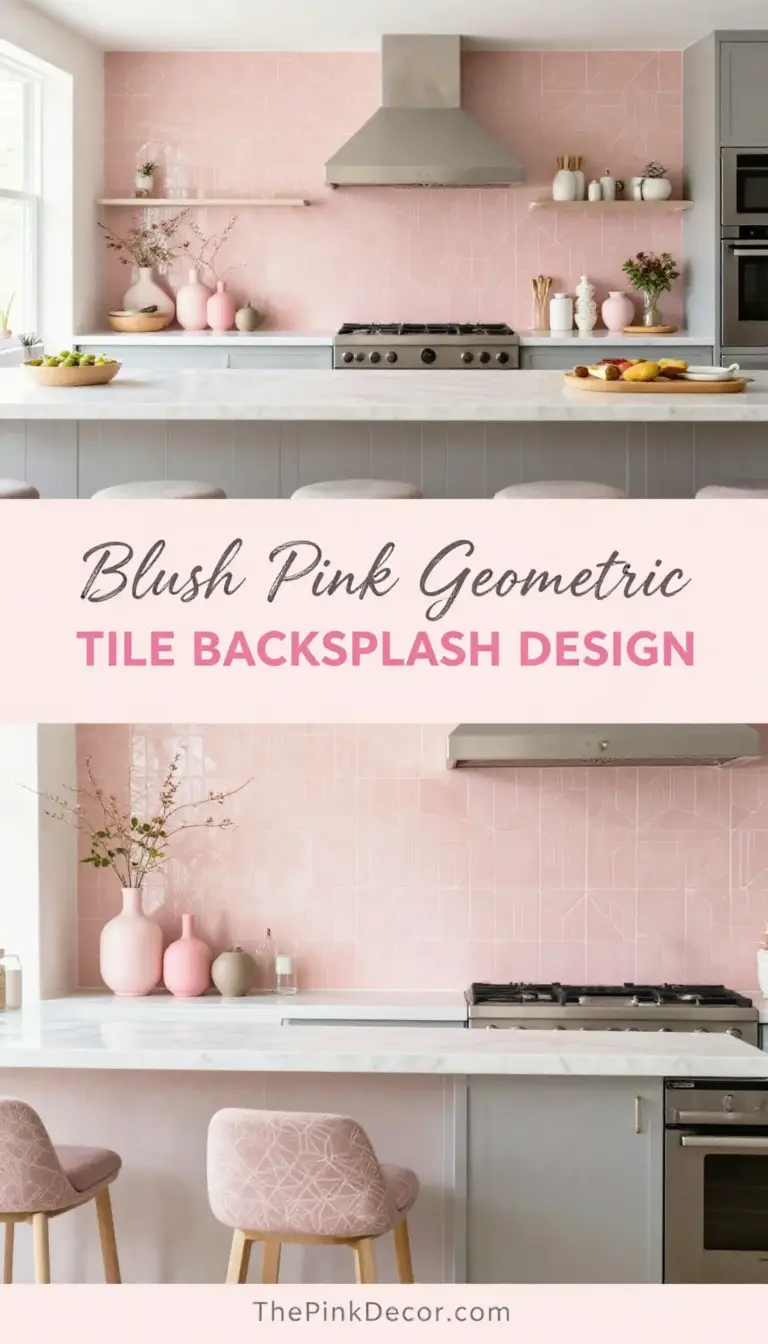
Mix at least three different textures to create visual depth and interest. Combine smooth lacquered cabinets with matte pink walls, textured pink backsplash tiles, and soft pink upholstered seating. This prevents a flat, one-dimensional look even within monochromatic schemes.
Specific materials that complement pink include Carrara marble with subtle gray veining, unlacquered brass that develops patina, warm oak or walnut wood tones, and velvet for upholstered elements. Avoid pairing pink with too many glossy surfaces, which can create a sterile feel—balance with matte and textured finishes.
Create depth through material variation rather than just color changes. A pink kitchen might feature glossy pink cabinets, matte pink walls, textured pink ceramic backsplash, and pink quartz countertops with subtle patterning. Each material reflects light differently, adding complexity to your design.
Decorative Finishing Touches
Accessories provide the final layer that personalizes your pink kitchen. Consider pink small appliances (stand mixers, toasters), utensil crocks, tea kettles, and dishware. These elements add pops of color without permanent commitment. Stick to 2-3 accessory colors for cohesion.
Incorporate plants, mirrors, and smart storage solutions. Greenery (like pink-tinged succulents or orchids) adds life and contrasts beautifully with pink surfaces. Mirrors expand visual space in small kitchens. Pink storage baskets or canisters keep essentials accessible while contributing to your color scheme.
Create cohesive styling through intentional vignettes. Style open shelving with pink dishes, cookbooks with pink spines, and pink glassware. Avoid human or animal art in kitchens—opt for abstract pieces, food-related prints, or botanical illustrations that complement rather than compete with your pink palette.

🎯 How to Design Your Pink Kitchen: Step-by-Step
Follow this actionable seven-step process to create your perfect pink kitchen. This systematic approach ensures you consider all elements for a cohesive, beautiful result that functions beautifully for your lifestyle.
- Choose Your Pink Shade – Assess your kitchen’s natural lighting at different times of day. Consider room size—lighter pinks expand small spaces, darker pinks add intimacy to large rooms. Test at least three paint samples on large boards you can move around the room. Observe how each looks morning, noon, and evening before deciding.
- Plan the Layout – Measure your space accurately, noting windows, doors, and permanent fixtures. Consider workflow—ensure efficient movement between cooking, cleaning, and storage zones. Plan furniture placement to maintain 36-inch walkways and functional work triangles. Create a scaled floor plan before purchasing any items.
- Select Anchor Pieces – Start with the largest, most expensive items like cabinets, islands, or major appliances. Consider which elements deserve investment—quality cabinets last decades, while trends change faster. Balance pink and neutral anchor pieces; if you choose pink cabinets, select a neutral island or vice versa.
- Add Complementary Colors – Choose 2-3 complementary colors using the 60-30-10 rule. For a blush pink kitchen, you might select white (60%), blush pink (30%), and gold (10%). Ensure all colors share similar undertones—warm pinks with warm accents, cool pinks with cool accents. Create a physical mood board with samples.
- Layer Different Textures – Mix at least three textures: smooth (lacquered cabinets), matte (painted walls), and textured (backsplash tile or upholstery). Combine hard and soft materials—stone countertops with fabric window treatments. Vary finishes within your pink elements to add depth and visual interest.
- Incorporate Metallic Accents – Choose one primary metallic finish (70%) and one secondary (30%). Brass or gold complements warm pinks; chrome or nickel suits cool pinks. Apply this to hardware, light fixtures, faucets, and accessories. Ensure finishes match exactly—mixing too many metallics creates visual chaos.
- Style Final Details – Add accessories that serve both form and function: pink ceramic canisters for storage, plants for freshness, artwork for personality. Create intentional vignettes on open shelves and countertops. Incorporate smart storage solutions that hide clutter while keeping essentials accessible.
💡 Expert Design Tips
PRO TIP: Professional designers recommend limiting pink to 30% of visible surfaces for sophistication. Paint lower cabinets pink while keeping uppers white, or use pink on one accent wall behind open shelving. Test paint samples for 7 days minimum—pink shifts dramatically from morning to evening light. In north-facing rooms, choose pinks with yellow undertones (like Benjamin Moore ‘Pink Bliss’) to counteract cool natural light. For south-facing rooms with abundant warm light, select pinks with blue undertones (like Sherwin-Williams ‘Charming Pink’) to prevent overheating the space visually.
🛍️ Where to Shop: Pink Kitchen Pieces
Budget-Friendly (Under $100)
IKEA offers pink kitchen accessories in their SINNERLIG and 365+ collections, including utensil holders and textiles for $5-$20. Target’s Project 62 and Hearth & Hand lines feature pink ceramic canisters, small appliances, and dish towels for $10-$50. Amazon carries numerous pink kitchen gadgets, from stand mixer attachments to silicone utensils, typically under $30 each.
Mid-Range ($100-$500)
West Elm’s pink marble and brass accessories, like salt cellars and utensil crocks, range from $50-$200. CB2 offers contemporary pink barstools, pendant lights, and serving pieces in the $150-$400 range. Pottery Barn’s pink kitchen textiles, including rugs and curtains, cost $80-$300. Wayfair provides pink kitchen islands, carts, and storage solutions between $200-$500.
Luxury Investment ($500+)
Designer brands like deVOL Kitchens offer custom pink cabinetry starting at $5,000 per linear foot. British Standard by Plain English creates bespoke pink kitchens with traditional craftsmanship. For appliances, Smeg’s pastel pink retro refrigerator costs approximately $1,200. These investments offer superior materials, craftsmanship, and timeless design that lasts decades.
🎨 Pink Kitchen Style Variations
Modern Minimalist
Clean lines, restrained pink accents, and a less-is-more philosophy define this style. Think pink lower cabinets with flat-panel doors, integrated appliances, and minimal hardware. Use pink as a subtle accent—one pink wall, pink barstools, or pink pendant lights—against a predominantly white or gray backdrop. Storage is concealed, surfaces are clutter-free.
Romantic Feminine
Layered textiles, vintage touches, and soft lighting create this dreamy aesthetic. Incorporate pink velvet barstools, floral-patterned pink curtains, and crystal cabinet knobs. Mix antique pink dishes with modern elements for eclectic charm. Add a pink upholstered banquette or window seat for cozy dining moments. Lighting should be warm and diffuse.
Bold Contemporary
Vibrant pink, geometric patterns, and unexpected materials characterize this daring approach. Consider hot pink lacquered cabinets, black geometric floor tiles, and stainless steel accents. Use pink in unexpected ways—a pink ceiling, pink interior cabinet surfaces, or pink grout between white subway tiles. Keep lines crisp and architectural for modern edge.
Scandinavian Hygge
Pale pink, natural materials, and functional beauty define this cozy style. Combine light pink walls with oak floors, white shaker cabinets, and simple ceramic accessories. Incorporate hygge elements: candle displays on pink trays, textured pink wool rugs, and a reading nook in a pink corner. Focus on natural light and organic shapes.
🚫 4 Common Pink Design Mistakes to Avoid
- Overwhelming Pink Overload: Using pink on every surface creates visual fatigue and a childish feel. Fix this by applying the 30% rule—limit pink to cabinets, one wall, or the island. Balance with ample neutral surfaces and natural materials. Introduce pink through removable accessories first if you’re uncertain.
- Wrong Pink for Your Lighting: Choosing a pink without considering natural light direction leads to disappointing results. Test large samples on multiple walls at different times. North-facing rooms need warm, peachy pinks; south-facing rooms handle cooler, bluer pinks. Artificial lighting should complement, not fight, your pink choice.
- Clashing Undertones: Mixing warm and cool undertones creates visual discord. Identify your pink’s undertone by comparing it to pure white under natural light. Warm pinks (yellow/peach undertones) pair with brass, warm woods, and cream. Cool pinks (blue/lavender undertones) complement chrome, gray, and pure white.
- Ignoring Room Architecture: Forcing a modern pink scheme into a traditional kitchen creates stylistic conflict. Match your pink approach to your space’s inherent style. Traditional kitchens suit softer pinks with classic details; modern spaces handle bolder pinks with clean lines. Work with, not against, your room’s architectural features.
❓ Frequently Asked Questions
Is pink too bold for a Kitchen?
Not at all—when used strategically, pink creates a sophisticated, inviting kitchen. Start with subtle applications: pink accessories, a single accent wall, or pink lower cabinets with neutral uppers. Soft blush and dusty rose tones feel particularly elegant and gender-neutral. Many designers consider pink today’s neutral for modern interiors.
What colors pair best with pink in interior design?
White creates crisp contrast, gray adds sophistication, black provides drama, gold brings luxury, navy offers depth, and green adds natural balance. Warm pinks pair best with cream, brass, and walnut. Cool pinks complement pure white, chrome, and charcoal. Always consider undertone compatibility for harmonious pairing.
How can I add pink without painting walls?
Five easy alternatives: 1) Pink cabinet hardware ($2-$20 per piece), 2) Pink small appliances ($30-$200), 3) Pink textiles—rugs, curtains, towels ($20-$150), 4) Pink dishware and glassware ($5-$50 per piece), 5) Pink barstools or chairs ($80-$400). These removable options let you experiment before committing to permanent changes.
Will pink decor go out of style?
While specific shades trend (like millennial pink), pink itself has remained relevant for centuries in interior design. Choose timeless applications: quality pink cabinets in classic styles, pink marble countertops, or pink as an accent rather than dominant color. Avoid overly trendy combinations and focus on quality materials that endure beyond fleeting trends.
What pink shade works in small Kitchens?
Light blush pinks (like Sherwin-Williams ‘Innocence’ SW 6588) work best, as they reflect light and visually expand space. Use them on walls or upper cabinets to create airiness. If you prefer darker pinks, limit them to lower cabinets or a single accent wall to maintain spatial perception. Glossy finishes enhance the light-reflecting quality.
✨ Before & After: Real Transformation Examples
A typical 1990s oak kitchen transformed with Benjamin Moore ‘Pink Bliss’ on lower cabinets ($800 paint job), white upper cabinets, brass hardware ($300), and new marble-look quartz countertops ($2,500). The once-dated space now feels bright, modern, and sophisticated. The pink adds warmth missing from the original cold oak finish, creating a welcoming heart-of-the-home atmosphere.
A rental kitchen refresh achieved with removable pink elements: peel-and-stick pink backsplash tiles ($120), pink barstools from Wayfair ($350), pink ceramic accessories from Target ($75), and pink curtains from Amazon ($40). Total cost under $600 created dramatic impact without permanent changes. This proves you can achieve significant pink kitchen design inspiration on a budget with smart, temporary solutions.
📸 How to Photograph Your Pink Kitchen
Capture your pink kitchen in natural morning or late afternoon light—the golden hour enhances pink’s warmth without harsh shadows. Turn off artificial lights to prevent color distortion from mixed temperatures. Clean all surfaces and style with intentional vignettes before shooting.
Style layers by adding fresh herbs in pink pots, artfully arranged pink dishes, and folded pink textiles. Create depth with foreground elements (a pink mug) midground (the countertop) and background (cabinets). Remove clutter but keep functional items visible for authenticity.
Shoot from multiple angles: overall room shots, detail shots of pink elements, and vignettes. Use hashtags like #PinkKitchen, #KitchenDesign, #HomeDecor, #InteriorDesign, and #PinkDecor when sharing. Tag paint brands and furniture sources to help others recreate your look.
Final Thoughts
Pink kitchen design inspiration offers endless possibilities for creating a space that’s both beautiful and functional. From soft blush to vibrant fuchsia, this versatile color adapts to any style—modern, traditional, romantic, or bold. The key lies in balanced application, thoughtful pairing, and personal expression.
Ready to begin your transformation? Start with small pink accents and gradually incorporate more elements as your confidence grows. Remember that successful design combines aesthetics with practicality—your pink kitchen should delight you daily while serving your cooking needs perfectly. For continuous inspiration, explore our complete Pink Kitchen Design Inspiration gallery.
Embrace the joy and warmth that pink brings to your home’s heart. Your perfect pink kitchen design inspiration awaits—a space where style meets function in the most delightful way. Whether through a full renovation or simple updates, pink can transform your kitchen into a personal sanctuary that reflects your unique taste.
💬 Ready to transform your Kitchen? Share your pink decor journey in the comments below! For more inspiration, explore our complete Kitchen collection.