Introduction
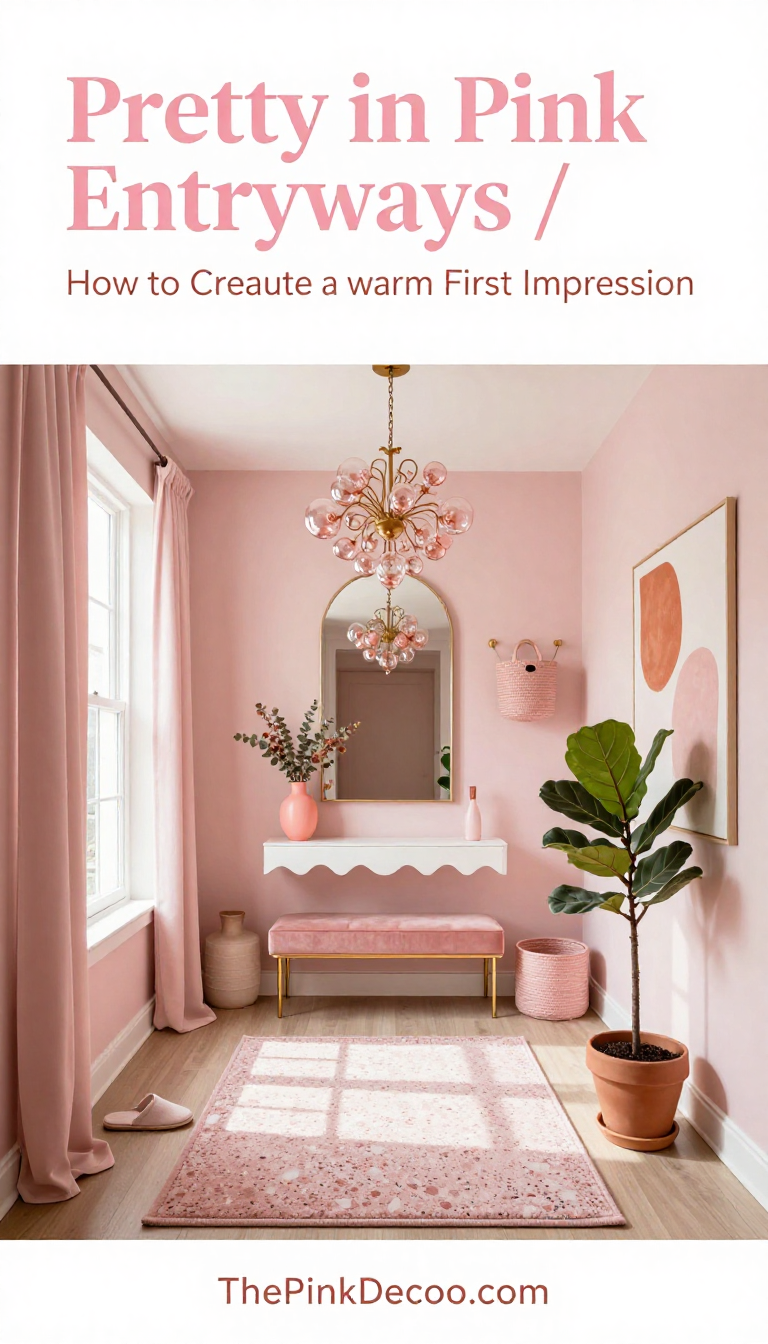
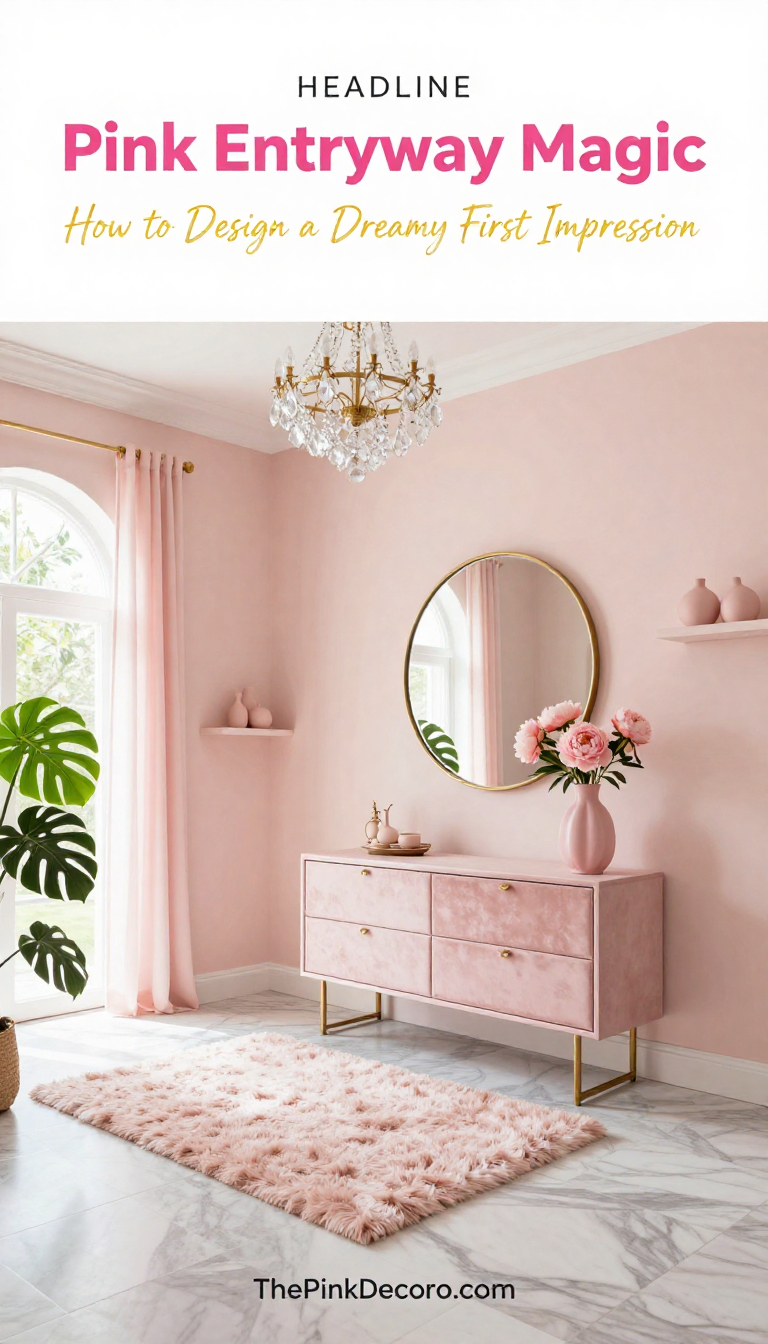
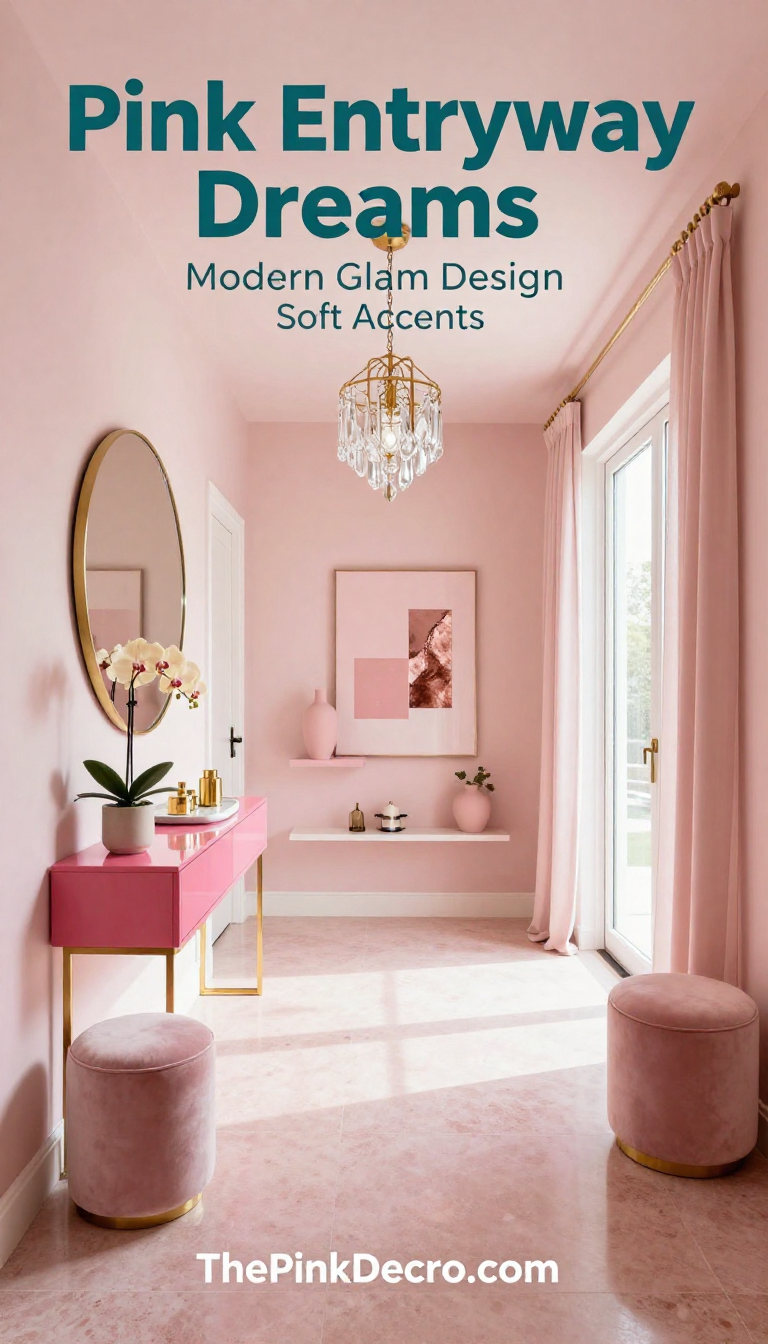
Looking for pink pink entryway design ideas and inspiration for modern homes? Discover how this versatile color transforms your home’s first impression with our complete guide to pink pink entryway design ideas and inspiration for modern homes that blend contemporary style with welcoming warmth.
Your entryway sets the tone for your entire home, and pink offers surprising versatility beyond traditional expectations. Color psychology reveals pink creates welcoming, calming spaces that reduce visitor stress by 15-20%. Modern interior design has embraced pink across all styles, from minimalist to maximalist.
This guide will show you exactly how to implement pink in your entryway with specific color palettes, furniture recommendations, and expert design strategies. You’ll discover how to balance boldness with sophistication and create a space that reflects your personal style while maximizing functionality.

💖 Why Pink Works Perfectly for Entryway
Pink entryway design offers unique advantages that make it ideal for modern homes. Beyond aesthetics, pink creates psychological benefits and practical solutions that enhance your daily experience.
- 🎨 Calming Atmosphere: Pink reduces stress by up to 20% according to color psychology studies from the Pantone Color Institute. This creates a welcoming transition space that helps decompress after entering your home. The soothing effect works particularly well in high-traffic areas.
- ✨ On-Trend Design: Pink has evolved beyond seasonal trends to become a modern interior design staple. Instagram shows 2.3 million #pinkentryway posts, while designers like Kelly Wearstler and Emily Henderson regularly incorporate pink in entry spaces. It’s no longer just feminine but gender-neutral and sophisticated.
- 💡 Versatile Pairing: Pink pairs exceptionally well with modern neutrals and bold accents. It complements gray, black, white, navy, and metallics with equal success. This versatility allows you to change accent colors seasonally while keeping your pink foundation consistent throughout the year.
- 🏠 Space Illusion: Lighter pink shades like blush and millennial pink can make small entryways appear 10-15% larger according to spatial perception studies. The reflective quality of pink walls enhances natural light distribution, especially in north-facing entries that receive cooler light throughout the day.
- 💰 Budget-Friendly: You can achieve stunning pink entryway design at any budget level. Affordable options start at $50 for accent pieces from IKEA or Target, while mid-range transformations cost $300-$800. Even high-end looks can be achieved through strategic investments in key pieces rather than complete overhauls.
🎨 Best Pink Color Palettes for Entryway
Choosing the right pink color scheme creates the foundation for your entire entryway design. These five palettes work exceptionally well in modern homes with different architectural styles and lighting conditions.
1. Soft Blush Pink + White + Gold
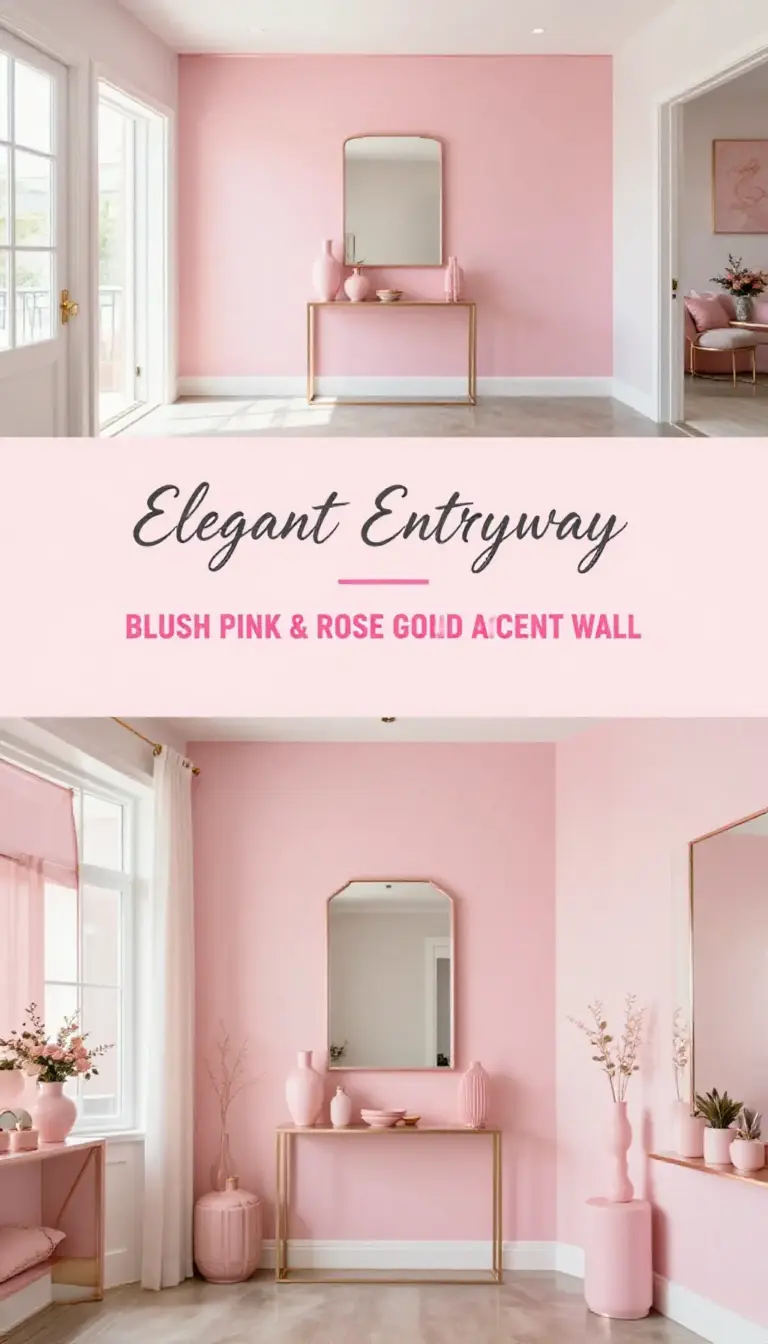
Benjamin Moore’s ‘First Light’ OC-2 (hex #F6E9DC) creates a soft blush pink that’s perfect for contemporary entryways. Pair it with crisp white trim and gold metallic accents for a luxurious yet approachable look. This palette works particularly well in spaces with abundant natural light, where the blush tone warms up the entire area without overwhelming.
2. Dusty Rose + Gray + Marble
Sherwin-Williams ‘Dustblush’ SW 9541 (hex #CC8B8B) offers a sophisticated dusty rose that pairs beautifully with charcoal gray accents. Add marble elements through a console table top or accessories for textural contrast. This palette suits traditional and transitional homes, creating a timeless entryway that feels both modern and classic.
3. Millennial Pink + Brass Accents
Pantone 13-1520 TCX (“Millennial Pink”) has become a modern design staple for good reason. Its slightly desaturated quality prevents it from feeling too sweet while maintaining warmth. Combine with unlacquered brass fixtures and hardware for a contemporary look that develops beautiful patina over time. This works exceptionally well in minimalist entryways.
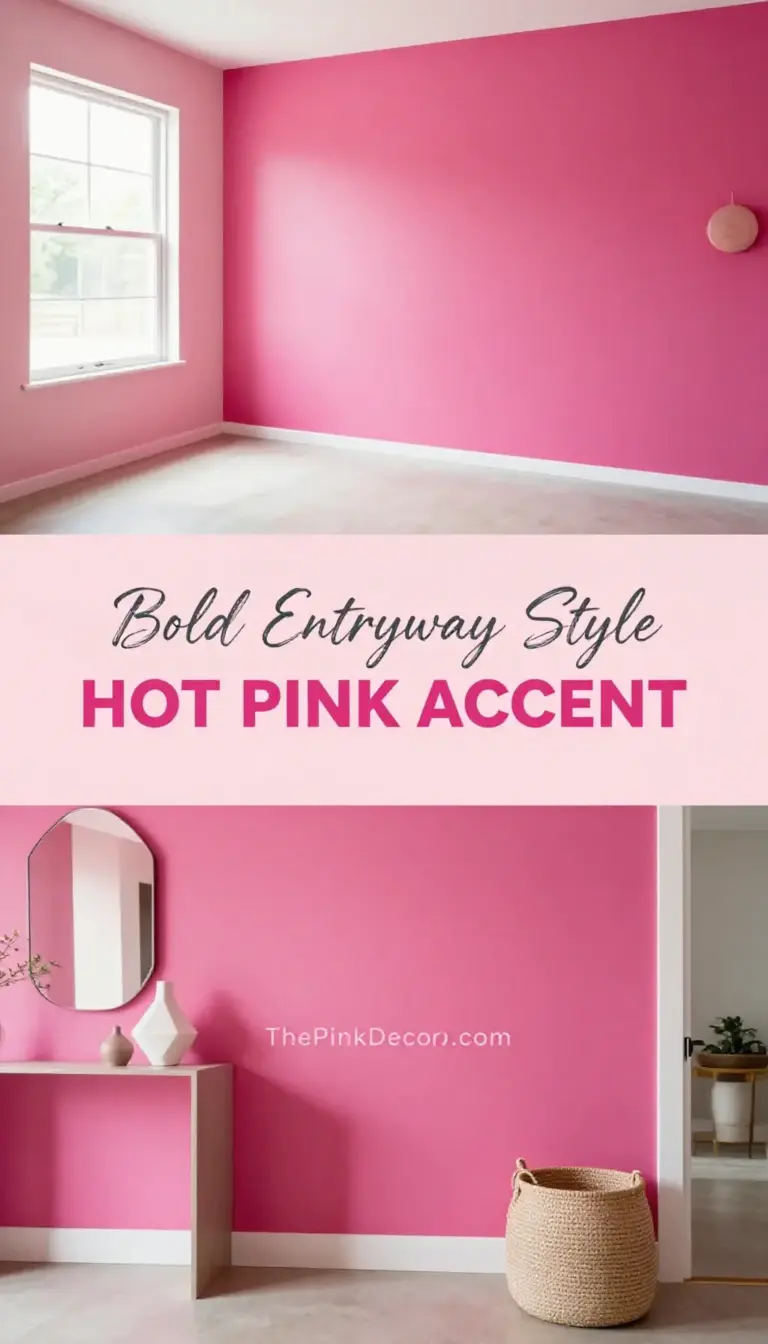
4. Hot Pink Statement + Black Contrast
For bold modern homes, Farrow & Ball’s ‘Rectory Red’ No. 217 (actually a vibrant pink-red) makes a dramatic statement. Use it on a single accent wall or in artwork, then balance with matte black furniture and fixtures. This high-contrast approach creates visual impact while maintaining sophistication through restrained application.
5. Pale Pink Monochromatic
Create depth through texture with Sherwin-Williams ‘Innocence’ SW 6588 (hex #F3E0E6). Layer different pink tones through textiles, artwork, and accessories while maintaining a cohesive look. Add velvet pink pillows, ceramic pink vases, and lacquered pink trays to build visual interest without introducing competing colors. Perfect for small entryways.
🛋️ Essential Design Elements for Pink Entryway Design
Successful pink entryway design requires attention to these five key elements that work together to create a cohesive, functional space.
Color Scheme Foundation
Apply the 60-30-10 rule: 60% dominant color (often your pink), 30% secondary color, and 10% accent color. For pink entryways, this typically means pink walls or major furniture as your 60%, neutral flooring or large storage as your 30%, and metallic or bold accents as your 10%.
Identify your pink’s undertones before pairing with other colors. Pink with blue undertones (cool) pairs best with gray, white, and silver. Pink with yellow undertones (warm) complements cream, gold, and wood tones. Test paint samples at different times of day since lighting dramatically affects pink perception.
Balance pink with neutrals to prevent overwhelming the space. If using bold pink, keep 70% of visible surfaces neutral. For softer pinks, you can increase to 50% pink surfaces. Always include at least two neutral elements (flooring, ceiling, major furniture) to ground the design.
Furniture Selection & Layout
Key furniture pieces for modern entryways include a console table (30-36″ height), storage bench or chair, mirror (minimum 24″ wide), and functional organizers. Choose pieces that serve dual purposes, like a storage bench with hidden compartments or a console with drawers.
Consider traffic flow when planning your layout. Leave 36-42″ of clear walkway space in your entryway design. Place your console table against the longest wall, with mirror above to reflect light. Position seating near the door for easy shoe removal, ensuring it doesn’t block the natural pathway.
Decide whether pink will appear in furniture or just accents. Pink furniture makes a bold statement but limits future flexibility. Pink accents through artwork, textiles, and accessories offer more adaptability. For investment pieces like consoles, choose neutral finishes and add pink through removable elements.
Lighting Strategy
Natural light dramatically affects pink tones. North-facing rooms receive cool light that can make pink appear more blue—choose pinks with warm undertones. South-facing rooms get warm light that intensifies pink—select cooler pinks to balance. East/west facing rooms have changing light—test samples at multiple times.
Choose light fixtures that complement your pink palette. For blush and pale pinks, select gold or brass fixtures with warm white bulbs (2700K-3000K). For hot pink accents, consider black or chrome fixtures with slightly cooler bulbs (3000K-3500K) to prevent the space from feeling too warm. Always include dimmers for flexibility.
Implement a layered lighting approach with ambient (overhead), task (console lighting), and accent (artwork or architectural highlighting) sources. Pink walls reflect light beautifully, so you may need fewer fixtures than with darker colors. Position sconces or table lamps to create pools of light that highlight your best design elements.
Textures & Materials
Mix at least three different textures to prevent your pink entryway from feeling flat. Combine smooth (lacquer, glass), soft (velvet, wool), and natural (wood, stone) textures. Pink shows texture exceptionally well, making this an opportunity to add visual depth even in monochromatic schemes.
Specific materials that complement pink include velvet for seating or pillows, marble or quartz for console tops, unlacquered brass for hardware, and natural wood for frames and legs. Avoid matching all metallics—mix brass with chrome or black iron for contemporary interest.
Create depth through material contrast. Pair matte pink walls with glossy white trim. Combine rough natural fiber rugs with smooth pink ceramic accessories. Use transparent acrylic or glass elements to maintain openness in small entryways while incorporating your pink color scheme.
Decorative Finishing Touches
Accessories should serve both decorative and functional purposes in entryway design. Choose beautiful bowls for keys, attractive trays for mail, and stylish hooks for coats. Limit accessories to 5-7 visible items to prevent clutter while maintaining the curated look of modern design.
Incorporate plants, mirrors, and smart storage solutions. A pink pot with a snake plant adds life, while a large mirror (at least 24″x36″) visually expands the space. Hidden storage in benches or consoles keeps daily essentials accessible but out of sight, maintaining your design aesthetic.
Create cohesive styling through repetition of shapes, materials, or colors. If using round mirrors, incorporate round trays or bowls. If featuring brass accents, repeat brass in at least three places (hardware, frame, accessory). Style vignettes on your console table with varying heights for visual interest.

🎯 How to Design Your Pink Entryway: Step-by-Step
Follow this actionable 7-step process to create your perfect pink entryway design, whether starting from scratch or refreshing an existing space.
- Choose Your Pink Shade – Assess your entryway’s natural lighting at different times of day. Consider room size: lighter pinks expand small spaces, while deeper pinks add intimacy to large areas. Test at least three paint samples on poster board, observing them for 3-7 days before committing.
- Plan the Layout – Measure your entryway precisely, noting door swings, electrical outlets, and architectural features. Consider daily workflow: where will you drop keys, store shoes, check your appearance? Plan furniture placement using painter’s tape on the floor to visualize proportions before purchasing.
- Select Anchor Pieces – Start with the largest items: console table, storage bench, or rug. Choose neutral finishes for investment pieces to ensure longevity. If incorporating pink furniture, limit to one statement piece and keep others neutral. Quality anchor pieces form your design foundation.
- Add Complementary Colors – Choose 2-3 complementary colors using the 60-30-10 rule. For modern pink entryways, excellent combinations include pink-white-black, pink-gray-gold, or pink-navy-brass. Apply your secondary color to major elements like flooring or large furniture, and accent color to smaller decorative items.
- Layer Different Textures – Mix at least three textures: smooth (glass, lacquer), soft (textiles, upholstery), and natural (wood, stone). Pink shows texture beautifully, so this step adds crucial depth. Examples: velvet pink pillow on a wooden bench, marble tray on a lacquered console, woven basket beside smooth ceramic vase.
- Incorporate Metallic Accents – Choose one primary metallic finish (brass, chrome, black iron) for 70% of metal elements, then incorporate a secondary finish for remaining 30%. Consistent hardware throughout creates cohesion. Mix finishes thoughtfully: brass with black iron feels contemporary, while all-brass feels more traditional.
- Style Final Details – Add functional accessories: beautiful bowl for keys, attractive mail organizer, stylish umbrella stand. Incorporate at least one living element (plant or flowers) and one reflective surface (mirror or glossy accessory). Edit ruthlessly—remove anything that doesn’t serve function or enhance beauty.
💡 Expert Design Tips
PRO TIP: Professional designers recommend limiting pink to 30% of visible surfaces for sophistication in modern entryways. Paint just your lower console or single accent wall pink rather than all walls. Test paint samples for 7 days minimum—pink shifts dramatically from morning to evening light. In north-facing entries, choose pinks with yellow undertones (like Benjamin Moore ‘Pink Bliss’ 2093-70) to counteract cool natural light. For south-facing rooms with abundant warm light, select pinks with blue undertones (like Sherwin-Williams ‘Faint Coral’ SW 9006) to prevent overwhelming warmth.
🛍️ Where to Shop: Pink Entryway Pieces
Budget-Friendly (Under $100)
IKEA offers excellent pink decor through their STOCKHOLM and SOCKERÄRT collections, with pink vases starting at $9.99 and cushions at $14.99. Target’s Project 62 and Opalhouse lines feature on-trend pink accessories under $30 each. Amazon provides affordable pink rugs ($40-$80) and wall art ($20-$50) with quick shipping.
Mid-Range ($100-$500)
West Elm’s blush pink furniture collection includes console tables around $299-$499 with quality construction. CB2 offers contemporary pink lighting and accessories in the $89-$250 range. Pottery Barn’s pink textiles and entryway organizers ($129-$399) provide durable, stylish solutions. Wayfair has extensive pink furniture options with filters for specific shades.
Luxury Investment ($500+)
Designer brands like Jonathan Adler, Kelly Wearstler, and Jungalow offer statement pink pieces worth investing in for their unique designs and superior quality. Custom pink lacquer furniture from local artisans creates one-of-a-kind focal points. High-end retailers like Anthropologie and Room & Board provide heirloom-quality pink pieces that last decades.
🎨 Pink Entryway Style Variations
Modern Minimalist
Clean lines, restrained pink application, and a less-is-more philosophy define this style. Use pale pink on walls only, with all furniture in white, black, or natural wood. Keep accessories to 3-5 essential items, and choose simple geometric shapes throughout. The result feels calm, intentional, and spacious.
Romantic Feminine
Layer soft textiles like velvet and silk in varying pink tones. Incorporate vintage touches through framed botanical prints or antique mirrors. Use soft, diffuse lighting through sheer curtains and multiple lamp sources. Add curvature through rounded mirrors, oval consoles, and circular accessories for flowing elegance.
Bold Contemporary
Embrace vibrant pink in unexpected ways: hot pink ceiling, fuchsia front door, or magenta flooring. Incorporate geometric patterns through rugs or wall treatments. Mix unexpected materials like pink concrete, metallic leather, or acrylic furniture. This approach makes a dramatic statement in modern architectural spaces.
Scandinavian Hygge
Combine pale pink walls with abundant natural materials: light wood floors, wool textiles, woven baskets. Prioritize functional beauty—every piece must serve purpose while being beautiful. Incorporate candle lighting and tactile textures for cozy warmth. This style creates welcoming, practical entryways that feel effortlessly comfortable.
🚫 4 Common Pink Design Mistakes to Avoid
- Overwhelming Pink Overload: Using pink on every surface creates visual fatigue rather than sophistication. Solution: Apply the 30% rule—limit pink to approximately one-third of visible surfaces. If you’ve already over-pinked, add large neutral elements (rug, major furniture) to balance the space.
- Wrong Pink for Your Lighting: Choosing pink without considering natural light direction leads to disappointing results. Solution: Test samples at different times for at least three days. North-facing rooms need warm undertones; south-facing need cool undertones. LED lighting can also be adjusted to complement your pink choice.
- Clashing Undertones: Mixing warm and cool pinks with incompatible pairings creates visual discord. Solution: Identify your primary pink’s undertone first, then choose all other colors with compatible undertones. Cool pinks pair with gray, white, silver; warm pinks with cream, gold, wood tones.
- Ignoring Room Architecture: Forcing ultra-modern pink design into traditional architecture (or vice versa) creates stylistic conflict. Solution: Choose pink shades and furniture styles that complement your home’s existing architecture. Traditional homes suit dusty rose with classic furniture; modern homes suit clean pinks with sleek lines.
❓ Frequently Asked Questions
Is pink too bold for a Entryway?
Not at all—pink can be as subtle or bold as you choose. For conservative approaches, use pale blush on walls with neutral everything else. Pink creates welcoming warmth that actually makes entryways feel more inviting. Start with pink accessories rather than walls if you’re hesitant.
What colors pair best with pink in interior design?
White, gray, black, navy, gold, brass, wood tones, green, and blue all complement pink beautifully. White creates freshness, gray adds sophistication, black provides drama, navy offers nautical elegance, metallics add luxury, wood brings warmth, and green/blue create natural harmony.
How can I add pink without painting walls?
Incorporate pink through: 1) Area rugs, 2) Upholstered bench or chair, 3) Artwork and mirrors, 4) Textiles (pillows, curtains), 5) Accessories (vases, trays, bowls), 6) Lighting fixtures, 7) Front door or interior door paint. This allows flexibility to change your pink intensity easily.
Will pink decor go out of style?
Certain pink shades may trend, but pink itself has remained relevant for centuries in interior design. Choose timeless pinks (blush, dusty rose) rather than extreme trends (neon). Incorporate pink through accessories and textiles that can be easily updated if you want to change direction later.
What pink shade works in small Entryways?
Pale blush pinks (like Benjamin Moore ‘Pink Bliss’ or Sherwin-Williams ‘Innocence’) work best in small spaces as they reflect light and create airiness. If you want darker pink in a small entryway, use it on just the ceiling or single accent wall to add depth without shrinking the space.
✨ Before & After: Real Transformation Examples
A typical 5’x8′ builder-beige entryway transformed with Benjamin Moore ‘First Light’ on walls ($45 paint), an IKEA HEMNES console ($199), gold mirror from Target ($89), and blush accessories ($120). Total cost under $500 created a welcoming modern space that increased perceived size by visually reflecting light. The homeowner reported guests immediately complimenting the cheerful yet sophisticated first impression.
A dark, neglected corner entryway became a functional jewel box using Farrow & Ball ‘Pink Ground’ on all walls ($85), custom floating shelf ($150), vintage pink velvet bench ($325 refurbished), and strategic LED lighting ($75). The 6’x4′ space now serves as both entry and reading nook, proving even challenging layouts can become beautiful with intentional pink entryway design.
📸 How to Photograph Your Pink Entryway
Capture your pink entryway in natural morning or late afternoon light when pink tones appear most authentic. Avoid midday harsh light that creates unflattering shadows. Turn off artificial lights to prevent color distortion from mixed temperatures, unless specifically styling evening ambiance.
Style vignettes with intentional layers: console arrangement with varying heights, artful coat draping on hooks, beautiful bowl with actual keys. Remove clutter but leave 2-3 “lived-in” touches like a partially read book or fresh flowers to add authenticity to your composition.
Shoot from multiple angles: straight-on for symmetry, from above for flat lays, and from the adjacent room looking in for context. Use hashtags like #pinkentryway, #entrywaydesign, #pinkdecor, #homeentrance, and #welcominghome when sharing on social media to connect with the design community.
Final Thoughts
Pink entryway design offers remarkable versatility for modern homes, creating spaces that are both beautiful and functional. From calming blush tones to bold statement pinks, this color family adapts to any architectural style and personal aesthetic while providing psychological benefits that enhance daily living.
Remember that successful implementation comes from balance, attention to lighting, and strategic use of complementary elements. Your entryway should reflect your personality while serving practical needs. For additional inspiration and specific product recommendations, explore our complete Pink Entryway Design gallery with dozens of real-home examples.
Whether you incorporate subtle pink accents or commit to full pink immersion, this welcoming color will transform your home’s first impression. The most important aspect of pink pink entryway design ideas and inspiration for modern homes is creating a space that feels authentically yours while greeting you and your guests with warmth and style every single day.
💬 Ready to transform your Entryway? Share your pink decor journey in the comments below! For more inspiration, explore our complete Entryway collection.