Pink Dining Room Style
Welcome to the world of pink dining room style, where sophistication meets playfulness in the most delightful way. Once considered a color solely for nurseries or little girls’ rooms, pink has undergone a remarkable transformation in interior design. Today, pink dining rooms represent some of the most Instagram-worthy, stylish, and emotionally resonant spaces in modern homes. From soft blush tones that whisper elegance to bold millennial pink that makes a statement, this versatile color palette offers endless possibilities for creating a dining room that’s both beautiful and functional.
The psychology behind pink’s popularity in dining spaces is fascinating. Unlike more aggressive colors that might stimulate appetite too intensely, pink creates a balanced atmosphere—warm enough to encourage connection and conversation, yet calming enough to make meals feel like special occasions. Modern pink dining room style ideas and inspiration for modern homes often focus on this balance, creating spaces that feel simultaneously contemporary and timeless. Whether you’re hosting formal dinner parties or enjoying casual family meals, a pink dining room provides the perfect backdrop for life’s most meaningful moments.
This comprehensive guide will walk you through everything you need to know about creating your dream pink dining room. We’ll explore color psychology, design trends, practical implementation, and expert tips to help you transform your dining room into a pink paradise that reflects your personal style while maximizing both beauty and functionality. Get ready to discover why pink is no longer just a color—it’s a design statement that can elevate your entire home.

💖 Why Pink Works Perfectly for Your Dining Room
- 🎨 Color Psychology Benefit: Pink creates a calming, welcoming atmosphere perfect for dining. Studies show that softer pink tones can actually lower heart rates and reduce anxiety, making your dining room a peaceful retreat for meals and conversation. The color’s feminine associations have evolved to represent modern sophistication rather than traditional gender roles.
- ✨ Design Trend Benefit: Pink dining rooms are incredibly Instagram-worthy and consistently on-trend. From designer showcases to celebrity homes, pink has become the neutral of the 2020s—a color that feels fresh, modern, and endlessly photographable. Your dining room will become the most talked-about space in your home.
- 💡 Versatility Benefit: Pink pairs exceptionally well with virtually every other color family. Whether you prefer classic combinations like pink and white, modern mixes like pink and charcoal, or bold statements with pink and navy, this color serves as the perfect foundation for creative expression in your dining room.
- 🏠 Space Enhancement: Lighter pink tones can make dining rooms feel larger, brighter, and more open. Pink reflects light beautifully, especially during golden hour, creating a warm glow that enhances the dining experience. Even darker pink shades add depth and dimension without making spaces feel cramped.
- 💰 Budget-Friendly: Incorporating pink into your dining room doesn’t require a complete overhaul. Start with pink accents—a centerpiece, textiles, or artwork—and gradually build your palette. This approach makes pink dining room style accessible at every budget level.
🎨 Pink Color Palette Ideas for Dining Room
Choosing the right pink palette is crucial for creating your ideal dining room atmosphere. Here are five stunning options with specific implementation guidance:
Soft Blush Pink with White and Gold
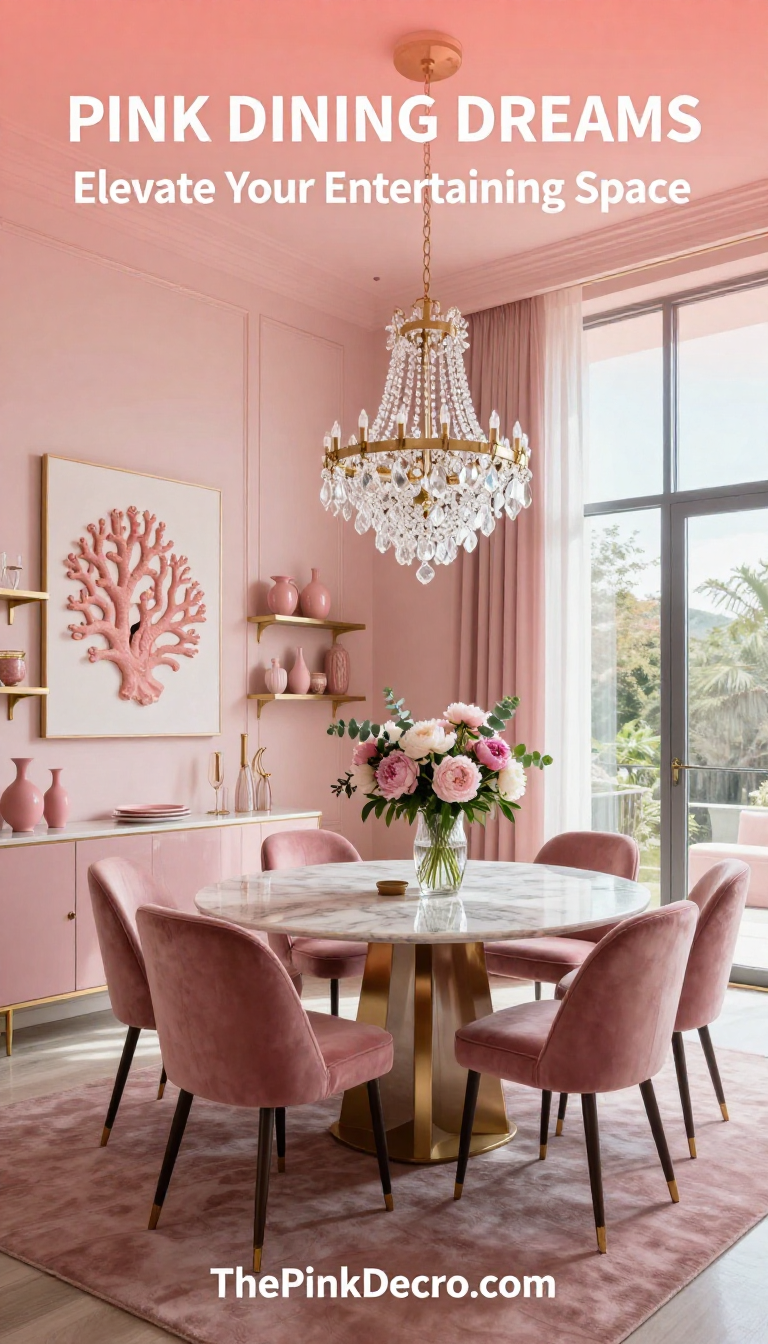
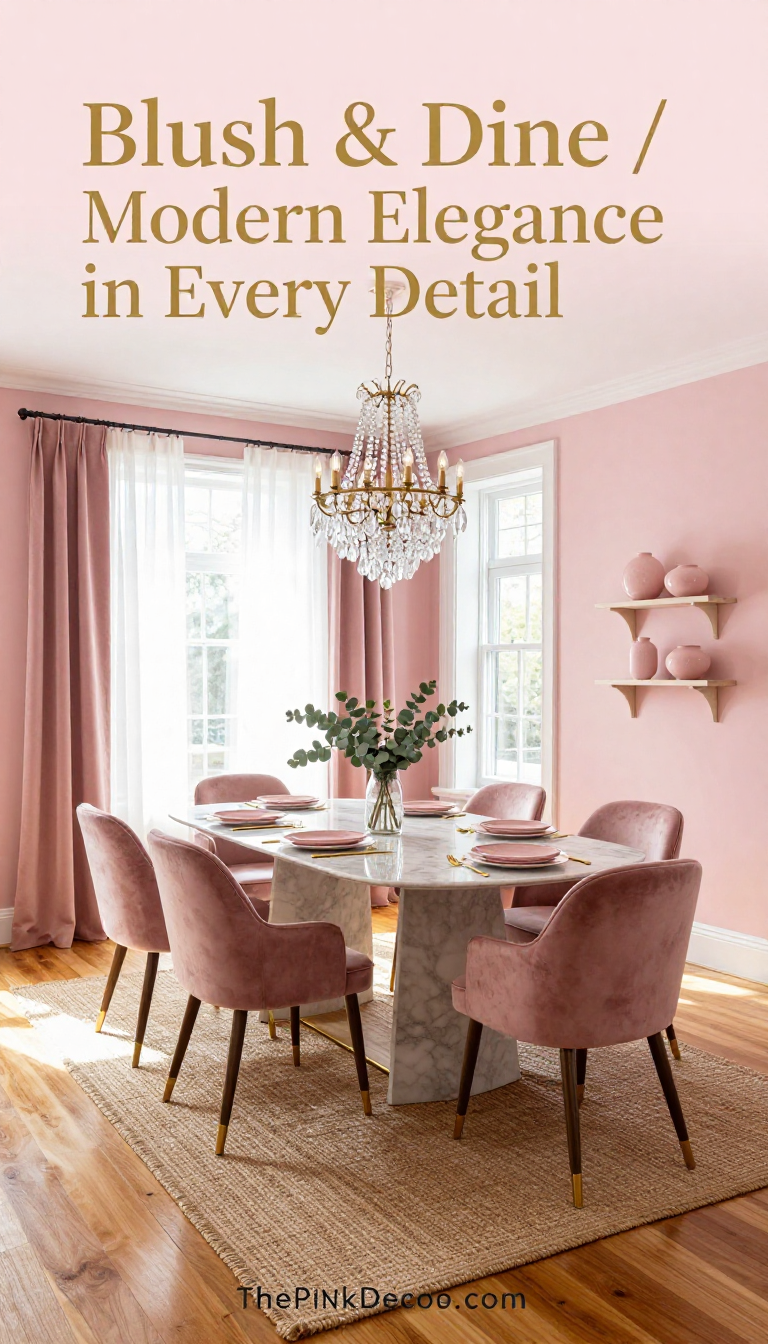
This timeless combination creates an elegant, airy dining room perfect for both modern and traditional homes. Blush pink (HEX #F8C8DC) serves as the primary color, complemented by crisp white (HEX #FFFFFF) and warm gold accents (HEX #D4AF37). Consider Benjamin Moore’s “First Light” or Sherwin-Williams “Innocence” for walls. This palette works beautifully with marble tables, velvet dining chairs, and brass light fixtures.
Dusty Rose with Gray and Marble
For a sophisticated, moody dining room, combine dusty rose (HEX #C9A9A6) with charcoal gray (HEX #36454F) and marble elements. Farrow & Ball’s “Setting Plaster” or Behr’s “Dusted Rose” capture this elegant tone perfectly. This palette creates a dramatic yet cozy dining atmosphere, especially effective in rooms with natural wood floors and industrial-inspired lighting.
Millennial Pink with Brass Accents
The iconic millennial pink (HEX #F3CFC6) paired with brass creates a contemporary dining room that feels both trendy and timeless. This specific pink tone has cool undertones that work beautifully with brass fixtures and warm wood tones. Try Sherwin-Williams “Cavern Clay” or Benjamin Moore “Blushing” for authentic millennial pink walls in your dining room.
Hot Pink Bold Statement with Black
For those who love drama, combine hot pink (HEX #FF69B4) with matte black (HEX #000000) for a striking dining room that commands attention. This high-contrast palette works particularly well in modern minimalist spaces. Use hot pink as an accent wall or through statement furniture pieces against black walls or trim. Consider Behr’s “Vibrant Orchid” for maximum impact.
Pale Pink Monochromatic
Create a serene, cohesive dining room using varying shades of pale pink (HEX #FFD1DC as base). This monochromatic approach layers different pink tones through walls, textiles, and accessories. Benjamin Moore’s “Pink Bliss” or Sherwin-Williams “Certain Peach” provide excellent starting points. Add texture through different materials to prevent the space from feeling flat.
🛋️ Essential Elements for Pink Dining Room Style
1. Color Scheme
A successful pink dining room begins with a thoughtfully balanced color scheme. Your main pink tone should cover 60% of the visible space—typically walls or large furniture pieces. Secondary colors (30%) should complement the pink, with neutral tones like white, gray, or beige working beautifully. The remaining 10% serves as accent colors—metallics, darker shades, or contrasting colors that add visual interest. Remember that pink’s undertones (warm peachy pinks vs. cool blue-based pinks) will determine which complementary colors work best in your specific dining room.
2. Furniture & Layout
Key furniture pieces for a pink dining room include the dining table, chairs, and storage solutions like buffets or china cabinets. When incorporating pink furniture, consider starting with chairs or an accent piece rather than committing to a pink table—this allows for more flexibility. For layout, ensure at least 36 inches of clearance around the table for comfortable movement. If your dining room features pink walls, consider lighter wood or white furniture to prevent the space from feeling overwhelming. Round tables work particularly well in pink dining rooms as they soften the overall aesthetic.
3. Lighting
Lighting dramatically affects how pink appears in your dining room. Natural light enhances pink’s warmth during the day, while evening lighting requires careful consideration. A dimmable chandelier or pendant light above the table allows you to adjust ambiance for different occasions. Consider how different light temperatures affect your chosen pink: warm bulbs (2700K-3000K) enhance peach and coral undertones, while cooler bulbs (3500K-4000K) work better with blue-based pinks. Don’t forget accent lighting—wall sconces or picture lights can highlight pink walls or artwork beautifully.
4. Textures & Materials
Texture prevents pink dining rooms from feeling one-dimensional. Mix velvet dining chairs with a polished wood table, or pair a marble tabletop with linen curtains. Metallic finishes add another layer of texture—rose gold and brass complement warm pinks, while chrome and nickel work with cooler tones. Natural materials like rattan, wood, and stone ground pink’s sweetness with organic texture. Even within pink elements themselves, consider textured pink wallpapers, ribbed pink glassware, or nubby pink textiles to add depth to your dining room.
5. Decorative Accents
Accessories complete your pink dining room story. Start with a centerpiece—pink flowers in a clear vase, a collection of pink candles, or a sculptural pink bowl. Textiles like pink table runners, napkins, or chair cushions add softness. Mirrors with pink-tinted glass or pink frames expand the space while reinforcing your color theme. Plants with pink-tinged leaves (like stromanthe or pink nerve plants) bring natural beauty. Decorative objects like pink ceramic vases, pink glassware collections, or abstract pink sculptures add personality without overwhelming the space.

🎯 Step-by-Step Design Guide
- Choose Your Pink Shade: Begin by assessing your dining room’s natural light. North-facing rooms benefit from warmer pinks (peach undertones) to combat cool light, while south-facing rooms can handle cooler pinks. Consider the room’s size—lighter pinks expand small dining rooms, while darker pinks add intimacy to large spaces. Test paint samples at different times of day before committing.
- Plan Your Layout: Measure your dining room and create a floor plan considering traffic flow, furniture placement, and focal points. The dining table should be centered, with enough space for chairs to be pulled out comfortably. If including additional furniture like a buffet or bar cart, position them against walls to maximize floor space. Consider how pink elements will be distributed throughout the layout.
- Select Key Pieces: Choose your dining table first—this anchor piece determines the room’s scale. For pink furniture, consider starting with chairs or an accent chair rather than a pink table. If opting for a pink table, balance it with neutral chairs. Look for pieces with clean lines that complement your chosen pink aesthetic, whether modern, traditional, or eclectic.
- Add Complementary Colors: Select 2-3 complementary colors that enhance your chosen pink. White creates crisp contrast, gray adds sophistication, navy provides depth, and metallics add glamour. Apply these colors through furniture, textiles, and accessories using the 60-30-10 rule: 60% pink, 30% complementary colors, 10% accents.
- Layer Textures: Incorporate at least three different textures to add depth. Combine smooth (glass, polished wood), soft (velvet, linen), and shiny (metallics, lacquer) elements. Even within pink elements, vary textures—a matte pink wall with glossy pink accessories, or a velvet pink chair with a rattan pink light fixture.
- Incorporate Metallics: Choose one primary metallic finish that complements your pink’s undertones. Gold and brass enhance warm pinks; silver and chrome complement cool pinks. Apply metallics consistently through light fixtures, hardware, frames, and decorative objects. Mixing metallics is acceptable if done intentionally—stick to two finishes maximum.
- Add Final Touches: Style your dining table with pink elements—a centerpiece, place settings, or textiles. Add artwork with pink accents (abstract pieces, botanical prints, or geometric patterns). Incorporate greenery—plants with pink flowers or variegated leaves reinforce the color theme. Adjust lighting to highlight your pink elements beautifully.
💡 Design Tips from the Experts
PRO TIP: “The key to a sophisticated pink dining room is balance and restraint. Rather than painting all four walls pink, consider a feature wall in your boldest pink shade, with the remaining walls in a complementary neutral. This creates visual interest without overwhelming the space. For furniture, mix pink pieces with natural materials like wood and rattan to ground the sweetness. Always test your pink paint in the actual dining room lighting—pinks change dramatically throughout the day and under artificial light.”
🛍️ Shopping Guide – Where to Find Pink Dining Room Pieces
Budget-Friendly Options
IKEA offers surprisingly chic pink dining chairs, tables, and accessories at accessible prices. Their VINTERFINT and ROSENTRÄD collections frequently feature pink elements. Target’s Project 62 and Opalhouse lines include stylish pink dining room decor, from glassware to textiles. Wayfair provides extensive filtering options to find pink dining furniture within specific budgets, with regular sales on pink accent pieces.
Mid-Range Choices
West Elm consistently features beautiful pink dining room furniture, especially their velvet dining chairs in various pink shades. CB2 offers modern pink pieces with contemporary flair. Anthropologie’s home collection includes unique pink dining items with artistic details. Article provides quality pink furniture with mid-century modern influences, particularly their pink sofas that can be adapted as dining bench seating.
Luxury Splurges
Designer brands like Jonathan Adler, Kelly Wearstler, and Kathryn M. Ireland offer stunning pink dining room pieces as investment items. High-end furniture retailers like Roche Bobois and Ligne Roset create custom pink dining furniture. For truly unique pieces, consider commissioning a local artisan to create a pink dining table or custom pink chairs that perfectly fit your space and style.
🎨 Style Variations
Modern Minimalist Pink
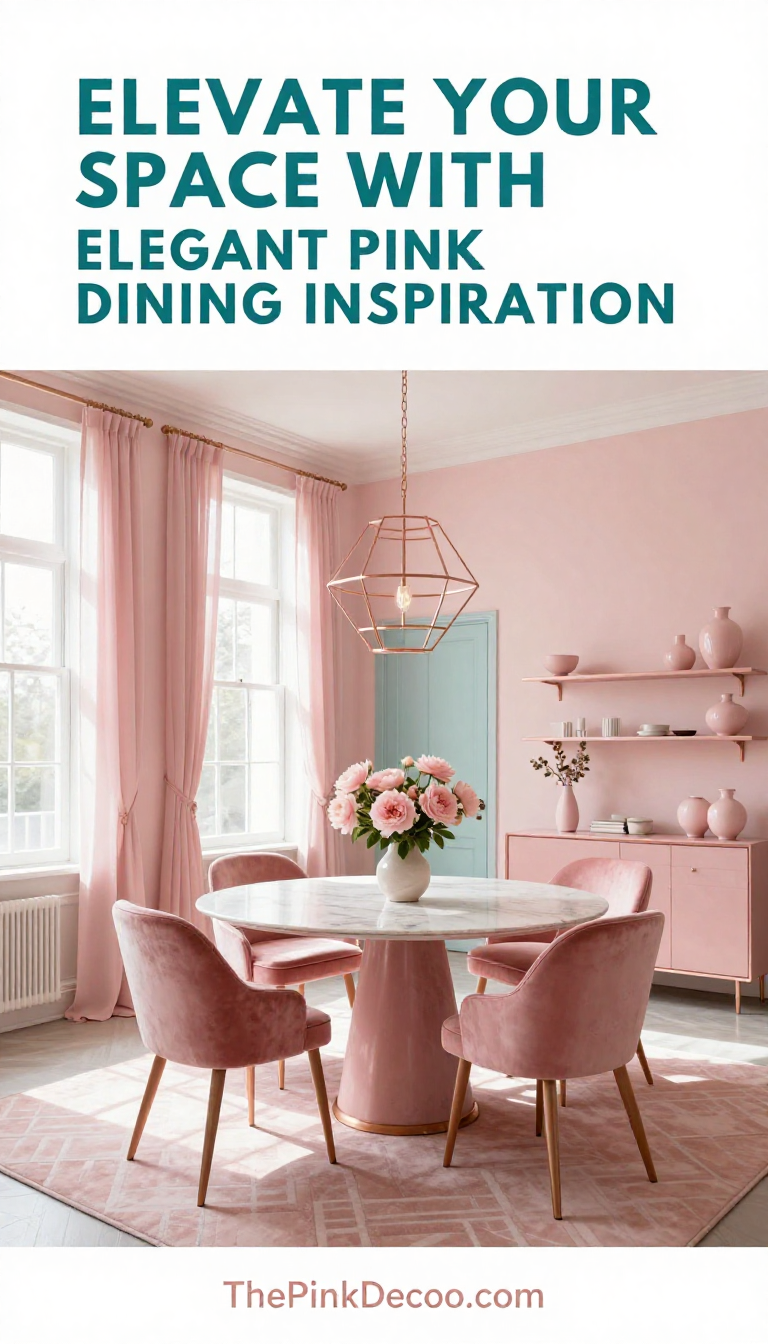
This approach uses pink as an accent color within a clean, uncluttered dining room. Think a single pink wall, pink dining chairs against a white table, or a pink pendant light as the focal point. Furniture features simple lines, and accessories are carefully curated. The color palette stays limited—often just pink, white, and one additional color like black or natural wood.
Romantic Feminine Pink
Create a dreamy dining room with layered pink textiles—velvet chairs, silk curtains, lace table runners. Incorporate floral patterns through wallpaper or artwork. Vintage-inspired pink china displays add charm. Lighting becomes particularly important in this style—crystal chandeliers or pink-tinted glass fixtures enhance the romantic atmosphere during evening meals.
Bold Contemporary Pink
This style embraces pink’s power with confidence. Hot pink accent walls, geometric pink patterns, and mixed metallics create a dynamic dining space. Furniture features bold shapes and unexpected materials—a pink resin table, acrylic pink chairs, or a metallic pink buffet. Artwork makes strong statements with abstract pink compositions or pop art influences.
Scandinavian Pink
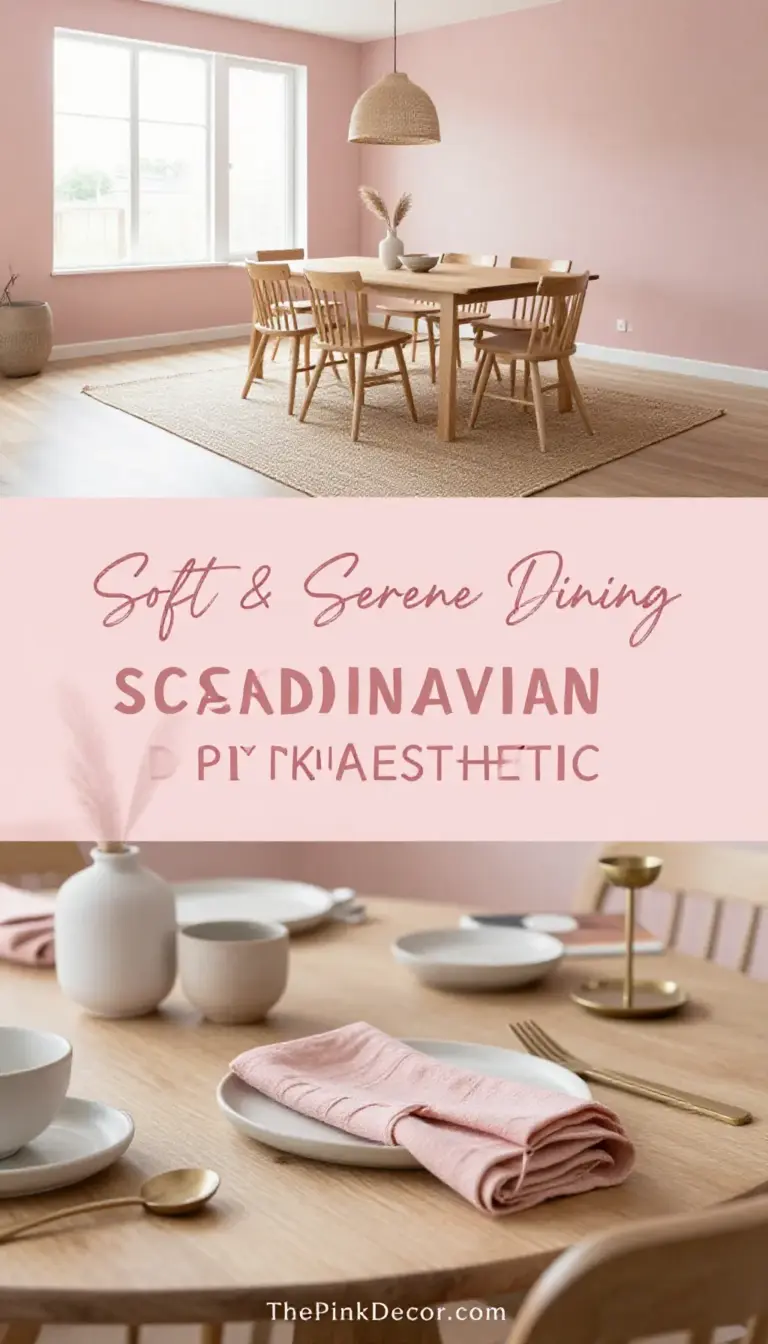
Combine pale pink with natural materials for a cozy, hygge-inspired dining room. White walls with pink accents, light wood furniture, and plenty of natural textures create warmth. Functional beauty is key—pink storage solutions, practical yet beautiful pink tableware, and simple pink floral arrangements. The overall feeling is serene, comfortable, and intentionally simple.
🔧 Common Mistakes to Avoid
- Too Much Pink: While we love pink, overwhelming a dining room with it can feel childish rather than sophisticated. Balance pink with neutrals and complementary colors. If you’ve painted walls pink, keep furniture neutral. If you have pink furniture, consider neutral walls.
- Wrong Pink Shade for Lighting: Pinks change dramatically under different lighting conditions. Always test multiple pink samples in your actual dining room at different times of day. What looks perfect at the paint store may appear too orange or too purple in your specific space.
- Clashing Undertones: Pink undertones must harmonize with other elements. A pink with blue undertones paired with orange-toned wood creates visual discord. Similarly, mixing warm and cool pinks without intentional contrast can look accidental rather than designed.
- Ignoring Existing Architecture: Your pink dining room should complement, not fight, your home’s architectural style. Modern pink works beautifully in contemporary spaces, while traditional homes might suit softer, more historical pink shades. Consider moldings, ceiling height, and window styles when choosing your pink approach.
❓ Frequently Asked Questions
Is pink too bold for a Dining Room?
Absolutely not—when used thoughtfully. Pink dining rooms have moved firmly into mainstream interior design, embraced by top designers and homeowners alike. The key is choosing the right pink for your space and balancing it with neutrals. Start with pink accents if you’re hesitant—a pink centerpiece, artwork, or textiles. As you become comfortable, you can incorporate more pink elements. Remember that softer pinks like blush and dusty rose feel particularly sophisticated in dining rooms.
What colors go best with pink in interior design?
Pink is remarkably versatile. Classic combinations include pink and white for crisp elegance, pink and gray for modern sophistication, pink and navy for depth and contrast, and pink and green (especially sage or olive) for natural freshness. Metallics—particularly gold, brass, and rose gold—add glamour. For bold statements, try pink with black or charcoal. Natural wood tones beautifully ground pink’s sweetness.
How do I incorporate pink without painting walls?
There are numerous ways to bring pink into your dining room without committing to painted walls: 1) Pink dining chairs or a pink bench, 2) Pink textiles—curtains, table runners, chair cushions, 3) Pink artwork or a pink gallery wall, 4) Pink lighting fixtures or lampshades, 5) Pink tableware and glassware collections, 6) A pink area rug under the dining table, 7) Pink decorative objects—vases, sculptures, bowls as centerpieces.
Will pink decor go out of style?
While specific pink trends evolve (millennial pink had its moment), pink as a color in interior design has enduring appeal. The key to timeless pink decor is choosing shades with classic undertones rather than overly trendy versions. Soft blush, dusty rose, and pale pink have historical precedent in design and feel timeless. Even if you choose a trendier pink, you can incorporate it through easily changeable elements like accessories and textiles rather than permanent fixtures.
What’s the best pink shade for small Dining Rooms?
Light, soft pinks work beautifully in small dining rooms as they reflect light and create a sense of expansiveness. Blush pink (HEX #F8C8DC), pale pink (HEX #FFD1DC), and barely-there pinks that read almost as white in certain light are excellent choices. Avoid dark, saturated pinks in small spaces as they can feel overwhelming. If you love deeper pinks, use them as accents rather than wall colors in compact dining rooms.
✨ Before & After Inspiration
Consider a typical beige dining room transformed with pink elements: Instead of repainting all walls, the homeowner creates a pink accent wall behind a built-in buffet. They replace standard dining chairs with four blush pink velvet chairs while keeping their existing wood table. A new brass chandelier replaces the outdated fixture, and pink abstract artwork adds personality. The transformation cost under $2,000 but completely changed the room’s atmosphere—from generic to personalized, from forgettable to memorable.
Another inspiring transformation: A dark, rarely-used formal dining room receives a makeover with pale pink walls, a round white table, and mixed pink and white chairs. The homeowners remove heavy curtains to maximize natural light and add a pink and white striped rug. A collection of pink glassware displayed in open shelving becomes both functional and decorative. The room now serves daily family meals rather than just special occasions, proving that pink dining rooms can be both beautiful and practical.
📸 Styling Tips for Instagram-Worthy Photos
To photograph your pink dining room effectively: 1) Utilize natural light whenever possible—morning light creates soft pink glow, while golden hour enhances warmth. 2) Style your dining table with intentional layers—placemats, napkins, glassware, and a centerpiece that highlights pink elements. 3) Shoot from corners to capture the room’s depth and pink elements throughout the space. 4) Include lifestyle elements—a partially set table, an open cookbook, fresh flowers—to create narrative. 5) Edit photos to enhance pink tones subtly without making them artificial. 6) Consider aerial shots of beautifully set pink tablescapes for dramatic effect.
🎉 Final Thoughts
Creating a pink dining room represents one of the most joyful and transformative home decor projects you can undertake. This versatile color palette offers endless possibilities—from subtle sophistication to bold statements—while creating spaces that feel welcoming, modern, and emotionally resonant. Whether you’re starting with small pink accents or planning a complete pink dining room overhaul, remember that the most successful spaces reflect personal style while maintaining balance and functionality.
The journey to your perfect pink dining room doesn’t need to happen overnight. Start with one pink element that brings you joy—a centerpiece, artwork, or textile—and build from there. Notice how different pink shades make you feel in your dining space, and let that emotional response guide your choices. Most importantly, have fun with the process! Interior design should be an expression of creativity and personality, and pink provides the perfect canvas for both.
As you embark on your pink dining room transformation, remember that trends come and go, but spaces that genuinely reflect your taste and lifestyle remain timeless. Pink dining room style ideas and inspiration for modern homes continue to evolve, but the core appeal—creating beautiful, welcoming spaces for connection and celebration—remains constant.
💬 Ready to go pink? Share your Dining Room transformation in the comments! For more pink home decor inspiration, explore our Dining Room collection.