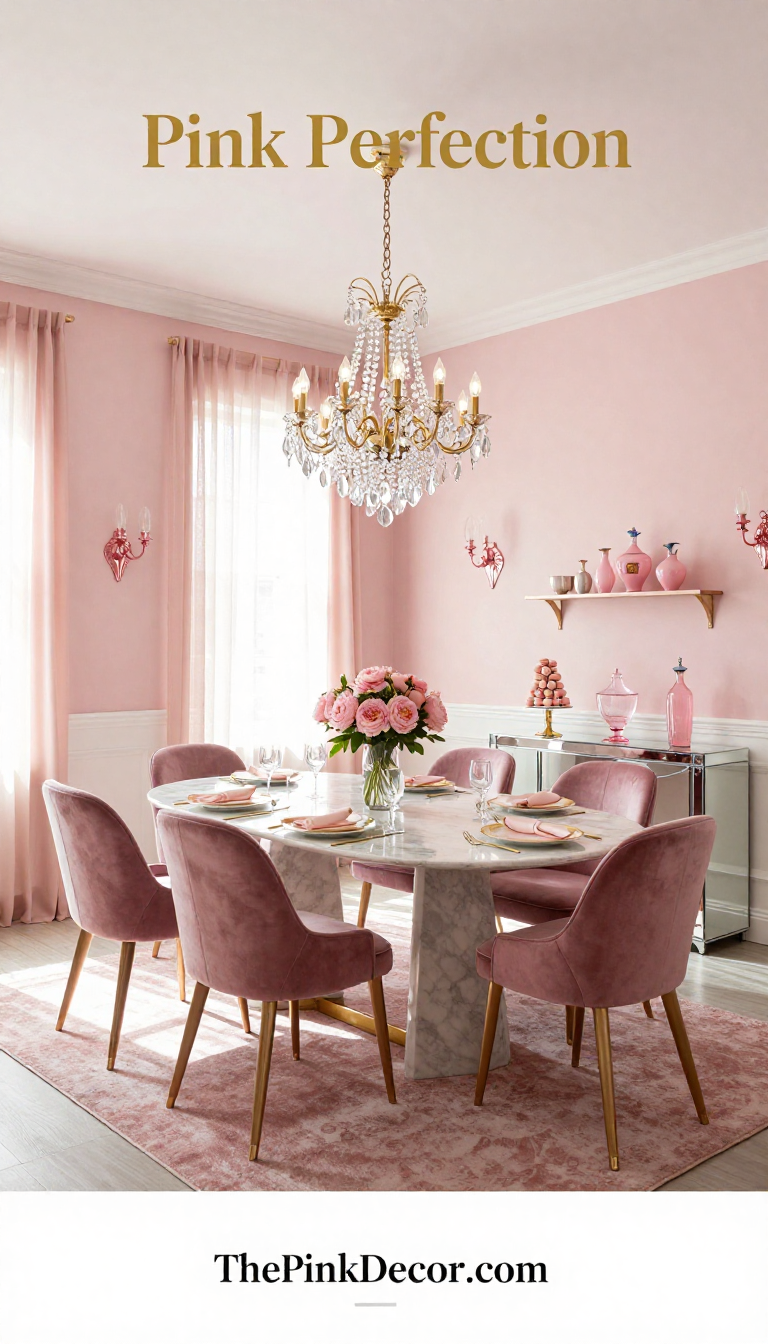
Pink Dining Room Style Ideas
Imagine transforming your dining room into a sophisticated sanctuary where every meal feels like a special occasion. Pink dining room style isn’t just about color—it’s about creating an atmosphere that’s both inviting and stylish. Once considered too bold for formal spaces, pink has evolved into a versatile design element that brings warmth, elegance, and modern flair to dining areas. From soft blush accents to dramatic hot pink statements, this trend offers endless possibilities for creating a space that reflects your personal style while remaining perfectly functional for everyday dining and entertaining.
The beauty of pink dining room style lies in its incredible adaptability. Whether you’re designing a cozy breakfast nook or a formal dinner space, pink can be tailored to suit any aesthetic. Modern interpretations of pink dining rooms blend this traditionally feminine hue with contemporary elements like clean lines, mixed metals, and natural textures, resulting in spaces that feel fresh, balanced, and intentionally designed. The key to success with pink dining room style is understanding how to work with different shades, undertones, and applications to create a cohesive look that feels sophisticated rather than saccharine.
In today’s design landscape, pink dining room style ideas and inspiration for modern homes are more accessible than ever. Social media platforms like Instagram and Pinterest showcase stunning examples of how pink can transform dining spaces into Instagram-worthy settings. Beyond aesthetics, pink has psychological benefits—it’s known to stimulate conversation and appetite, making it particularly well-suited for dining rooms. As we explore the various approaches to incorporating pink into your dining room, you’ll discover that this versatile color can range from subtle and sophisticated to bold and dramatic, offering something for every design preference and lifestyle.

💖 Why Pink Works Perfectly for Your Dining Room
- 🎨 Color psychology benefit: Pink creates a calming, welcoming atmosphere that stimulates appetite and encourages conversation—perfect for dining spaces. Unlike more aggressive colors, pink promotes a sense of comfort and relaxation, making meals more enjoyable experiences.
- ✨ Design trend benefit: Pink dining rooms are incredibly Instagram-worthy and consistently on-trend. From interior design magazines to social media feeds, pink dining spaces photograph beautifully and create memorable backdrops for everything from casual family dinners to sophisticated dinner parties.
- 💡 Versatility benefit: Pink pairs exceptionally well with neutrals, metals, and natural materials. Whether combined with crisp white for a fresh look, warm woods for organic contrast, or brass accents for glamorous appeal, pink serves as a versatile base that adapts to various design styles.
- 🏠 Space enhancement: Light pink tones can make rooms feel larger and brighter by reflecting light. This optical illusion is particularly valuable in smaller dining rooms or spaces with limited natural light, where the right pink shade can transform a cramped area into an airy, inviting space.
- 💰 Budget-friendly: Pink is easy to incorporate gradually through accents and accessories. You don’t need to commit to pink walls or expensive furniture immediately—start with pink table linens, artwork, or decorative objects to test the waters before making larger investments.
🎨 Pink Color Palette Ideas for Dining Room
Choosing the right pink palette is crucial for achieving your desired dining room aesthetic. Here are five sophisticated pink color schemes perfect for modern dining rooms:
1. Soft Blush Pink with White and Gold
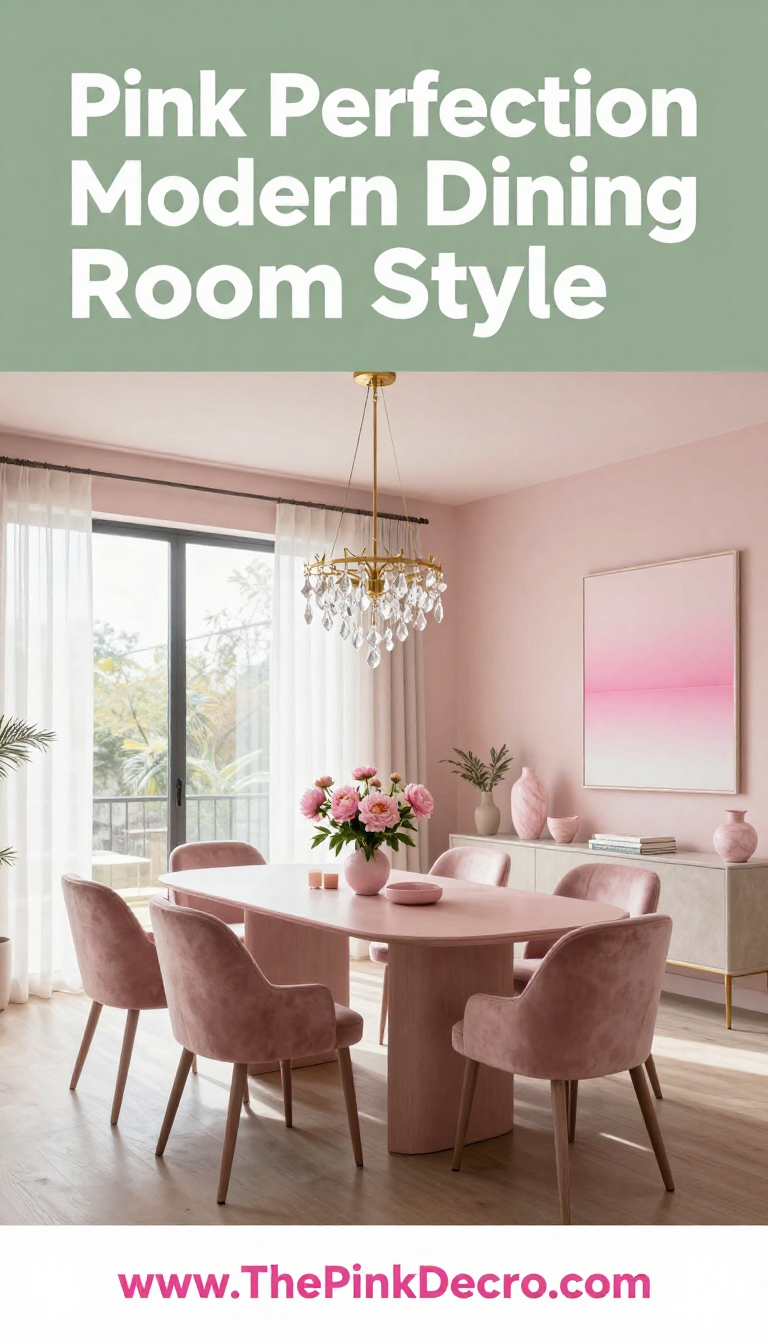
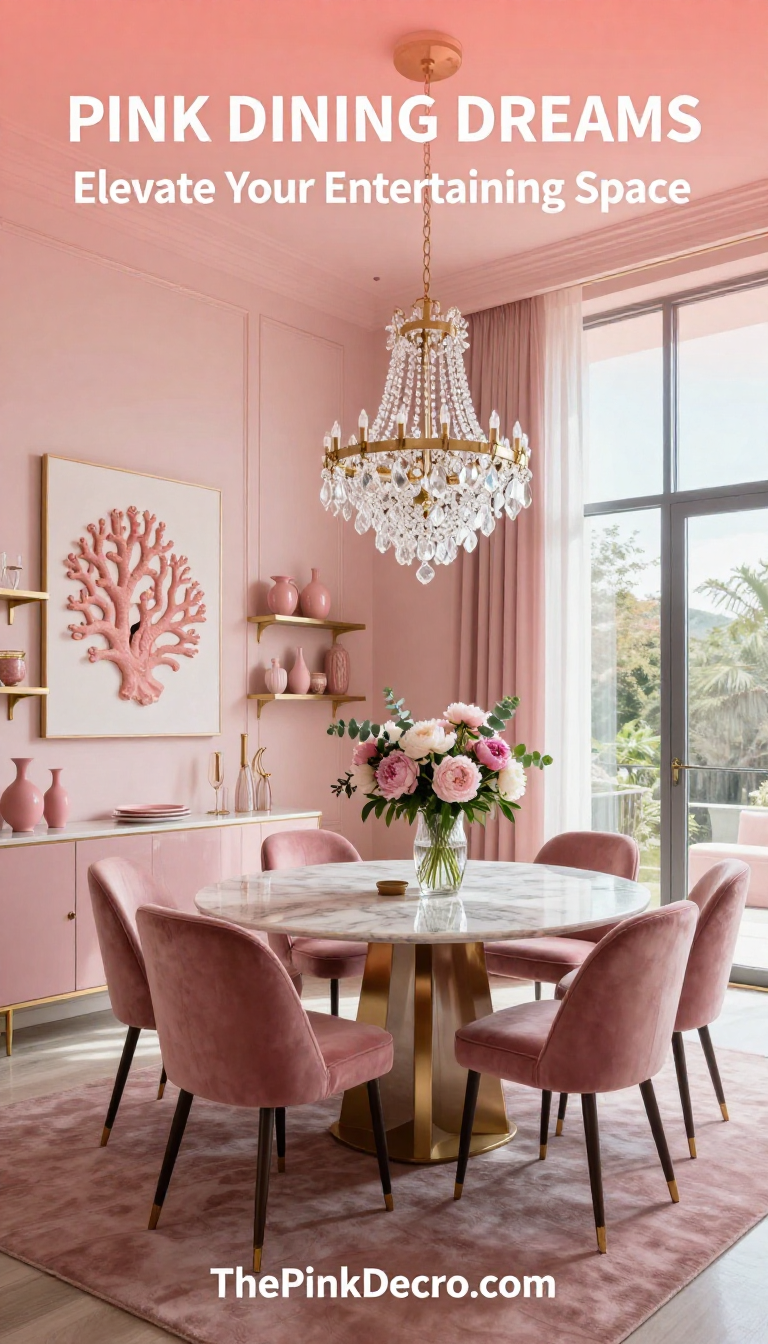
This timeless combination creates an elegant, airy feel perfect for both traditional and contemporary dining rooms. Blush pink walls or upholstery paired with crisp white trim and gold lighting fixtures or hardware results in a sophisticated space that feels both fresh and luxurious. Consider Benjamin Moore’s “First Light” (OC-131) or Sherwin-Williams “In the Pink” (SW 6587) for this palette.
2. Dusty Rose with Gray and Marble
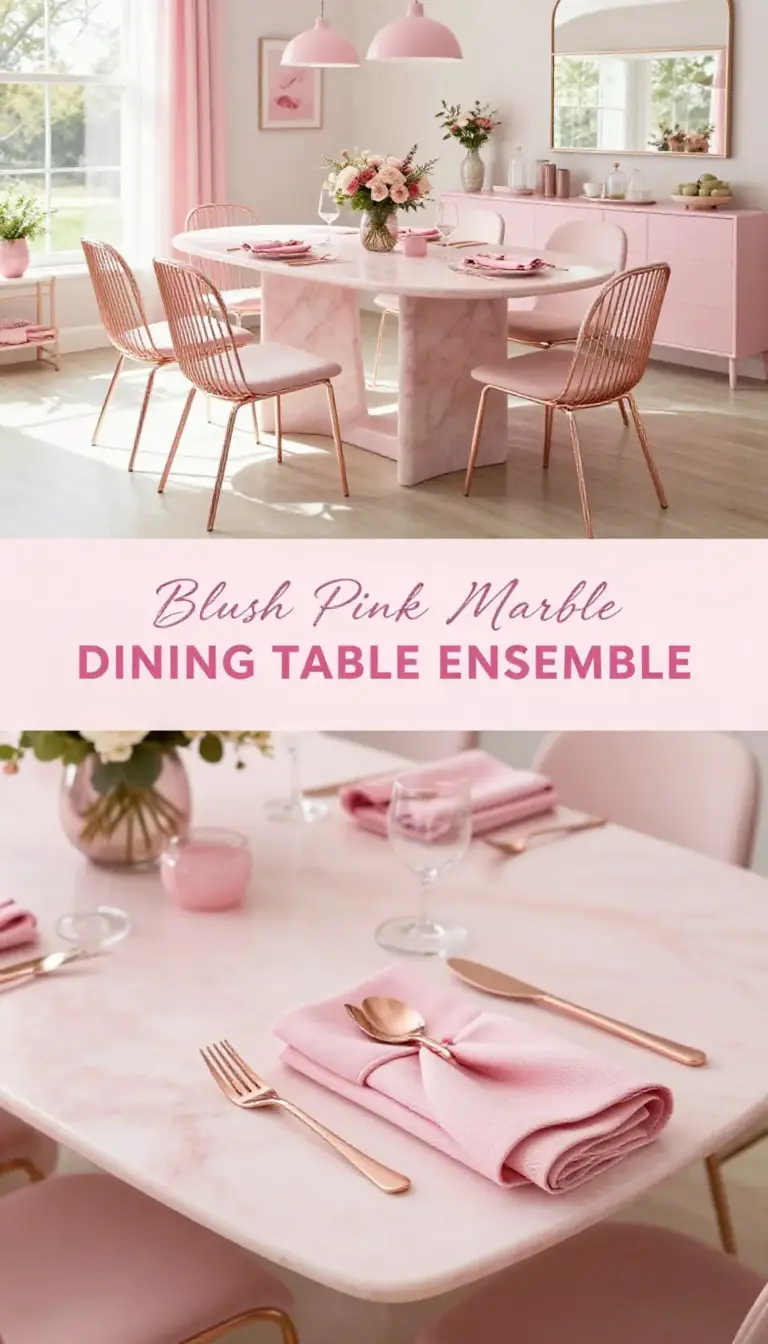
For a more muted, sophisticated look, pair dusty rose with cool grays and marble accents. This combination works beautifully in modern dining rooms with clean lines and minimal decor. The gray tones ground the pink while marble elements add natural texture and luxury. Try Farrow & Ball’s “Setting Plaster” or Behr’s “Rose Quartz” (S180-3) as your base pink.
3. Millennial Pink with Brass Accents
The iconic millennial pink—a dusky, slightly desaturated pink—pairs perfectly with warm brass accents for a contemporary yet cozy dining space. This combination feels current without being trendy, creating a dining room that will remain stylish for years. Consider using Sherwin-Williams “Feminine” (SW 6595) or Benjamin Moore “Pink Bliss” (2093-70).
4. Hot Pink Bold Statement with Black
For those who love drama, hot pink makes an unforgettable statement when paired with black accents. This high-contrast combination works particularly well in dining rooms with architectural interest or modern furniture. Use hot pink selectively—on an accent wall, dining chairs, or artwork—balanced with substantial black elements like a dining table or lighting fixture. Benjamin Moore’s “Raspberry Blush” (2003-40) makes a stunning statement.
5. Pale Pink Monochromatic
A monochromatic pink scheme using varying shades of pale pink creates a serene, cohesive dining environment. Layer different pink tones through walls, textiles, and accessories while maintaining the same undertone throughout. This approach works beautifully in minimalist dining rooms where subtle variation creates visual interest without clutter. Try using Farrow & Ball’s “Pink Ground” as your base with lighter and darker variations from the same color family.
🛋️ Essential Elements for Pink Dining Room Style
1. Color Scheme
A successful pink dining room begins with a well-planned color scheme. Start by selecting your dominant pink shade, then choose 2-3 complementary colors to balance the space. White, cream, and gray are classic neutrals that allow pink to shine without overwhelming the room. For added depth, incorporate metallic accents in gold, brass, or rose gold. If you prefer more contrast, navy blue, forest green, or charcoal gray make striking companions to pink. The 60-30-10 rule works well here: 60% dominant color (often your pink), 30% secondary color, and 10% accent color.
2. Furniture & Layout
Key furniture pieces in a pink dining room include the dining table, chairs, and storage solutions like a buffet or sideboard. When incorporating pink furniture, consider starting with chairs or a bench rather than a large table—this allows for easier updates if your style evolves. For layout, ensure there’s adequate circulation space around the table (at least 36 inches from walls or other furniture) and that the room’s flow supports comfortable movement. If your dining room serves multiple purposes, consider a round table that maximizes space or an extendable table that adapts to different occasions.
3. Lighting
Lighting dramatically affects how pink appears in your dining room. Natural light enhances pink’s warmth and vibrancy, while artificial lighting can either complement or alter its appearance. For overhead lighting, consider a statement chandelier or pendant light in a metallic finish that complements your pink scheme. Layer lighting with dimmable overhead fixtures, wall sconces for ambient light, and candles for intimate dinners. Pink-tinted lighting or bulbs with warm color temperatures (2700K-3000K) will enhance pink tones, while cooler lighting may shift pinks toward more mauve or gray undertones.
4. Textures & Materials
Incorporating varied textures prevents a pink dining room from feeling flat or one-dimensional. Mix smooth surfaces like lacquered furniture or marble tabletops with textured elements like woven dining chair seats, velvet upholstery, or rattan accents. Natural materials like wood, stone, and ceramics add organic contrast to pink’s softness. Consider a wooden dining table with pink upholstered chairs, or pink walls with natural fiber area rugs. Metallic finishes—whether brushed brass, polished chrome, or matte black—add reflective surfaces that catch light and add sophistication.
5. Decorative Accents
Accessories complete your pink dining room style while adding personal touches. Layer pink through table linens, napkins, and runner in varying textures—linen for casual elegance, silk for formal occasions. Incorporate mirrors to reflect light and create the illusion of more space. Add greenery with potted plants or fresh flowers that complement your pink palette (eucalyptus, olive branches, or white blooms work beautifully). Decorative objects like ceramic vases, sculptural pieces, or curated collections on a sideboard add personality without clutter. Remember our guideline: NO human or animal figurative art to maintain a timeless, sophisticated aesthetic.

🎯 Step-by-Step Design Guide
- Choose Your Pink Shade: Begin by selecting a pink that complements your dining room’s natural light and existing elements. North-facing rooms with cooler light benefit from warm pinks with peach or coral undertones, while south-facing rooms with abundant warm light can handle cooler pinks with blue or purple undertones. Test large paint samples on multiple walls at different times of day before committing.
- Plan Your Layout: Consider your dining room’s primary functions—daily family meals, entertaining, or multi-purpose use. Arrange furniture to optimize traffic flow, with the dining table as the focal point. Ensure there’s adequate space for chairs to be pulled out comfortably (at least 24 inches behind each chair) and that serving areas like buffets are easily accessible.
- Select Key Pieces: Choose foundational furniture that supports your pink dining room vision. A neutral dining table provides flexibility, allowing pink to be introduced through chairs, benches, or upholstery. If opting for a pink statement piece, ensure it’s something you’ll love long-term—dining tables are less frequently replaced than accessories.
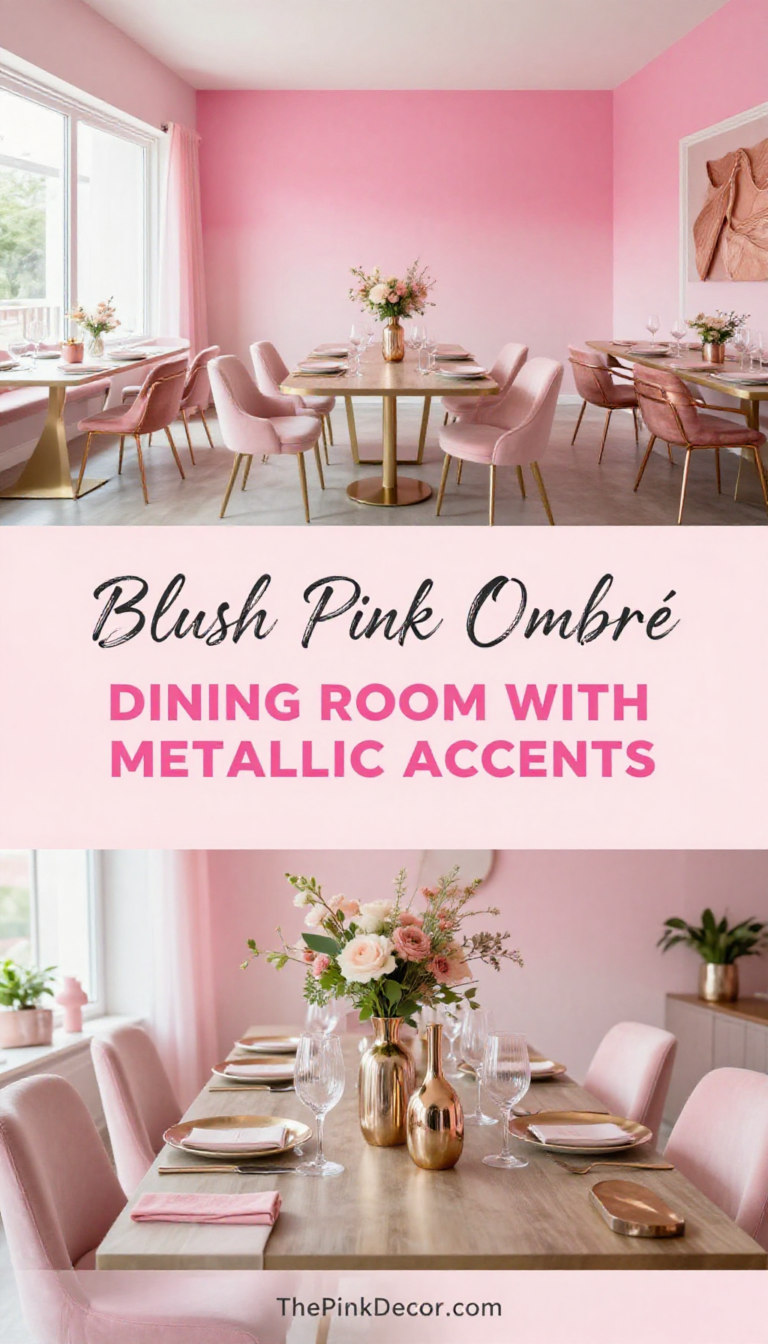
- Add Complementary Colors: Introduce colors that enhance your chosen pink. For soft pinks, consider dove gray, warm white, or natural wood tones. For bold pinks, black, navy, or emerald green create striking contrast. Metallics like brass, copper, or rose gold add warmth and reflectivity regardless of your pink shade.
- Layer Textures: Create visual interest by mixing materials. Pair smooth lacquered surfaces with nubby textiles, shiny metals with matte ceramics, and hard surfaces with soft upholstery. A velvet pink bench cushion against a wood dining table, or marble accessories on a woven placemat, exemplify successful texture mixing.
- Incorporate Metallics: Choose one primary metallic finish and use it consistently throughout hardware, lighting, and accessories. Rose gold and brass complement most pink undertones beautifully, while chrome or nickel work better with cooler pinks. Avoid mixing too many metallic finishes—stick to one dominant and one accent finish maximum.
- Add Final Touches: Style your dining room with carefully curated accessories. Set the table with layered place settings that incorporate your pink palette through napkins, glassware, or charger plates. Add greenery for natural contrast, candles for ambiance, and artwork that complements without competing. Remember that negative space is as important as filled space in creating a balanced, sophisticated dining environment.
💡 Design Tips from the Experts
PRO TIP: “The secret to a sophisticated pink dining room is balance through contrast. Pair soft pink walls with substantial, darker furniture to ground the space. If using bold pink, limit it to one statement element—either the walls, the dining chairs, or a large artwork—and keep everything else neutral. Always consider undertones: pink with warm peach undertones pairs beautifully with brass and wood tones, while pink with cool blue undertones works better with silver, chrome, and gray finishes. Test your pink in the actual dining room lighting before committing, as artificial light can dramatically shift pink’s appearance.”
🛍️ Shopping Guide – Where to Find Pink Dining Room Pieces
Budget-Friendly Options
For affordable pink dining room finds, check IKEA for pink accent chairs, tableware, and textiles. Target’s Project 62 and Hearth & Hand with Magnolia lines frequently feature pink decor items at accessible price points. Amazon offers a wide selection of pink dining chairs, table linens, and accessories with user reviews to guide your choices. HomeGoods/TJ Maxx are treasure troves for discounted pink decor, especially for accent pieces like vases, candles, and artwork.
Mid-Range Choices
West Elm consistently offers stylish pink dining furniture and accessories with a modern aesthetic. Wayfair provides numerous options across styles and price points, with filters to narrow your search specifically to pink dining items. Article features quality pink upholstered dining chairs and benches with clean lines. CB2 offers contemporary pink dining pieces with designer appeal at accessible prices. Etsy is excellent for custom pink dining chairs, table runners, and unique handmade accessories.
Luxury Splurges
For investment pieces, consider designer brands like Jonathan Adler for statement pink dining chairs with architectural interest. Anthropologie’s higher-end offerings include beautifully crafted pink dining furniture with unique details. Room & Board offers custom pink upholstery on quality dining chairs and benches. Design within Reach features iconic mid-century modern pieces that can be customized in pink fabrics. For truly bespoke pink dining rooms, work with a local furniture maker to create custom pink dining tables or built-in cabinetry.
🎨 Style Variations
Modern Minimalist Pink
Clean lines, uncluttered spaces, and intentional pink accents define this style. Choose one pink element—a sculptural dining chair, a single artwork, or a flush of pink on one wall—and keep everything else simple and neutral. Furniture should be streamlined with minimal ornamentation. Storage is concealed to maintain visual calm. This approach works beautifully in open-plan dining areas where pink creates subtle definition without overwhelming adjacent spaces.
Romantic Feminine Pink
Soft textures, floral patterns, and vintage touches characterize this pink dining room style. Layer different pink tones through upholstery, curtains, and table linens. Incorporate floral patterns in moderation—on chair cushions, a table runner, or wallpaper on a single accent wall. Vintage-inspired lighting fixtures, curved furniture shapes, and delicate china display add to the romantic atmosphere. Balance the femininity with substantial furniture pieces to prevent the space from feeling overly delicate.
Bold Contemporary Pink
Vibrant hot pink, geometric patterns, and modern edge define this confident approach. Use pink as a dramatic statement against a neutral backdrop—hot pink dining chairs against white walls, or a pink geometric patterned rug under a black dining table. Incorporate contemporary art with pink elements, sculptural lighting, and furniture with strong silhouettes. This style embraces contrast and isn’t afraid to make pink the undeniable focal point of the dining room.
Scandinavian Pink
Pale pink, natural materials, and hygge vibes create this cozy yet modern dining room style. Combine barely-there pink walls with light wood dining tables, woven textiles, and simple functional furniture. Prioritize natural light and incorporate candles for soft evening ambiance. Storage should be both beautiful and practical, with open shelving to display simple tableware. This style emphasizes comfort, simplicity, and connection to nature—pink adds just enough warmth without sacrificing Scandinavian minimalism.
🔧 Common Mistakes to Avoid
- Too much pink: An overwhelmingly pink dining room can feel childish or overwhelming. Balance pink with neutrals, using the 60-30-10 rule as a guideline. If you’ve overdone it, introduce substantial neutral elements like a wood table, natural fiber rug, or black metal lighting to ground the space.
- Wrong pink shade for lighting: Pink looks dramatically different in various lighting conditions. Always test paint samples at different times of day and under both natural and artificial light. North-facing rooms generally need warmer pinks, while south-facing rooms can handle cooler tones.
- Clashing undertones: Mixing pink with clashing undertones creates visual discord. If your pink has warm peach undertones, pair it with warm woods and brass rather than cool grays and silver. Consistently warm or cool undertones throughout the dining room create harmony.
- Ignoring existing architecture: Forcing a pink dining room style that conflicts with your home’s architecture creates dissonance. Traditional homes with detailed moldings might suit softer, more classic pink applications, while modern spaces with clean lines can handle bolder pink statements. Work with—not against—your dining room’s inherent character.
❓ Frequently Asked Questions
Is pink too bold for a Dining Room?
Not at all—when used thoughtfully, pink creates a sophisticated, inviting dining atmosphere. The key is balance and shade selection. Soft blush pinks work beautifully as wall colors in formal dining rooms, while bolder pinks can be incorporated through accents like dining chairs, artwork, or table settings. Consider your dining room’s formality, natural light, and how frequently you entertain when deciding on pink’s intensity.
What colors go best with pink in interior design?
Pink pairs beautifully with numerous colors depending on the desired effect. Classic combinations include pink with white for freshness, gray for sophistication, navy for contrast, and green for natural harmony. Metallics—especially gold, brass, and rose gold—add warmth and luxury. Natural wood tones create organic balance. The most successful combinations maintain consistent undertones (all warm or all cool) throughout the dining room palette.
How do I incorporate pink without painting walls?
There are numerous ways to introduce pink without committing to painted walls. Upholstered dining chairs in pink fabric make a significant impact. Pink table linens—runners, placemats, napkins—offer flexible, changeable pink accents. Artwork featuring pink elements, pink glassware or tableware, and decorative accessories like vases or candles incorporate pink subtly. Even a pink area rug under the dining table can transform the space’s feel without permanent changes.
Will pink decor go out of style?
While specific shades of pink may trend (like millennial pink), pink itself has enduring appeal in interior design. To create a timeless pink dining room, focus on classic applications: soft blush walls that function as a neutral, quality pink upholstery on well-designed furniture, or pink accents that can be easily updated. Avoid overly trendy pink patterns or gimmicky applications, and your pink dining room will remain stylish for years.
What’s the best pink shade for small Dining Rooms?
Light, soft pinks work best in small dining rooms as they reflect light and create an airy, spacious feel. Avoid dark or intense pinks that can make small spaces feel closed in. Pale blush, barely-there pink, or pink with white undertones (like Farrow & Ball’s “Pink Ground”) are excellent choices. If you love bold pink, use it strategically on just one element—accent chairs or artwork—against light walls to maintain a sense of openness.
✨ Before & After Inspiration
Consider a typical beige dining room transformed with pink accents: Replace neutral dining chairs with blush velvet upholstered seats, swap out a basic light fixture for a brass chandelier with pink glass details, add a pink-toned abstract artwork, and layer the table with pink linen napkins and rose-colored glassware. The architectural shell remains the same, but the space now feels intentionally designed, sophisticated, and inviting. The biggest impact often comes from changing the dining chairs and lighting—these elements define the space’s character more than any other single change.
Another transformative approach: A dark, formal dining room lightened with pale pink walls, a light wood dining table replacing a heavy dark one, and airy curtains replacing heavy drapes. The pink walls reflect available light, making the room feel larger and more welcoming while maintaining enough sophistication for formal entertaining. The key to successful before-and-after transformations is identifying what isn’t working in the existing space and addressing it with pink elements that solve those specific issues.
📸 Styling Tips for Instagram-Worthy Photos
To photograph your pink dining room effectively, utilize natural light whenever possible—position your camera facing windows rather than with windows behind you. Style the dining table with layered place settings that incorporate your pink palette: pink napkins folded on neutral plates, pink-toned glassware, and simple floral arrangements with pink blooms. Add candles for warmth and dimension. Shoot from multiple angles: overhead shots of the styled table, eye-level shots that capture the room’s atmosphere, and detail shots of carefully arranged vignettes on sideboards or shelves. Use a consistent editing style that enhances your pink tones without oversaturating—slightly increased exposure and warmth often flatter pink dining rooms.
🎉 Final Thoughts
Creating a pink dining room is an opportunity to design a space that’s both beautiful and functional—a room where everyday meals feel special and entertaining becomes memorable. As we’ve explored, pink dining room style offers remarkable versatility, from subtle blush accents to bold statement walls, each approach creating its own unique atmosphere. The most successful pink dining rooms balance this evocative color with thoughtful neutrals, varied textures, and personal touches that make the space uniquely yours.
Remember that designing with pink doesn’t require an all-or-nothing approach. Start small with pink accessories or textiles, observe how the color interacts with your space throughout the day, and build gradually toward your vision. Whether you’re refreshing an existing dining room or designing from scratch, pink offers a sophisticated palette that adapts to traditional, modern, and everything in between. The enduring appeal of pink in interior design speaks to its ability to create warmth, elegance, and character in dining spaces of all sizes and styles.
As you embark on your pink dining room journey, trust your instincts while applying the principles we’ve discussed: balance pink with neutrals, consider lighting carefully, mix textures for depth, and choose quality pieces you’ll love for years. Your dining room should reflect your personal style while functioning beautifully for your lifestyle. With thoughtful planning and execution, your pink dining room will become a cherished space for nourishment, connection, and beautiful moments.
💬 Ready to go pink? Share your Dining Room transformation in the comments! For more pink home decor inspiration, explore our Dining Room collection.