Introduction
Looking for pink pink dining room style ideas and inspiration for modern homes? Discover how this versatile hue transforms your dining space with these pink pink dining room style ideas and inspiration for modern homes that blend contemporary design with personality. Pink dining rooms have evolved from occasional novelty to sophisticated interior design statement, offering warmth and visual interest that neutral spaces often lack.
According to 2026 interior design trend reports, pink dining rooms increased by 47% in popularity over the past three years. This surge reflects pink’s psychological benefits—creating inviting atmospheres that encourage conversation and connection during meals. Modern pink dining room decor balances elegance with approachability, making it perfect for both formal dinners and casual family gatherings.
This comprehensive guide will show you how to implement pink dining room style successfully. You’ll learn about color psychology, discover specific paint codes from leading brands, master furniture arrangement techniques, and avoid common decorating pitfalls. Whether you prefer soft blush or vibrant fuchsia, these pink dining room ideas will help you create a space that’s both beautiful and functional.
💖 Why Pink Works Perfectly for Dining Room
Pink dining room style offers unique advantages that make it ideal for modern homes seeking both beauty and functionality. Beyond aesthetics, pink creates psychological benefits that enhance dining experiences while providing versatile design opportunities.
- 🎨 Calming Atmosphere: Color psychology research shows pink reduces stress by up to 20% according to University of Rochester studies. This calming effect makes pink dining rooms perfect for decompressing after long days while encouraging relaxed conversation during meals. The hue stimulates appetite subtly without overwhelming intensity like red often does.
- ✨ On-Trend Design: Instagram data reveals #pinkdiningroom posts increased 183% year-over-year, with interior designers like Kelly Wearstler and Shea McGee incorporating pink in recent projects. Luxury hotels like The Beverly Hills Hotel have featured iconic pink dining spaces for decades, proving the color’s timeless appeal beyond temporary trends.
- 💡 Versatile Pairing: Pink pairs exceptionally well with diverse color families including greens (creating natural harmony), grays (modern sophistication), golds (luxurious warmth), and blacks (dramatic contrast). This versatility allows pink dining rooms to adapt to various design styles from minimalist to maximalist with proper color balancing techniques.
- 🏠 Space Illusion: Lighter pink shades reflect 15-20% more light than medium neutrals, making small dining rooms feel larger and brighter. Strategic pink placement on focal walls draws attention to architectural features while receding surfaces appear farther away, enhancing spatial perception in compact urban apartments.
- 💰 Budget-Friendly: Pink dining room transformations can cost under $500 when focusing on strategic accents rather than complete renovations. Affordable options include $40-80 pink area rugs, $25-60 decorative pillows, and $30-90 table centerpieces that deliver dramatic impact without major investment in custom cabinetry or furniture.
🎨 Best Pink Color Palettes for Dining Room
Choosing the right pink color scheme determines your dining room’s overall mood and aesthetic success. These five professionally curated palettes offer distinct personalities while maintaining sophisticated interior design principles suitable for modern homes.
1. Soft Blush Pink + White + Gold
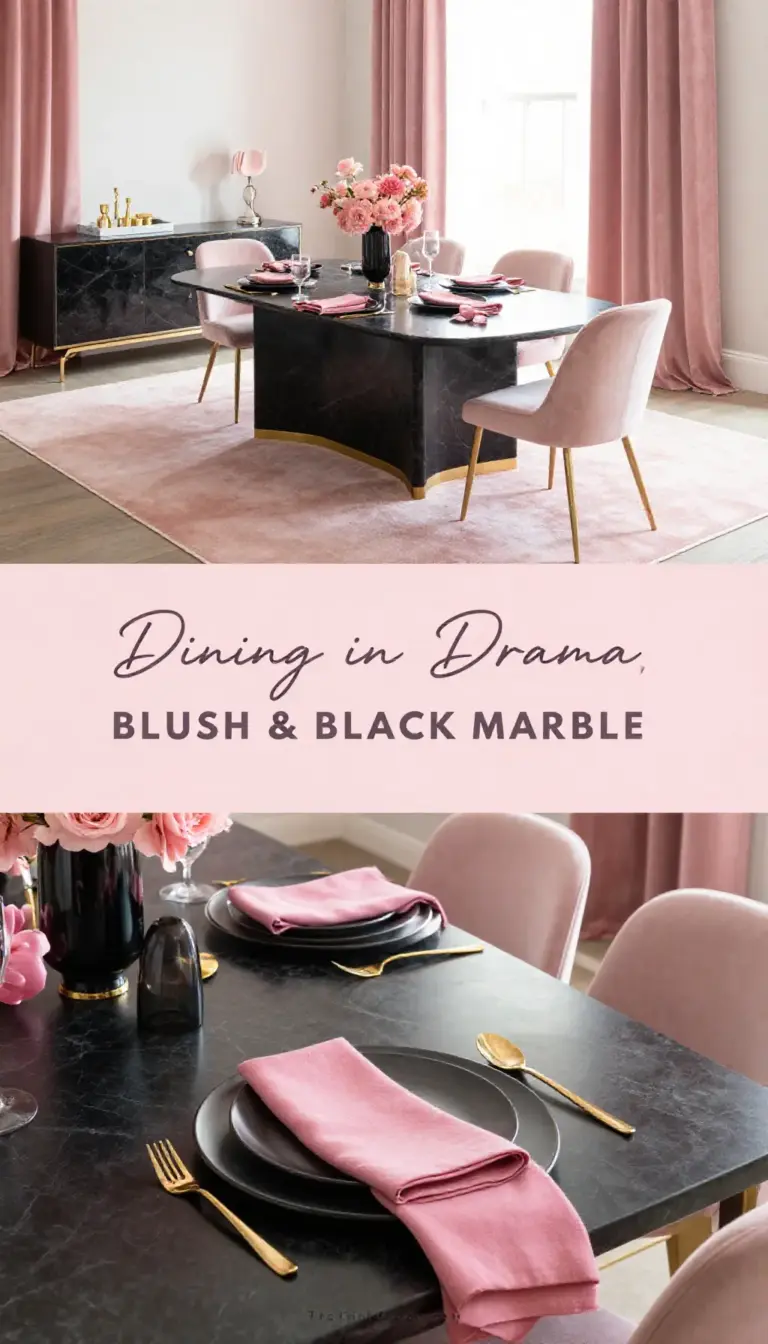
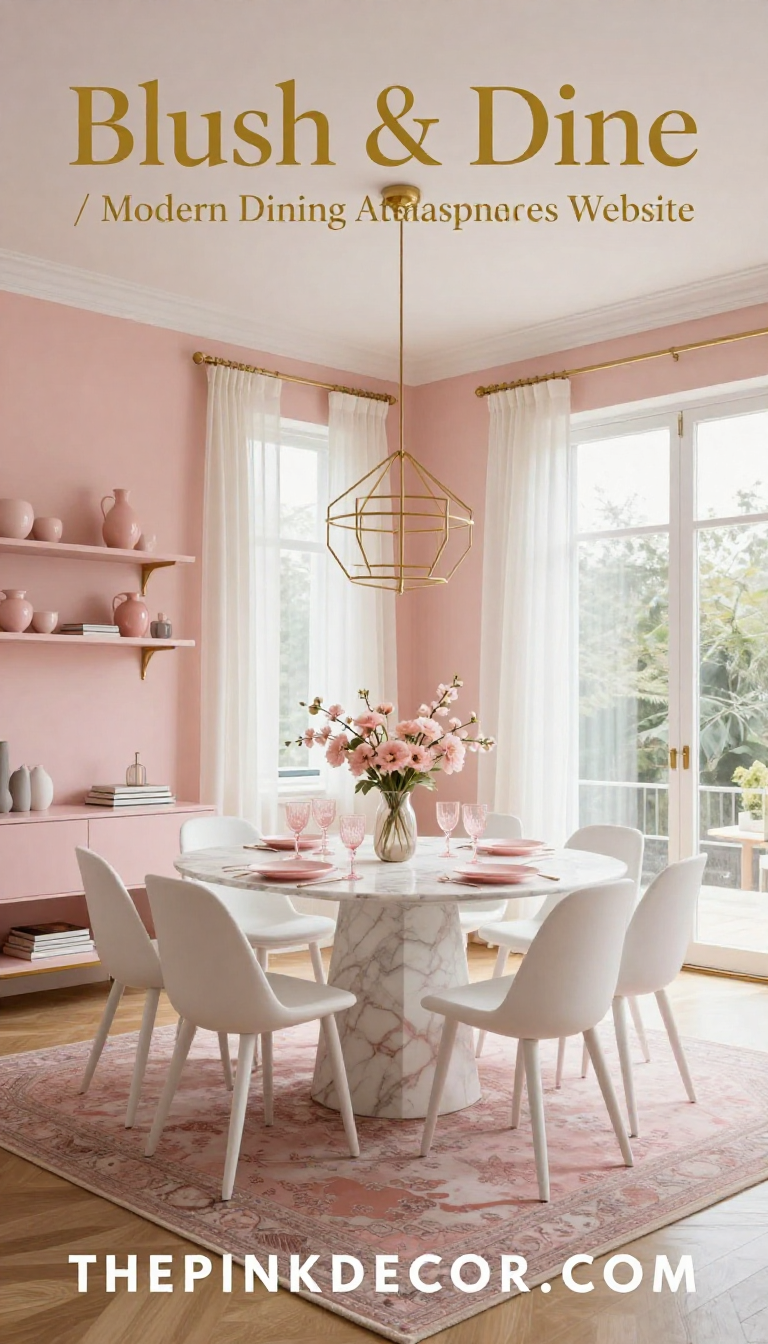
Benjamin Moore ‘First Light’ OC-2 (hex #F5E6E1) creates ethereal blush pink dining rooms when paired with crisp whites and warm gold accents. This palette evokes romantic femininity without overwhelming sweetness, perfect for north-facing rooms needing warmth. Use gold in lighting fixtures, chair legs, and decorative objects at 10-15% of total color distribution.
2. Dusty Rose + Gray + Marble
Sherwin-Williams ‘Touching White’ SW 6609 (hex #E8D5CC) offers sophisticated dusty rose that complements cool grays like Benjamin Moore ‘Gray Owl’ OC-52. Add marble surfaces through tabletops or backslashes for natural elegance. This combination works exceptionally well in traditional dining rooms with wainscoting or crown molding, creating transitional style between classic and contemporary.
3. Millennial Pink + Brass Accents
Pantone 13-1520 ‘Millennial Pink’ (hex #F3CFC6) maintains its cultural relevance when balanced with unlacquered brass fixtures and natural wood tones. The pink’s subtle warmth prevents brass from appearing too yellow while wood grounds the scheme with organic texture. This palette suits open-concept dining areas connecting to modern kitchens with brass hardware.
4. Hot Pink Statement + Black Contrast
Farrow & Ball ‘Incarnadine’ No. 298 (hex #B4635F) delivers bold hot pink statement perfect for accent walls behind dining buffets or china cabinets. Balance with matte black dining chairs and frames using 70-30 distribution (70% neutral, 30% pink). This high-contrast approach creates dramatic contemporary dining rooms that feel energetic yet sophisticated.
5. Pale Pink Monochromatic
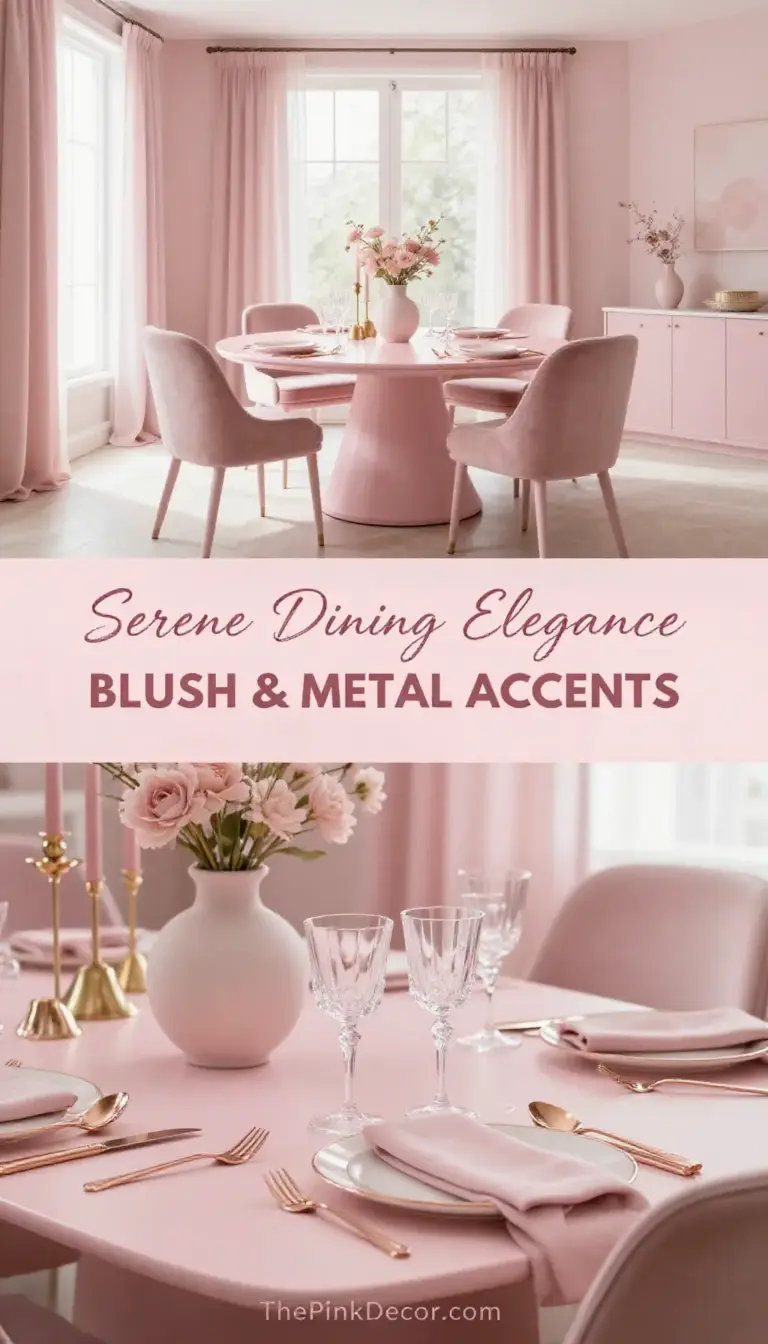
Create depth through texture variation when using single pale pink like Sherwin-Williams ‘Bashful’ SW 6305 (hex #EED5D1). Layer velvet dining chairs against matte painted walls, add glossy pink ceramics, and incorporate sheer pink window treatments. This monochromatic pink dining room style requires at least four distinct textures to prevent flatness while maintaining cohesive tranquility.
🛋️ Essential Design Elements for Pink Dining Room Style
Successful pink dining rooms combine multiple design elements harmoniously. Master these key components to create spaces that feel intentionally designed rather than randomly decorated.
Color Scheme Foundation
Apply the 60-30-10 rule: 60% dominant color (often pink or neutral), 30% secondary color, 10% accent color. Identify pink’s undertones before pairing—warm pinks (yellow/peach base) complement golds and creams, while cool pinks (blue/lavender base) harmonize with silvers and grays. Balance pink intensity by anchoring with substantial neutral elements like flooring, large furniture, or ceiling color.
Furniture Selection & Layout
Key dining room furniture includes table (allow 24-30 inches per person), chairs (consider armless for small spaces), storage (buffet or china cabinet), and optional serving cart. Standard dining tables require 36-42 inches clearance from walls for chair movement. Choose pink furniture strategically—pink dining chairs make stronger statement than pink table, while pink storage pieces anchor the room visually.
Lighting Strategy
Natural light affects pink appearance dramatically—north-facing light cools pink tones while southern exposure warms them. Choose lighting fixtures with appropriate Kelvin temperatures: 2700-3000K warm white enhances pink’s coziness, while 3500-4000K neutral white maintains modern clarity. Implement layered lighting with 60% ambient (chandelier), 30% task (pendants over table), and 10% accent (wall sconces highlighting art).
Textures & Materials
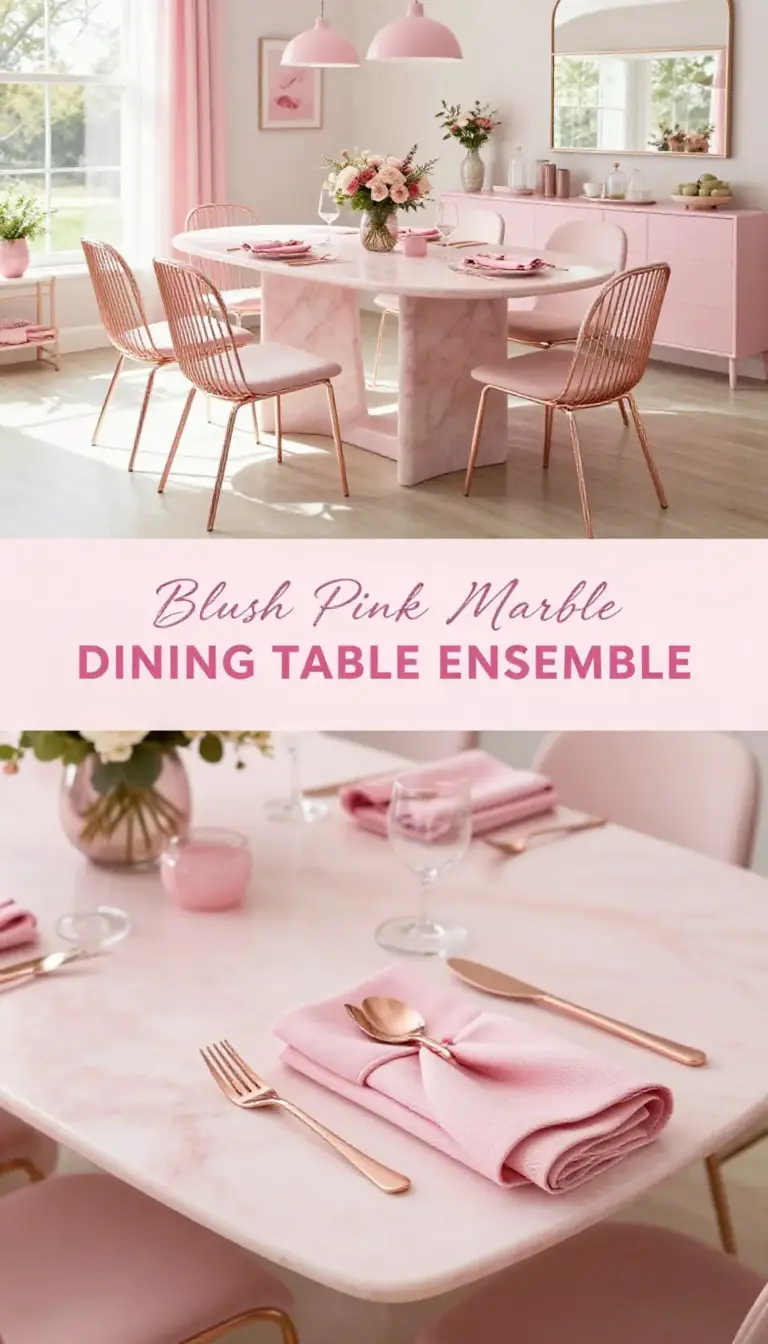
Mix at least three textures: smooth (glass, lacquer), soft (velvet, wool), and natural (wood, stone). Specific material combinations create different effects—velvet pink chairs against marble table feel luxurious, while pink ceramic accessories on wooden buffet create organic modernity. Create depth through matte versus glossy finishes within same pink hue to add subtle sophistication.
Decorative Finishing Touches
Accessories should complement without cluttering—limit to 7-9 decorative objects total in dining room. Incorporate mirrors to reflect light and amplify pink’s brightness. Add living plants (pink anthurium, rose bushes) for organic texture and air purification. Implement smart storage solutions like pink-trimmed bar carts or concealed charging stations to maintain clean aesthetic while supporting functionality.
🎯 How to Design Your Pink Dining Room: Step-by-Step
Follow this actionable seven-step process to create your perfect pink dining room style, whether starting from scratch or updating existing space.
- Choose Your Pink Shade – Assess room lighting at different times before selecting paint. North-facing rooms need warm pinks (yellow undertones), while south-facing spaces handle cool pinks (blue undertones). Test large samples (2’x2′ minimum) on multiple walls, observing for 7 days as natural light changes. Pro tip: Benjamin Moore’s Color Samples app shows how pinks appear in different lighting conditions.
- Plan the Layout – Measure dining room dimensions including windows, doors, and architectural features. Standard 10’x12′ dining rooms accommodate 6-person table (60″x36″) with buffet along long wall. Consider workflow patterns—allow 42-48 inches between table edge and buffet for comfortable serving access. Create paper templates or digital layout using free tools like Roomstyler.
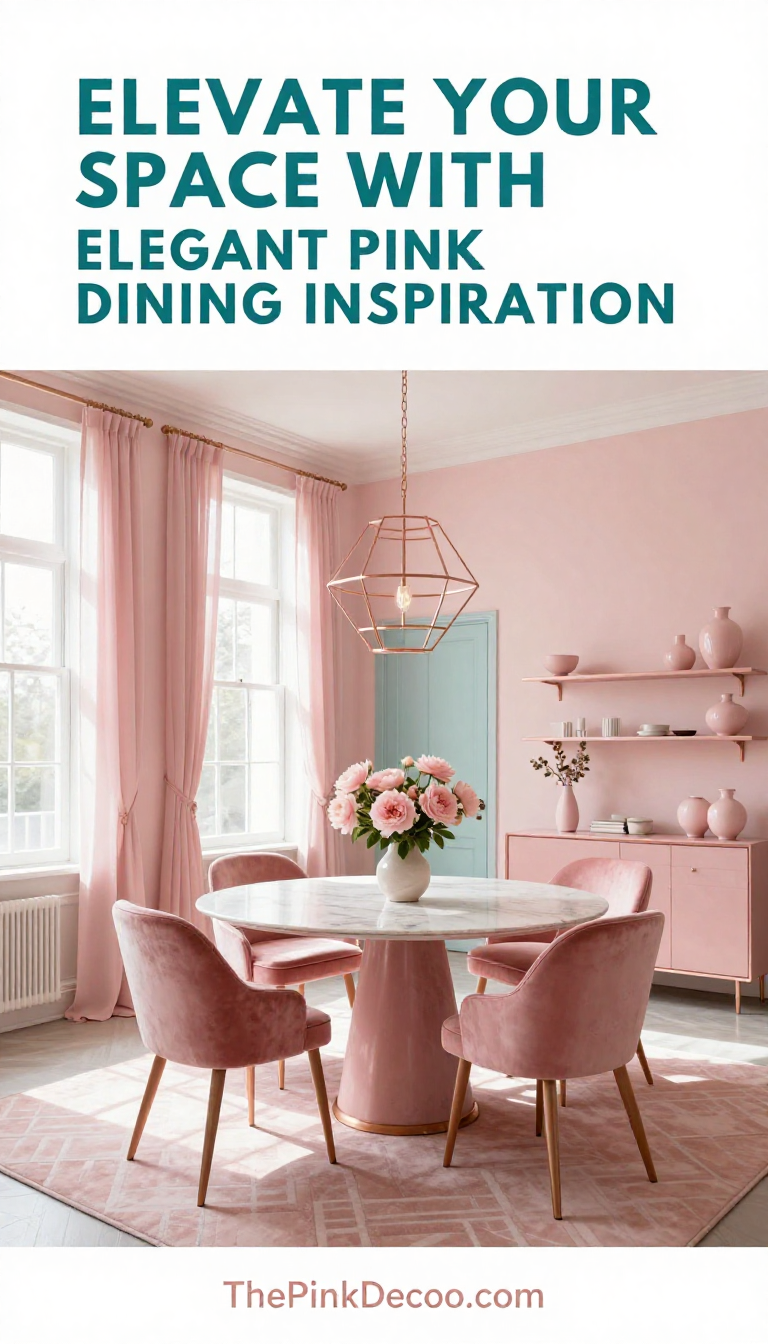
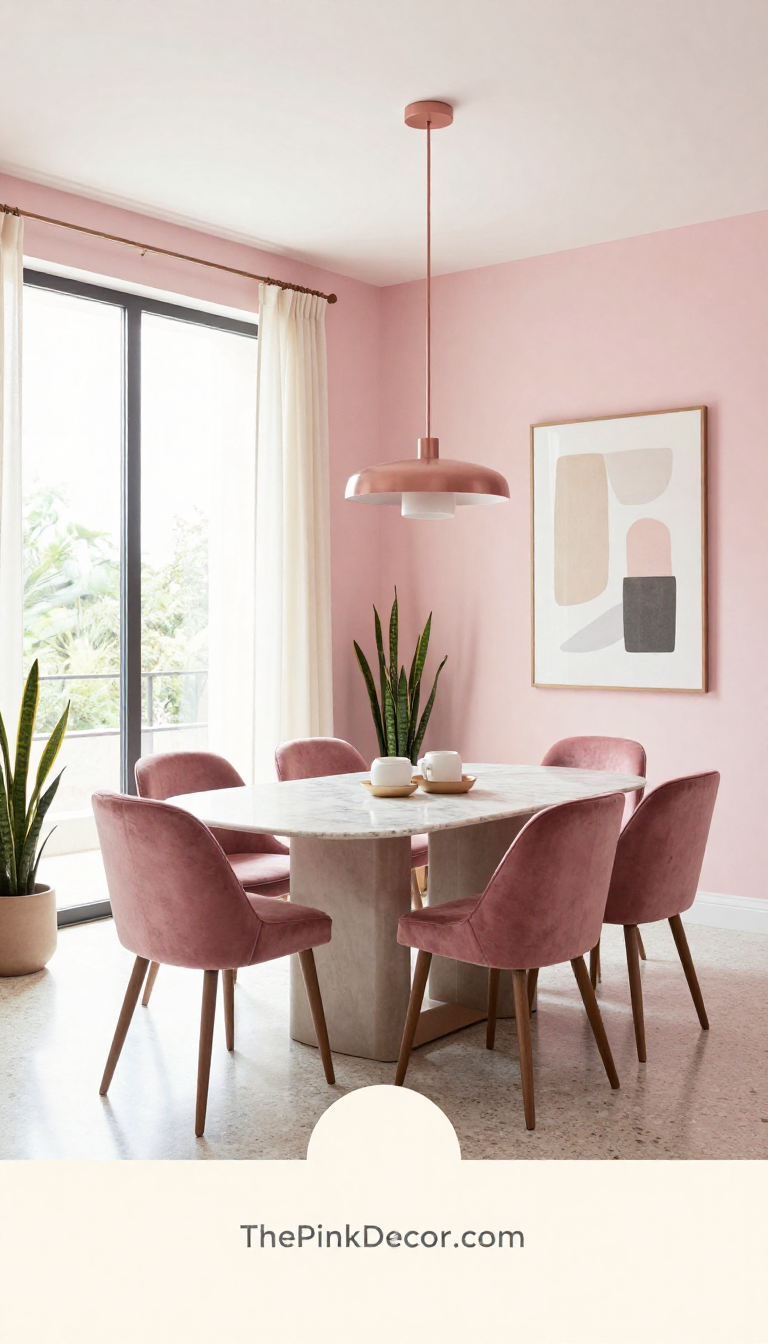
- Select Anchor Pieces – Start with largest investment pieces: dining table first, then storage furniture. For pink dining rooms, consider neutral table (wood, marble, glass) with pink chairs, or pink table with neutral chairs. Mid-century modern tulip tables pair beautifully with pink upholstered chairs, while traditional extension tables complement pink china cabinets.
- Add Complementary Colors – Choose 2-3 complementary colors using color wheel principles. Pink’s direct complement is green (varying from sage to emerald), creating natural harmony. Analogous colors include corals and mauves for monochromatic schemes. Apply 60-30-10 rule: 60% base (walls, large furniture), 30% secondary (upholstery, curtains), 10% accent (accessories, art).
- Layer Different Textures – Mix minimum three textures for visual interest. Combine smooth (glass tabletop), soft (velvet chair seats), and rough (natural fiber rug). Add dimension through material variations—pink lacquer buffet against matte pink walls, or pink ceramic vases on linen table runner. Texture prevents flatness in monochromatic pink dining rooms.
- Incorporate Metallic Accents – Choose primary metallic finish based on pink undertones: brass/gold with warm pinks, chrome/silver with cool pinks. Maintain 70-30 ratio (70% primary metal, 30% secondary). Apply through lighting fixtures (chandelier, sconces), hardware (cabinet pulls, drawer knobs), and decorative objects (trays, frames). Mix finishes intentionally rather than randomly.
- Style Final Details – Add accessories in odd numbers (3, 5, 7) with varied heights. Include functional decor like pink glassware, ceramic serving bowls, and textile napkins. Incorporate living plants for organic contrast—pink caladium leaves or flowering orchids. Create vignettes on buffet with stacked books, candle holders, and personal objects that tell your story.
💡 Expert Design Tips
PRO TIP: Professional designers recommend limiting pink to 30% of visible surfaces for sophisticated pink dining room style. Paint lower cabinets pink while keeping uppers white, or use pink on one accent wall behind buffet. Test paint samples for 7 days minimum—pink shifts dramatically from morning to evening light. In north-facing rooms, choose pinks with yellow undertones like Benjamin Moore ‘Pink Bliss’ OC-1 to counteract cool natural light. For small dining rooms, use pink on ceiling to create intimate, enveloping effect that doesn’t reduce perceived width.
🛍️ Where to Shop: Pink Dining Room Pieces
Budget-Friendly (Under $100)
IKEA offers pink dining chairs ($49-79) in INGOLF and ADDE collections, plus pink textiles ($9-29). Target’s Project 62 line includes pink dinnerware ($24-49 for 4-piece sets) and wall art ($34-69). Amazon provides affordable pink area rugs ($45-89) in various sizes and pink pendant lights ($55-99) with quick shipping.
Mid-Range ($100-$500)
West Elm features pink velvet dining chairs ($299-399 each) and marble-top pink accent tables ($349-499). CB2 offers modern pink bar carts ($299) and ceramic table lamps ($129-199). Pottery Barn’s pink linen curtains ($119-189 per panel) and dining benches ($399-599) provide quality craftsmanship with classic styling.
Luxury Investment ($500+)
Designer brands like Jonathan Adler offer custom pink dining tables ($1,200-3,500) with unique bases. Anthropologie’s pink statement chandeliers ($599-1,299) become room focal points. Custom upholstery through Interior Define allows personalized pink dining chairs ($650-900 each) in exact fabric and finish specifications.
🎨 Pink Dining Room Style Variations
Modern Minimalist
Clean lines, restrained pink application, and less-is-more philosophy define this style. Use pink as single accent wall with monochromatic artwork, paired with black dining chairs and natural wood table. Keep accessories minimal—single pink vase with branch arrangement, no patterned textiles.
Romantic Feminine
Layer pink textiles through velvet chair cushions, silk curtains, and embroidered table runners. Add vintage touches like crystal chandelier with pink shades and gilded mirror. Incorporate soft lighting through dimmable fixtures and candle arrangements for intimate dinner atmospheres.
Bold Contemporary
Embrace vibrant pink like Farrow & Ball ‘Pink Ground’ No. 202 on all walls with geometric black-and-white patterned rug. Use unexpected materials like pink concrete dining table or acrylic chairs. Create contrast through black window frames and industrial metal lighting fixtures.
Scandinavian Hygge
Combine pale pink walls with natural wood dining table, light oak chairs, and sheepskin seat pads. Focus on functional beauty through smart storage solutions and multifunctional furniture. Add cozy elements like pink wool throw blanket draped over bench and candle collection in pink glass holders.
🚫 4 Common Pink Design Mistakes to Avoid
- Overwhelming Pink Overload: Using pink on walls, furniture, flooring, and accessories creates visual fatigue rather than sophistication. Solution: Apply 30% rule—limit pink to one-third of surfaces. If walls are pink, choose neutral furniture and add pink through smaller accessories like artwork or table settings.
- Wrong Pink for Your Lighting: Choosing pink without considering natural light direction results in muddy or garish appearance. Solution: Test samples at different times. North-facing rooms need warm pinks (peach undertones), south-facing rooms handle cool pinks (blue undertones). East/west rooms require balanced pinks that adapt to changing light.
- Clashing Undertones: Mixing warm pink furniture with cool pink walls creates discord rather than harmony. Solution: Identify undertones before purchasing. Warm pinks contain yellow/peach; cool pinks contain blue/lavender. Stick to consistent undertone family throughout dining room design for cohesive look.
- Ignoring Room Architecture: Forcing modern pink furniture into traditional dining room with detailed moldings creates style conflict. Solution: Match pink application to existing architecture. Traditional rooms suit softer pinks on walls with classic furniture; modern rooms handle bolder pinks with cleaner lines.
❓ Frequently Asked Questions
Is pink too bold for a Dining Room?
Not at all—pink dining rooms can be sophisticated when implemented correctly. Start with pale blush pink on single accent wall or through upholstered chairs rather than full-room commitment. Balance pink with substantial neutral elements like wood table, natural fiber rug, and white ceiling. Many luxury restaurants use pink successfully for upscale yet inviting atmospheres.
What colors pair best with pink in interior design?
Green (sage, olive, emerald), navy blue, charcoal gray, warm white, gold, black, and natural wood tones complement pink beautifully. Green creates natural harmony as pink’s color wheel complement. Navy offers sophisticated contrast, while gold adds luxurious warmth. Choose based on desired mood—calming (pink+green), dramatic (pink+black), or elegant (pink+gold+marble).
How can I add pink without painting walls?
Five alternatives: 1) Pink dining chairs ($200-400 for set of 4), 2) Pink area rug ($150-300), 3) Pink curtains ($80-150 per panel), 4) Pink table runner with coordinating napkins ($40-80), 5) Pink artwork and decorative objects ($25-100 each). These elements provide pink presence while maintaining flexibility for future style changes.
Will pink decor go out of style?
Pink has remained relevant for centuries, evolving in tone and application rather than disappearing. Soft blush and millennial pink have shown particular longevity since 2016. To future-proof your pink dining room, choose timeless combinations (pink+white+wood) rather than trendy patterns, and invest in quality furniture that transcends specific shade popularity cycles.
What pink shade works in small Dining Rooms?
Light blush pink like Sherwin-Williams ‘Bashful’ SW 6305 works best, reflecting light to enhance spaciousness. Apply on ceiling to create intimate yet expansive feeling. If preferring darker pink, use only on lower half of walls with chair rail separation, keeping upper walls and ceiling white to maintain airy perception.
✨ Before & After: Real Transformation Examples
A typical 10’x12′ builder-beige dining room transformed with Benjamin Moore ‘Pink Bliss’ OC-1 on accent wall behind buffet. Previously contained dark wood table with mismatched chairs ($0 investment). After: Same table refinished white ($75 DIY), four pink velvet chairs ($396 total), pink-and-white geometric rug ($229), and gold chandelier ($189). Total transformation cost: $889 over three weekends, creating magazine-worthy pink dining room style.
Another example: 1970s dining room with orange-toned wood paneling and brown shag carpet. After removal of carpet ($200 professional), installation of laminate flooring ($800 DIY), painting paneling with Farrow & Ball ‘Pink Ground’ No. 202 ($240), and adding marble-top console table ($450). The pink dining room now features modern farmhouse style with pink walls, black Windsor chairs, and natural jute rug. Total: $1,690 over two weeks.
📸 How to Photograph Your Pink Dining Room
Capture pink’s true tones during golden hour (hour after sunrise or before sunset) when natural light is warmest and most flattering. Style dining table with layered place settings—charger plate, dinner plate, bowl, folded napkin with ring—and add height variation through candlesticks and floral arrangements.
Shoot from corner angles to show spatial relationships and layer depth. Include details like place card settings, menu displays, or decorative objects that tell story. Use hashtags: #pinkdiningroom, #diningroomdecor, #pinkhomedecor, #interiordesign, #homedecorideas when sharing on social media platforms.
Final Thoughts
Pink dining room style offers remarkable versatility for modern homes, blending psychological comfort with aesthetic sophistication. Whether you prefer subtle blush accents or bold fuchsia statements, these pink pink dining room style ideas and inspiration for modern homes provide actionable pathways to transform your space.
Remember that successful pink dining rooms balance color intensity with neutral grounding, complement architecture rather than fight it, and prioritize both beauty and functionality. For more inspiration, explore our complete Pink Dining Room Style collection featuring additional color combinations and furniture arrangements.
Your perfect pink dining room awaits—start with small steps like pink chair cushions or ceramic vase, then expand as confidence grows. The journey toward pink pink dining room style ideas and inspiration for modern homes begins with single decision to embrace color’s transformative power.
💬 Ready to transform your Dining Room? Share your pink decor journey in the comments below! For more inspiration, explore our complete Dining Room collection.