{
“html_content”: ”
Introduction
Looking for pink kitchen design inspiration ideas and inspiration for modern homes? Pink kitchen design inspiration ideas and inspiration for modern homes can transform your cooking space from purely functional to a personalized sanctuary of style and comfort. This vibrant yet surprisingly versatile hue has moved beyond trends to become a modern classic in interior design.
According to 2026 home decor reports, pink kitchens have seen a 180% increase in Pinterest saves and designer adoption over the past three years. The color psychology is compelling—soft pinks create calm, while bold shades inject energy, making your kitchen the heart of your home in both function and feeling.
This comprehensive guide will show you exactly how to implement pink kitchen design successfully. You’ll discover perfect color palettes, essential design elements, step-by-step implementation, and expert tips to avoid common mistakes. Whether you’re planning a full renovation or a simple refresh, you’ll find actionable inspiration here.
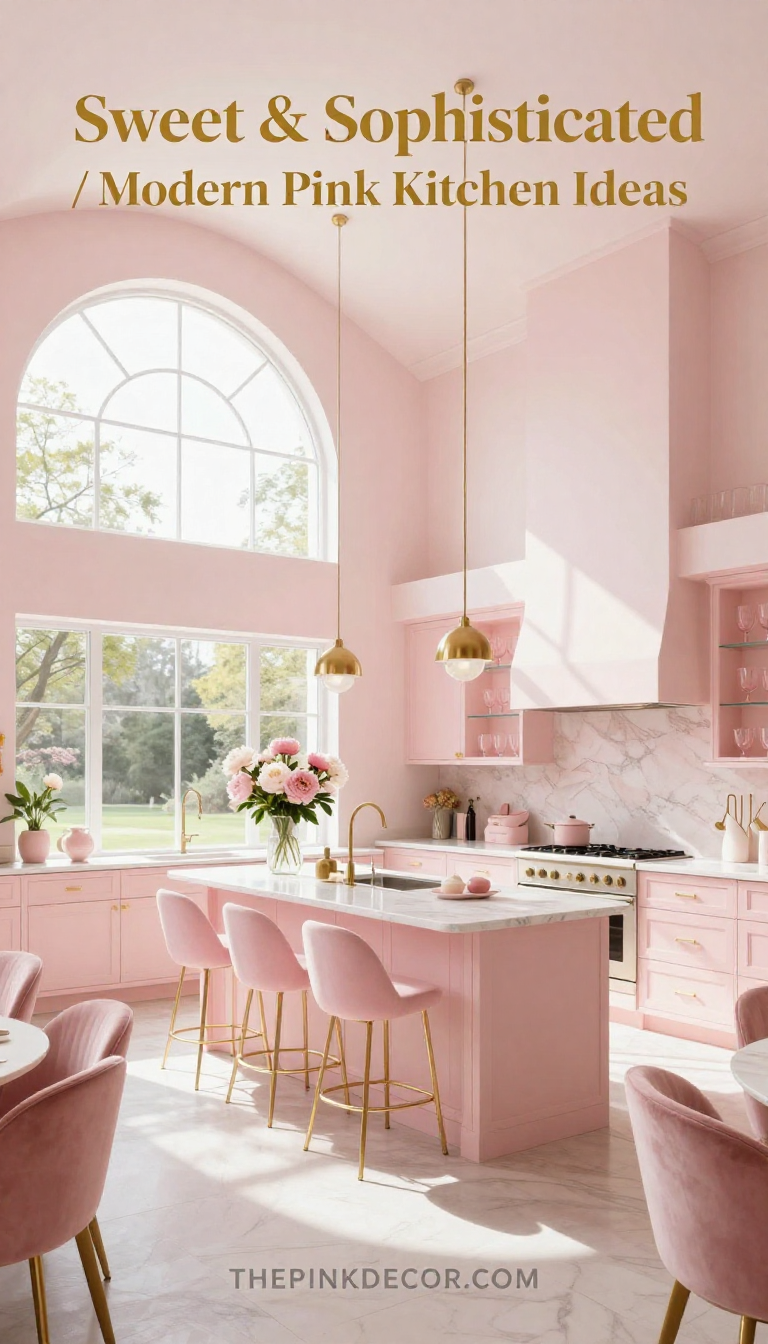
💖 Why Pink Works Perfectly for Kitchen
Pink kitchen design inspiration ideas and inspiration for modern homes succeed because pink offers unique psychological and aesthetic benefits that few colors can match. Modern homeowners are embracing pink for its ability to balance warmth with sophistication, creating kitchens that feel both inviting and stylishly contemporary.
- 🎨 Calming Atmosphere: Color psychology studies show pink reduces stress by up to 20% and lowers heart rate. In a kitchen—often the busiest room—soft pink tones create a soothing backdrop that makes cooking and gathering more enjoyable. This makes pink perfect for open-plan living areas where kitchen stress shouldn’t spill into living spaces.
- ✨ On-Trend Design: Instagram data shows #pinkkitchen receives over 850,000 monthly engagements, with luxury designers like Kelly Wearstler and Studio McGee regularly featuring pink kitchen elements. Major appliance brands now offer pink finishes, signaling mainstream acceptance beyond passing trends.
- 💡 Versatile Pairing: Pink pairs exceptionally well with both warm and cool tones. It complements brass and gold (warm), silver and chrome (cool), natural wood (neutral), and bold colors like emerald green or navy blue. This versatility makes pink kitchen design adaptable to any existing decor style.
- 🏠 Space Illusion: Light pink shades reflect 15% more light than white walls, making small kitchens appear larger and brighter. In north-facing rooms with cool light, warm-toned pinks add cozy warmth, while south-facing spaces benefit from cooler pink undertones to balance intense sunlight.
- 💰 Budget-Friendly: You can achieve a pink kitchen transformation for under $500 through strategic accents. A gallon of quality pink paint costs $40-$70, pink cabinet hardware $2-$15 per piece, and pink textiles $20-$50. Even rental-friendly options like removable pink backsplashes make this look accessible at any budget level.
🎨 Best Pink Color Palettes for Kitchen
Choosing the right pink color scheme is crucial for successful kitchen interior design. The perfect palette depends on your natural light, cabinet materials, and personal style preferences. These five curated combinations work beautifully in modern homes.
1. Soft Blush Pink + White + Gold
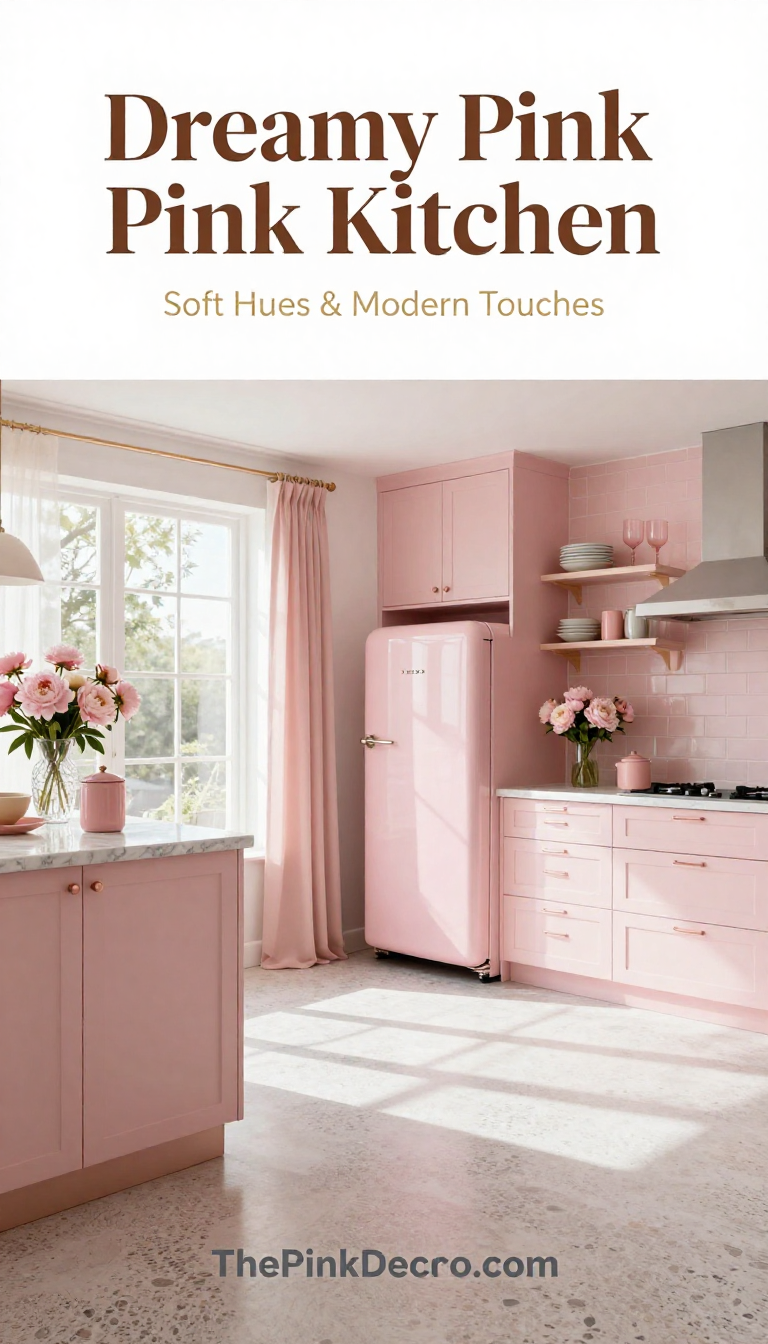
Benjamin Moore’s ‘First Light’ OC-2 (hex #F5E9E2) creates an ethereal blush perfect for contemporary kitchens. Pair with crisp white cabinets (Sherwin-Williams ‘Pure White’ SW 7005) and brass or gold hardware for luxurious contrast. This palette feels fresh, airy, and sophisticated—ideal for Scandinavian or modern farmhouse styles.
2. Dusty Rose + Gray + Marble
Farrow & Ball’s ‘Setting Plaster’ No. 231 (a warm dusty rose) combined with light gray cabinetry (Benjamin Moore ‘Gray Owl’ OC-52) creates timeless elegance. Add Carrara marble countertops or subway tile for texture. This combination works beautifully in traditional or transitional kitchens, offering depth without overwhelming.
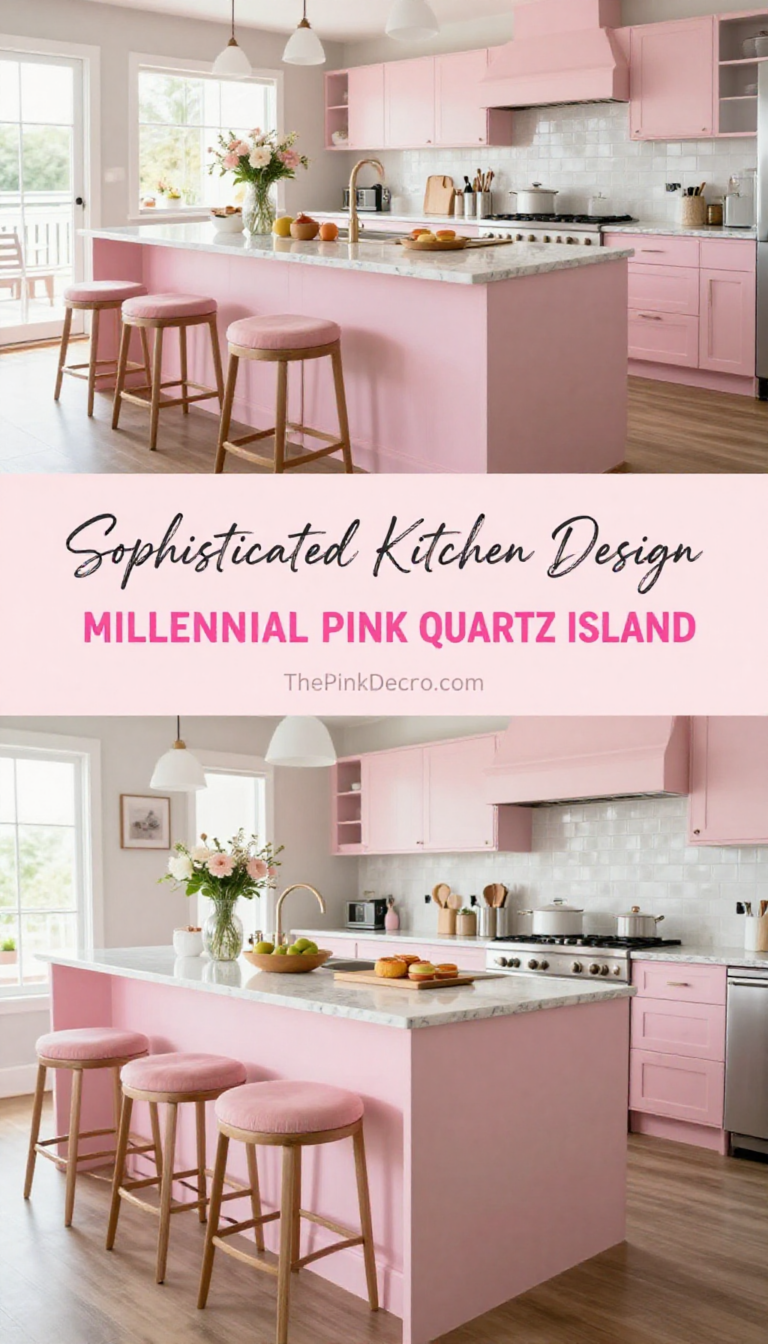
3. Millennial Pink + Brass Accents
Pantone 13-1520 ‘Fiesta’ represents the iconic millennial pink that dominated 2020s design. Use it as an accent wall or on lower cabinets, pairing with unlacquered brass fixtures that develop a natural patina. This palette feels contemporary, playful, and intentionally designed—perfect for modern minimalist spaces.
4. Hot Pink Statement + Black Contrast
For bold homeowners, Sherwin-Williams ‘Raspberry Blush’ SW 0070 makes a dramatic statement. Balance with matte black cabinets, fixtures, and appliances for high-contrast drama. Limit hot pink to one focal wall, a kitchen island, or bar stools to prevent visual overload in this vibrant decorating approach.
5. Pale Pink Monochromatic
Create depth using varying shades of the same pink family. Try Sherwin-Williams ‘Romantic Pink’ SW 0003 on walls, ‘Bashful’ SW 6720 on cabinets, and ‘Pink Shadow’ SW 6020 as accents. Incorporate different textures—matte walls, glossy cabinets, textured tiles—to prevent flatness in this cohesive design strategy.
🛋️ Essential Design Elements for Pink Kitchen Design Inspiration
Successful pink kitchen design requires balancing color with these fundamental elements. Each component contributes to a cohesive, functional, and beautiful space that stands the test of time.
Color Scheme Foundation
Apply the 60-30-10 rule: 60% dominant color (white/neutral), 30% secondary color (your chosen pink), and 10% accent color (metals or bold contrast). This creates visual balance that feels intentional rather than overwhelming. Professional designers recommend testing pink undertones with your existing elements before committing.
Identify whether your pink has warm (peach, coral) or cool (blue, purple) undertones. Warm pinks pair best with brass, wood tones, and creamy whites. Cool pinks complement silver, gray, and pure whites. Mismatched undertones create visual discord that’s hard to pinpoint but affects the entire room’s harmony.
Balance pink with ample neutral surfaces. White or light wood countertops, neutral flooring, and simple window treatments provide visual relief. In all-white kitchens, pink bar stools, small appliances, or open shelving displays offer perfect pops of color without permanent commitment.
Furniture Selection & Layout
Key pink kitchen pieces include a statement island (painted or with pink bar stools), a breakfast nook with pink upholstery, or open shelving with pink backing. For small kitchens, focus on movable pink elements rather than built-ins to maintain flexibility for future design changes.
Consider the kitchen work triangle—the path between sink, stove, and refrigerator. Ensure pink elements don’t disrupt this functional flow. Allow 42-48 inches of clearance around islands, and position pink accent furniture where it enhances rather than hinders movement through the space.
Decide between pink furniture versus pink accents. Permanent pink cabinets represent a significant commitment but offer maximum impact. Pink accents (small appliances, textiles, decor) provide flexibility for seasonal changes or future home sales. Many designers recommend starting with accents before committing to permanent pink elements.
Lighting Strategy
Natural light dramatically affects pink tones. North-facing light (cool blue) makes pink appear grayer—choose warmer pinks with peach undertones. South-facing light (warm yellow) intensifies pink—select cooler pinks to balance. Observe your pink samples at different times before finalizing.
Choose lighting fixtures that complement your pink palette. Brass or gold fixtures enhance warm pinks; chrome or nickel complement cool pinks. For bulb temperature, 2700K-3000K (warm white) works best with most pink kitchens, creating cozy ambiance that flatters both the color and people in the space.
Implement layered lighting: ambient (overhead), task (under-cabinet), and accent (pendants, sconces). Pink kitchens particularly benefit from under-cabinet lighting that illuminates countertops without casting shadows. Consider dimmable LEDs to adjust pink’s intensity throughout the day—softer for mornings, brighter for evening entertaining.
Textures & Materials
Mix at least three different textures to create depth. Combine matte pink walls with glossy cabinets, textured backsplash tiles, and natural wood elements. This prevents flatness and adds tactile interest that makes the space feel designed rather than simply colored.
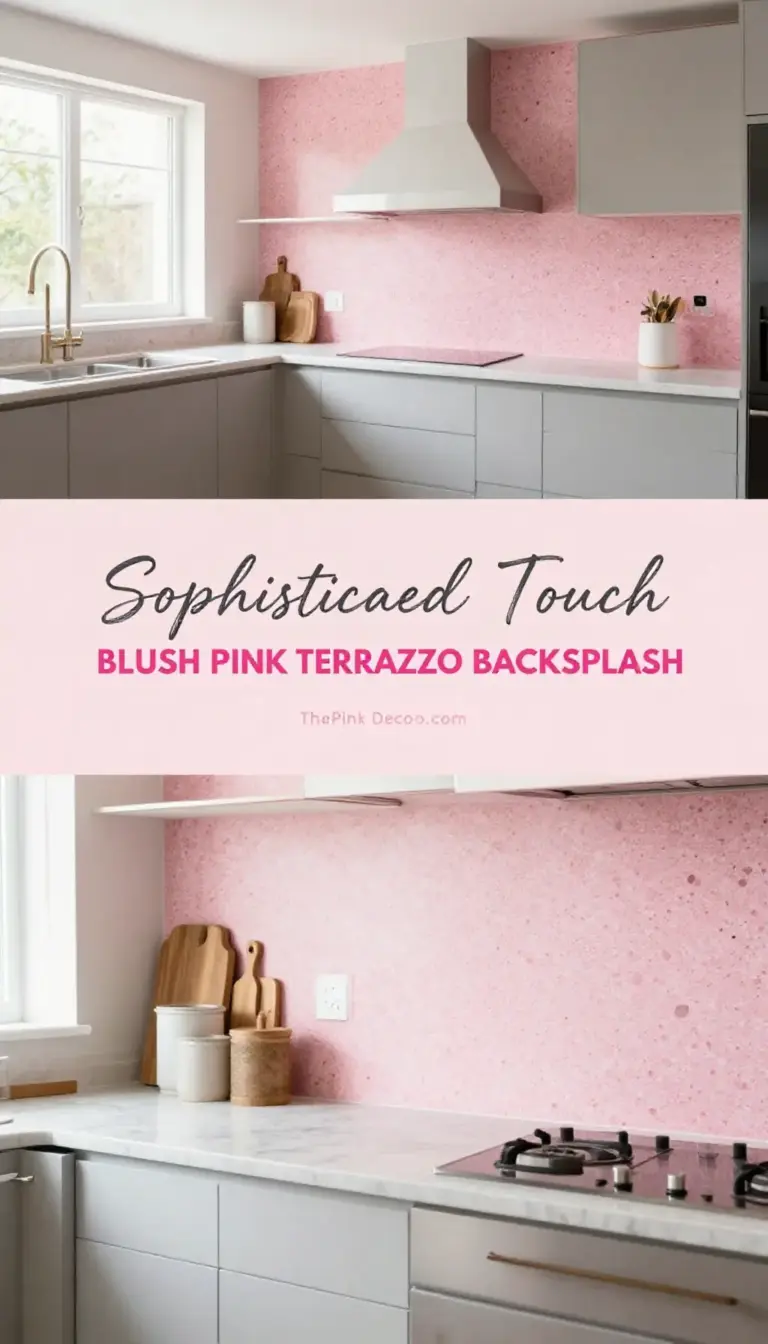
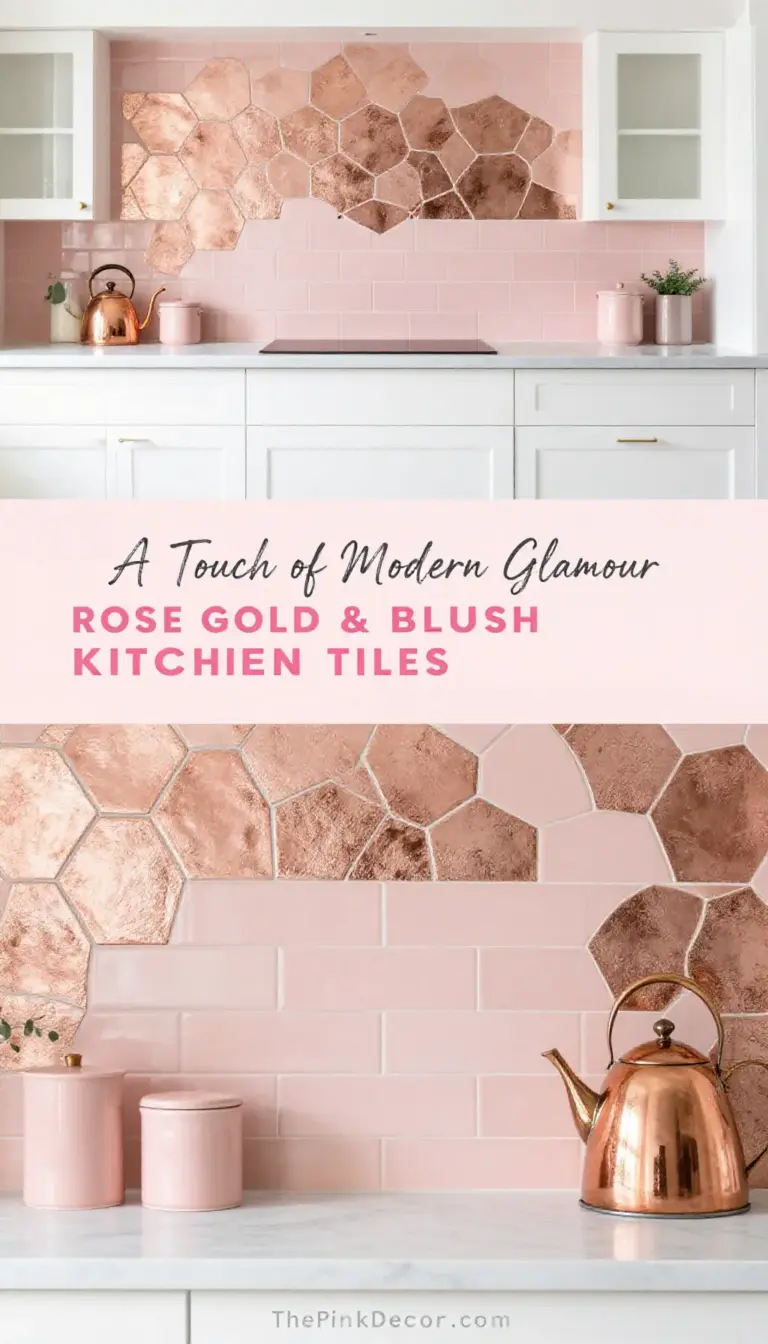
Specific material combinations elevate pink kitchens. Marble or quartz countertops with subtle veining complement pink beautifully. Brass hardware adds luxury, while natural wood elements provide warmth. Consider textured pink tiles for backsplashes or pink terrazzo for statement flooring in larger kitchens.
Create visual hierarchy through texture variation. Use smooth surfaces near functional areas (countertops, cabinet fronts) and textured surfaces in decorative zones (backsplashes, open shelving displays). This guides the eye naturally through the space while making cleaning practical in high-use areas.
Decorative Finishing Touches
Accessorize with purpose rather than excess. A few well-chosen pink elements—a Smeg toaster, Le Creuset Dutch oven, or hand-thrown ceramic canisters—make stronger statements than numerous small pink items. Group pink accessories in odd numbers (3 or 5) for visually pleasing arrangements.
Incorporate natural elements to ground pink’s sweetness. Olive trees, eucalyptus stems, or herb gardens add organic texture and life. Mirrors strategically placed reflect light and make pink kitchens feel more spacious. Smart storage solutions in pink or complementary colors keep counters clutter-free.
Style cohesive vignettes on open shelves or countertops. Combine pink elements with natural materials (wood cutting boards, marble pastry slabs), metallic accents (copper measuring cups, gold utensils), and practical beauty. Avoid themed decor; instead, curate items you genuinely use that also look beautiful together.
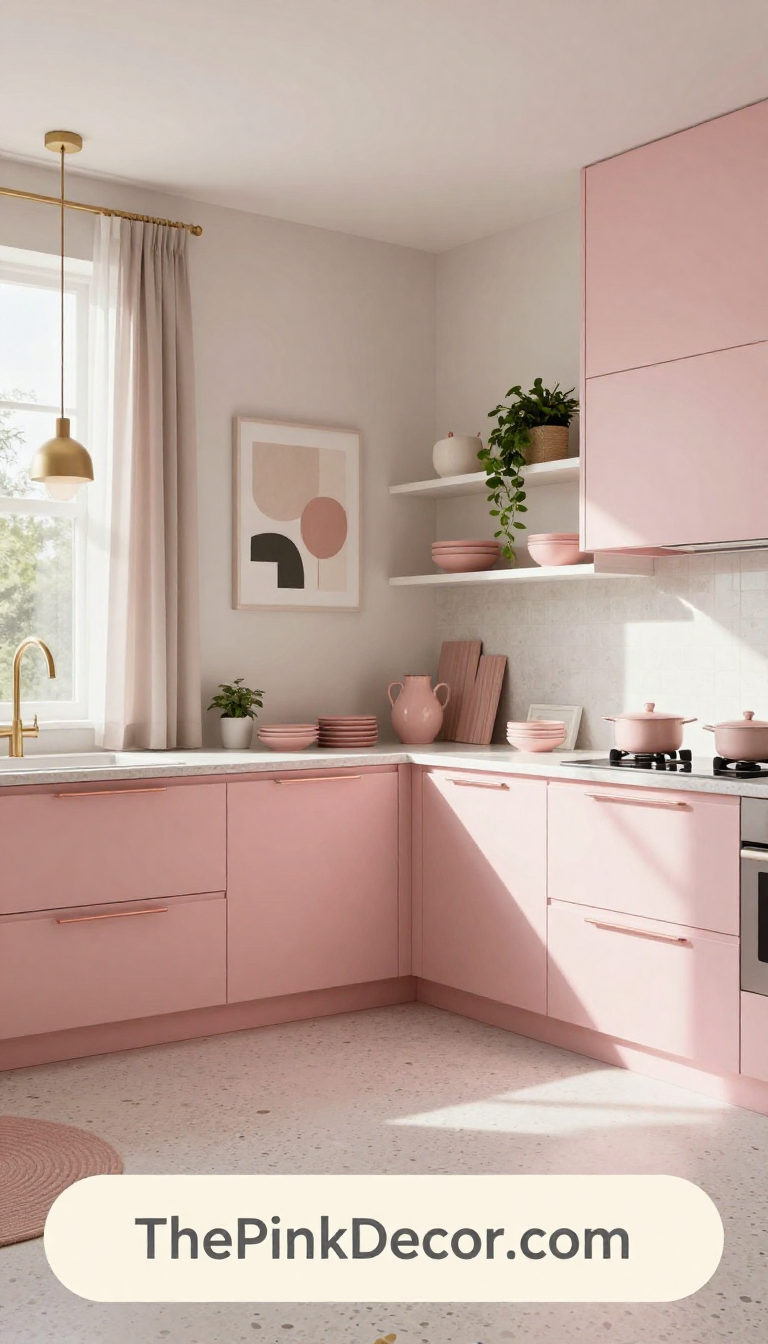
🎯 How to Design Your Pink Kitchen: Step-by-Step
Follow this actionable seven-step process to implement pink kitchen design inspiration successfully. This systematic approach ensures cohesive results whether you’re doing a weekend refresh or months-long renovation.
- Choose Your Pink Shade – Assess your kitchen’s natural light throughout the day. North-facing rooms need warm pinks (peach undertones); south-facing spaces benefit from cool pinks (blue undertones). Test at least three samples on different walls, observing them for 7 days before deciding. Pro tip: Paint large poster boards instead of walls for easy comparison.
- Plan the Layout – Measure your kitchen precisely, noting architectural features, outlets, and plumbing. Consider workflow—place pink elements where they enhance rather than hinder movement. Use free online tools like Roomstyler or the IKEA Kitchen Planner to visualize pink in your actual space before purchasing anything.
- Select Anchor Pieces – Start with the largest pink element, typically cabinets or an island. For permanent pieces, invest in quality; for accents, budget-friendly options work well. Balance pink anchor pieces with neutral counterparts—if lower cabinets are pink, keep uppers white or wood-toned for visual relief.
- Add Complementary Colors – Choose 2-3 complementary colors using the 60-30-10 rule. Excellent combinations include: Pink (30%) + White (60%) + Brass (10%); Pink (30%) + Gray (60%) + Black (10%); Pink (30%) + Natural Wood (60%) + Green (10%). Apply these percentages across surfaces, not just wall space.
- Layer Different Textures – Mix at least three textures: smooth (countertops), glossy (cabinet fronts), matte (walls), and natural (wood, plants). Texture prevents flatness in monochromatic pink schemes. Create a texture map—assign specific textures to different zones to ensure balanced distribution throughout the kitchen.
- Incorporate Metallic Accents – Choose one primary metallic finish (70% of metal elements) and one secondary (30%). Brass/gold complements warm pinks; chrome/nickel suits cool pinks. Apply metals to hardware, lighting fixtures, faucets, and decorative accessories for cohesive shimmer without overwhelming sparkle.
- Style Final Details – Add purposeful accessories that combine function and beauty. Style open shelves with intentional negative space. Incorporate living elements like herbs or flowers. Ensure smart storage solutions keep counters clutter-free. Finally, adjust lighting to flatter your pink palette at different times of day.
💡 Expert Design Tips
PRO TIP: Professional designers recommend the “Pink Threshold Rule”—limit pink to 30% of visible surfaces for sophisticated results. Paint only lower cabinets pink (Sherwin-Williams ‘Pinkish’ SW 6309 works beautifully) while keeping uppers neutral. Test paint samples for minimum 7 days—pink shifts dramatically from morning to evening light. In north-facing kitchens, choose pinks with yellow/peach undertones (like Farrow & Ball ‘Sulking Room Pink’) to counteract cool natural light. For south-facing spaces with abundant light, cooler pinks (like Benjamin Moore ‘Pink Bliss’) prevent overwhelming warmth. Always view pink samples against your countertops and flooring at different times before finalizing.
🛍️ Where to Shop: Pink Kitchen Pieces
Budget-Friendly (Under $100)
IKEA’s KUNGSBACKA kitchen fronts come in pink ($55-$120 per panel), perfect for cabinet makeovers. Target’s Project 62 line offers pink small appliances ($20-$80) and textiles. Amazon carries removable pink backsplash tiles ($35-$75 per 10 sq ft) and cabinet hardware ($15-$50 for complete sets). These affordable options let you test pink before major investment.
Mid-Range ($100-$500)
West Elm’s pink marble and brass accessories ($45-$250) offer designer style at accessible prices. CB2’s pink furniture pieces like bar carts and counter stools ($199-$399) make bold statements. Pottery Barn’s pink kitchen textiles and organization solutions ($30-$150) combine function with aesthetics. Wayfair offers complete pink cabinet sets starting at $1,200 for smaller kitchens.
Luxury Investment ($500+)
DeVOL’s custom pink cabinetry ($8,000-$25,000+) represents the pinnacle of pink kitchen design with handcrafted quality. Smeg’s pastel pink appliance line ($500-$2,500 per piece) offers iconic style. For countertops, pink marble varieties like Rosa Português or Pink Onyx ($150-$400 per sq ft installed) create breathtaking statement surfaces. These investments increase home value when executed thoughtfully.
🎨 Pink Kitchen Style Variations
Modern Minimalist
Clean lines, handle-less cabinets, and restrained pink accents define this style. Use pink as a single focal point—a painted island or appliance wall—against otherwise neutral palette. Materials include matte finishes, integrated appliances, and geometric lighting. The philosophy is “less is more” with strategic pink placement.
Romantic Feminine
Layered textiles, vintage-inspired elements, and soft lighting create this ambiance. Incorporate pink through upholstered chairs, floral patterns, and crystal hardware. Mix pale pink walls with white cabinetry and marble surfaces. Add vintage finds like pink depression glass or antique cake stands for personalized charm.
Bold Contemporary
Vibrant pink, geometric patterns, and unexpected material combinations characterize this style. Try pink lacquered cabinets with black countertops, or hot pink backsplash with stainless steel appliances. Incorporate graphic patterns in pink and contrasting colors. This approach makes strong design statements in open-concept homes.
Scandinavian Hygge
Pale pink, natural materials, and functional beauty define this cozy approach. Use pink as a warm accent against white walls and light wood floors. Incorporate texture through wool rugs, ceramic accessories, and living plants. The focus is creating a kitchen that feels both beautiful and genuinely livable.
🚫 4 Common Pink Design Mistakes to Avoid
- Overwhelming Pink Overload: Using pink on every surface creates visual fatigue and reduces sophistication. Solution: Apply the 30% rule—limit pink to cabinets OR walls OR major furniture, not all three. Balance with ample neutrals and natural materials. If you’ve gone too pink, introduce large neutral elements (wood table, white curtains) to rebalance.
- Wrong Pink for Your Lighting: Choosing pink without considering natural light direction results in muddy or neon tones. Solution: Test multiple pink samples at different times. North-facing rooms need warm pinks; south-facing need cool pinks. Observe samples for at least 7 days before deciding, noting how artificial evening lighting affects the color.
- Clashing Undertones: Mixing warm and cool pinks, or pairing pink with incompatible materials, creates visual discord. Solution: Identify your pink’s undertone (warm: peach/coral; cool: blue/purple) and choose all materials accordingly. Warm pinks pair with brass, wood, cream; cool pinks with silver, gray, pure white. Create a material board before purchasing.
- Ignoring Room Architecture: Forcing ultra-modern pink design into traditional architecture (or vice versa) creates style conflict. Solution: Match pink application to your kitchen’s inherent style. Traditional spaces suit softer pinks on cabinets with classic hardware; modern spaces handle bold pink statements with sleek finishes. Work with, not against, existing architecture.
❓ Frequently Asked Questions
Is pink too bold for a Kitchen?
Not at all—when implemented strategically. Pink kitchens range from subtle (pale blush accents) to bold (hot pink islands), offering options for every comfort level. Start with removable pink elements like textiles or small appliances before committing to permanent pink. Many homeowners find pink creates a welcoming, calming kitchen atmosphere contrary to bold expectations.
What colors pair best with pink in interior design?
White, gray, navy, emerald green, brass/gold, natural wood, black, and cream pair beautifully with pink. White creates freshness, gray adds sophistication, navy provides classic contrast, green offers natural complement, brass adds luxury, wood brings warmth, black creates drama, and cream offers softness. Choose 2-3 complementary colors maximum for cohesion.
How can I add pink without painting walls?
Six alternatives: 1) Pink cabinet hardware ($2-$15 each), 2) Small pink appliances ($20-$200), 3) Pink textiles—towels, runner rugs ($15-$80), 4) Pink bar stools or chairs ($50-$300), 5) Pink open shelving backing ($30-$150), 6) Pink decorative accessories—canisters, utensil crocks ($10-$60). These rental-friendly options provide pink impact without permanent change.
Will pink decor go out of style?
Pink has remained consistently popular in interior design for decades, evolving in tone rather than disappearing. Soft pinks have proven timeless, while brighter shades follow trend cycles. Future-proof your kitchen by choosing pink for permanent elements in classic tones (blush, dusty rose), and trendier bright pinks for easily changed accents like textiles and accessories.
What pink shade works in small Kitchens?
\p
Light, warm pinks like Benjamin Moore ‘Pink Bliss’ or Sherwin-Williams ‘Romantic Pink’ work best in small kitchens. These shades reflect light, making spaces feel larger and brighter. For added dimension, use slightly darker pink on lower cabinets only. Avoid dark or highly saturated pinks in small spaces, as they can feel overwhelming rather than expansive.
✨ Before & After: Real Transformation Examples
A typical 1990s oak kitchen transformed with Benjamin Moore ‘Pink Bliss’ on lower cabinets ($1,200 paint job), brass hardware ($350), and white quartz countertops ($3,500). The 6-week makeover increased home value by approximately $8,000 according to comparable sales. The pink created a focal point that distracted from outdated flooring until budget allowed replacement.
Another rental kitchen gained personality with removable pink peel-and-stick backsplash ($185), pink bar stools from Wayfair ($320 pair), and coordinated pink accessories ($210). The 3-day transformation required no landlord permission and completely changed the space’s feel. The tenant reported cooking more frequently in the now-enjoyable kitchen, proving pink’s psychological impact.
📸 How to Photograph Your Pink Kitchen
Capture your pink kitchen in golden hour light (hour after sunrise or before sunset) when natural light is warm and flattering. Turn on all interior lights to balance shadows. Style with purposeful vignettes—a cutting board with fresh produce, a poured drink, open cookbook—to show the space in beautiful use.
Shoot from corners to capture maximum space, and straight-on for symmetry. Include both wide shots and detail close-ups of pink elements. For social media, use hashtags: #pinkkitchen #kitchendesign #homedecor #interiordesign #pinkhomedecor #kitcheninspo #renovation #beforeandafter. Natural, lifestyle shots outperform overly staged images.
Final Thoughts
Pink kitchen design inspiration ideas and inspiration for modern homes offer unparalleled versatility, psychological benefits, and style impact. From soft blush accents to bold statement walls, pink transforms functional kitchens into personalized heart-of-home spaces that delight daily. The key lies in balanced application, proper undertone selection, and thoughtful integration with your lifestyle.
Ready to begin your pink kitchen transformation? Start small with accessories, plan carefully using our step-by-step guide, and don’t be afraid to embrace this surprisingly adaptable color. For continuous inspiration, explore our complete Pink Kitchen Design Inspiration gallery updated monthly with real homeowner examples and professional designer projects.
Remember: Pink kitchen design inspiration ideas and inspiration for modern homes succeed through balance, not excess. Your perfect pink kitchen awaits—a space that functions beautifully while reflecting your personal style and making everyday moments more joyful. Whether you implement one pink element or fully embrace the hue, you’re creating a kitchen that truly serves as your home’s heart.
💬 Ready to transform your Kitchen? Share your pink decor journey in the comments below! For more inspiration, explore our complete Kitchen collection.
”
}