Introduction
Looking for the perfect pink bathroom decor ideas and inspiration for your modern home? You’ve come to the right place. Pink bathroom decor is no longer a relic of the 1950s; it’s a sophisticated, versatile color that can transform your bathroom into a spa-like sanctuary. This guide will provide you with modern pink bathroom decor ideas and inspiration for modern homes, featuring a range of styles from millennial pink to bold fuchsia. We’ll cover everything from choosing the right shade to the finishing touches that pull the entire look together. Whether you’re planning a full renovation or just want a quick, stylish refresh, these pink bathroom ideas will inspire your next project and help you create a space that is both beautiful and functional.
Pink has made a powerful comeback in interior design, and for good reason. It’s a color that promotes feelings of warmth, comfort, and serenity—qualities that are perfect for a bathroom, which should be a personal haven. According to color psychology, pink can have a calming effect, reducing feelings of anxiety and creating a space that feels both inviting and rejuvenating. This makes it an excellent choice for a bathroom, a space meant for relaxation and self-care.
In this guide, you’ll discover how to use pink bathroom decor ideas and inspiration for modern homes effectively. We’ll explore color palettes, material choices, lighting, and layout strategies to create a cohesive and stunning pink bathroom. From soft blush to vibrant magenta, we’ll show you how to use pink in a way that feels fresh, modern, and perfectly suited to your home.
💖 Why Pink Works Perfectly for Bathrooms
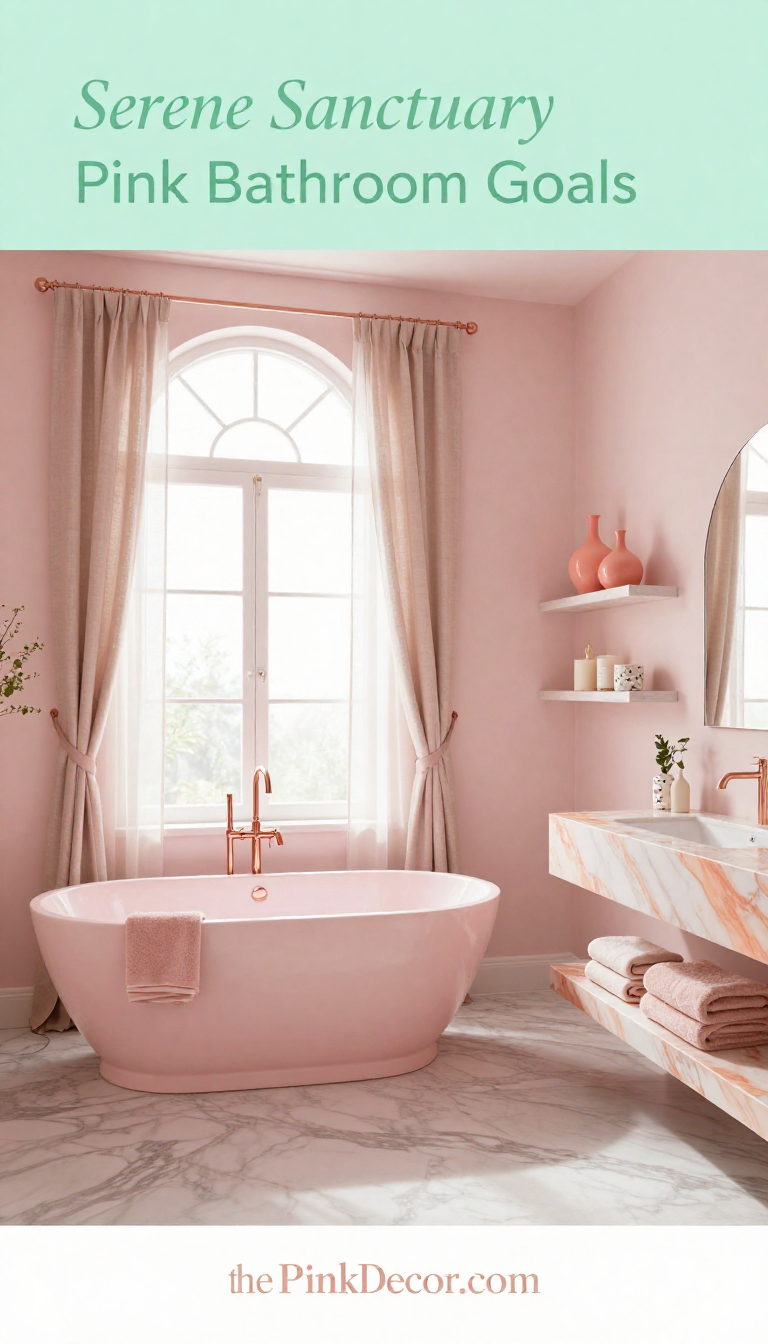
Pink is a versatile and psychologically impactful color that works surprisingly well in modern bathroom design. Far from being a cliché, the right shade of pink can create a space that feels both luxurious and tranquil. Let’s explore why pink is the perfect choice for your next bathroom makeover.
- 🎨 Calming Atmosphere: Pink is known for its soothing properties. Color psychology suggests pink can reduce stress and promote a sense of calm. In a bathroom, this is particularly beneficial. Studies on color psychology indicate that certain shades of pink can lower heart rate and create a spa-like atmosphere, turning your bathroom into a true retreat for relaxation.
- ✨ On-Trend Design: Pink has seen a major resurgence, moving from traditional pastels to a spectrum of shades like terracotta pinks and vibrant magentas. It’s a staple in modern design, often featured in high-end hotels and luxury spas. The trend is strong, with interior designers frequently using pink to add a touch of softness and sophistication to contemporary spaces.
- 💡 Versatile Pairing: Pink is a surprisingly flexible color. It pairs beautifully with a wide range of colors, from classic white and gray for a clean, modern look, to bolder combinations with navy, hunter green, or even black. This versatility makes it easy to create a look that’s uniquely yours, whether you prefer minimalist, modern, or vintage styles.
- 🏠 Space Enhancement: Lighter shades of pink can make a small bathroom feel larger and more open. Pink reflects light well, especially when paired with high-gloss tiles or reflective surfaces, creating a brighter, more open feeling in what is often a smaller space. It’s a smart design trick for making a small bathroom feel more spacious.
- 💰 Budget-Friendly Refresh: You don’t need a full renovation to introduce pink. A fresh coat of paint on the walls, new accessories like towels and art, or even a statement pink vanity can transform the space without a complete overhaul. This makes pink a cost-effective choice for a bathroom refresh.
🎨 Best Pink Color Palettes for Your Bathroom
Choosing the right shade of pink and its complementary colors is crucial. The right palette sets the entire mood of your bathroom, from serene and spa-like to bold and dramatic.
1. Soft Blush Pink + White + Gold
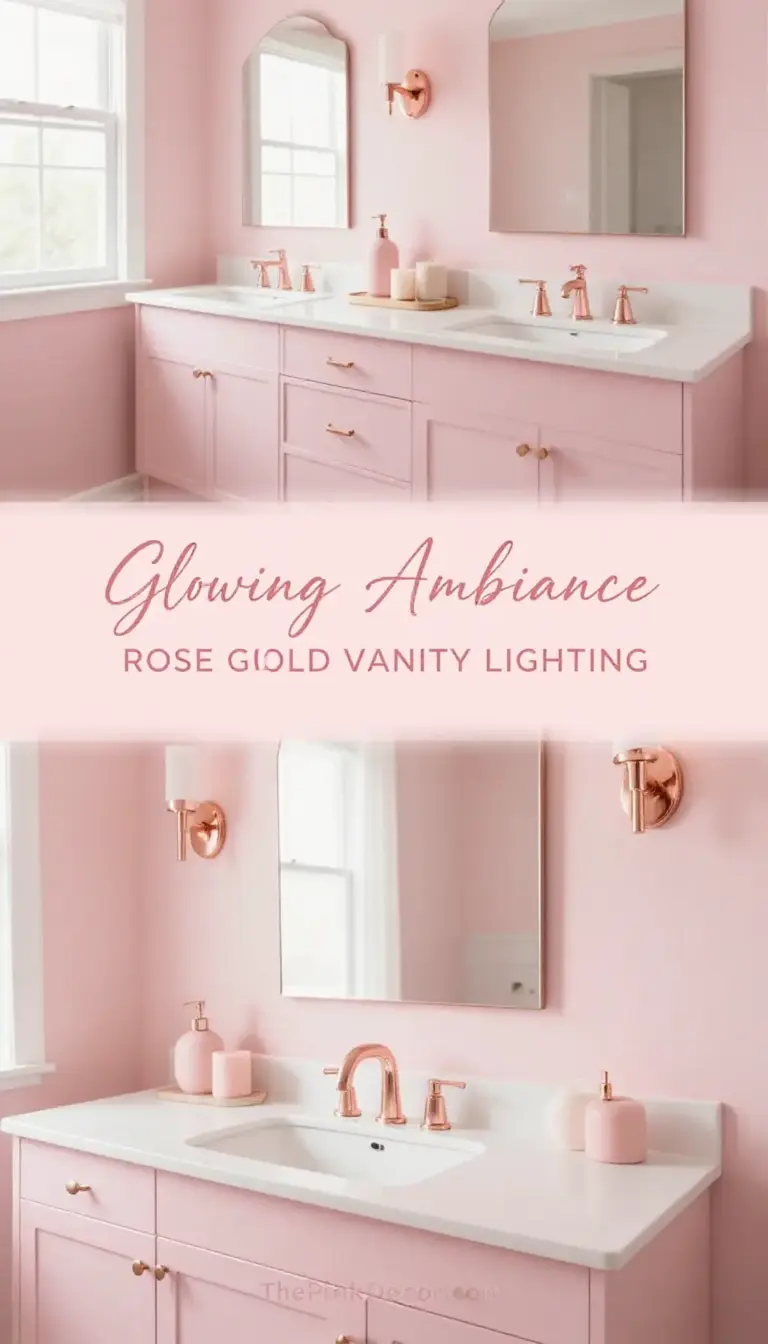
A soft blush pink paired with crisp white creates a clean, airy, and sophisticated look. This palette is perfect for small bathrooms, as it makes the space feel larger and more open. Gold or brass accents in fixtures and hardware add a touch of luxury. Try a matte black finish for a modern contrast. Pro tip: Use Benjamin Moore’s “First Light” (OC-2) for a soft, warm pink that works with almost any style.
2. Dusty Rose + Gray + Marble
For a more mature, sophisticated feel, pair a dusty rose with cool grays and marble accents. This combination is timeless and works exceptionally well with natural materials like wood and stone. The gray grounds the pink, preventing it from feeling too sweet, while marble adds a touch of timeless elegance.
3. Millennial Pink + Brass Accents
Millennial pink, a desaturated, muted pink, is a modern classic. Pair it with warm brass or rose gold fixtures for a look that’s contemporary and chic. This palette is less overtly feminine and works beautifully in gender-neutral or shared spaces, offering a warm, inviting, and modern feel.
4. Hot Pink + Black Contrast
For the bold at heart, a hot pink and black combination makes a dramatic statement. Use black in your fixtures, hardware, or as a feature wall to ground the vibrant pink. This creates a high-contrast, modern, and energetic vibe, perfect for a powder room that needs a dose of personality.
5. Pale Pink Monochromatic
Create a serene, spa-like atmosphere by layering different tones and textures of a single pink hue. Think pale pink walls, a slightly darker pink vanity, and terry towels in a similar hue. This approach creates depth and interest while maintaining a calm, cohesive, and very chic look.
🛋️ Essential Design Elements for a Pink Bathroom
Creating a cohesive pink bathroom is more than just a coat of paint. It’s about layering textures, materials, and strategic accents to create a balanced and functional space.
Color Scheme Foundation
Start with the 60-30-10 rule for a balanced color palette: 60% of the room (walls, large tiles) in your dominant color (pink), 30% in a secondary color (like white, gray, or a neutral), and 10% in an accent color. For pink, this might mean blush walls (60%), white tiles and fixtures (30%), and black or brass fixtures (10%). Remember to consider undertones. Cool-toned pinks (with blue or purple bases) pair with cool grays and silvers, while warm pinks (with peach or coral undertones) work with warm woods and golds.
Furniture Selection & Layout
In a pink bathroom, the vanity is often the star. A pink vanity can be a stunning statement, but if that feels like too much, a pink vanity top or a pink-painted lower cabinet works too. In a small bathroom, a floating vanity in a pale pink can make the room feel larger. Always measure your space before buying. A vanity should allow for at least 30 inches of clearance in front of it, and there should be at least 21 inches of clear floor space in front of the toilet.
Lighting Strategy
Lighting is crucial. Pink can look different under various lights. Aim for a color temperature of 2700K-3000K for warm, flattering light that flatters pink tones. Layer your lighting: an overhead fixture for ambient light, sconces or vertical fixtures on either side of the mirror for task lighting, and perhaps a small, dimmable feature light for a luxurious, spa-like ambiance. Natural light can make pinks look different throughout the day, so test paint samples on the wall.
Textures & Materials
Mix textures to add depth and prevent the space from feeling flat. Pair smooth, glossy pink subway tiles with the organic texture of a teak bath mat. Use a plush, high-pile pink bath mat for a tactile, cozy feel against cool, smooth tiles. Natural materials like wood, stone, and rattan can soften the pink and add an organic, grounding element.
Decorative Finishing Touches
Accessories are the jewelry of the room. Think beyond towels. A pink soap dispenser, a rose-gold picture frame, or a piece of abstract pink artwork can tie the look together. Add a small, low-maintenance plant like a snake plant or a potted orchid to bring in a touch of green, which beautifully complements pink.
🎯 How to Design Your Pink Bathroom: Step-by-Step
- Choose Your Pink Shade – Start with your shade of pink. Consider the lighting: north-facing rooms with cool light need a pink with warm undertones (peachy pinks). South-facing rooms can handle cooler pinks. Paint large swatches on the wall and observe them at different times of day before deciding.
- Plan the Layout – Measure your bathroom. Ensure there’s at least 15-18 inches of clearance on either side of the toilet and 21 inches in front of fixtures. For a double vanity, allow at least 30 inches of counter space per person.
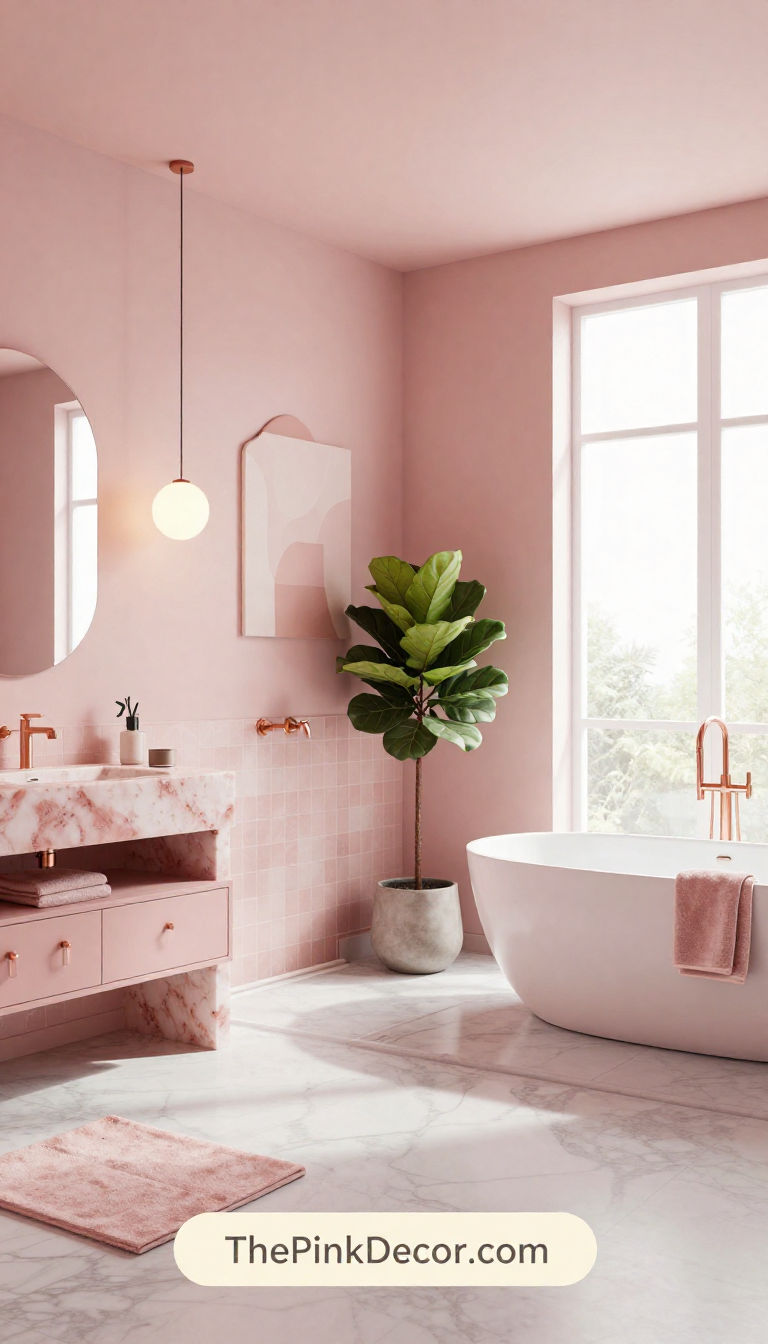
- Select Anchor Pieces – Choose one or two key pieces to be the focal point. This could be a pink vanity, a freestanding pink tub, or a wall of pink tiles. Invest in these pieces; they set the tone.
- Add Complementary Colors – Use the 60-30-10 rule. Your pink is the 60%. Choose a neutral (white, beige, gray) for 30% (like wall paint or large tiles). The final 10% is for an accent color, like navy or forest green.
- Layer Different Textures – Combine matte and gloss tiles, fluffy and woven textiles, and smooth and rough materials. This creates a rich, layered look that feels expensive and intentional.
- Incorporate Metallic Accents – Choose one primary metallic finish (like brass, chrome, or black nickel) for 70% of your fixtures and hardware. Use the secondary metal for the remaining 30% of smaller items, like a soap dispenser or towel ring.
- Style the Final Details – Add personality with a small gallery wall of pink-themed art, a decorative tray on the vanity, and a stylish wastebasket. Keep surfaces uncluttered for a clean, spa-like feel.
PRO TIP: For a professional touch, keep the pink saturation consistent. If you choose a pale pink for the walls, use the same shade in a darker or lighter tone for textiles or accessories. For example, use Sherwin-Williams “Romance” (SW 6323) on walls, and its darker sibling “In the Pink” (SW 6579) for towels and a bathmat. This tonal layering creates a sophisticated, cohesive look that feels professionally designed. When painting, always use a moisture-resistant, semi-gloss or satin paint in bathrooms to withstand humidity.
🛒 Where to Shop for Pink Bathroom Pieces
Budget-Friendly (Under $100)
Stores like IKEA, Target, and HomeGoods offer affordable pink accessories like towels, soap dispensers, and art. IKEA’s LILLHULT collection often has soft pink towels and bath mats. Amazon is a treasure trove for pink shower curtains and small decor items.
Mid-Range ($100 – $500)
West Elm, CB2, and Rejuvenation offer modern vanities, lighting, and hardware. Wayfair and Overstock have a wide selection of pink bathroom furniture at various price points.
Luxury Investment ($500+)
For a truly custom look, consider a custom vanity or a freestanding tub from a high-end retailer. Brands like Kohler offer pink fixtures and hardware that are investments in both quality and timeless style.
🎨 Pink Bathroom Style Variations
Modern Minimalist
Clean lines, pale pink walls, and a floating vanity in a matte finish. Fixtures are simple and hardware is hidden. The look is uncluttered, with storage cleverly concealed, and accessories are kept to an absolute minimum.
Romantic Feminine
This style uses lace, ruffled textiles, and vintage-inspired sconces. Think a clawfoot tub, a crystal chandelier, and a vanity with a skirt. The pink is soft and dusty, like rose quartz.
Bold Contemporary
This look embraces high-contrast. Think glossy fuchsia tiles in a herringbone pattern, matte black fixtures, and geometric light fixtures. It’s dramatic, confident, and modern.
Scandinavian Hygge
This style uses pale pink, lots of natural wood, and natural fiber rugs. The focus is on creating a cozy, inviting space that feels warm and simple, with a focus on natural light and functional, beautiful objects.
🚫 4 Common Pink Bathroom Mistakes to Avoid
- Overwhelming Pink Overload: Sticking to the 60-30-10 color rule helps. Use pink as the main color (60%), but balance it with 30% neutral surfaces and 10% of a contrasting accent.
- Wrong Pink for Your Lighting: Always test a large paint swatch on different walls and observe it at different times of day. North-facing rooms need warm-toned pinks to combat cool light.
- Clashing Undertones: A pink with a blue base (cool) will clash with brass or gold hardware, which has a warm base. Match cool pinks with chrome, nickel, or black fixtures.
- Ignoring Architecture: A Victorian-style pink bathroom sink will look out of place in a mid-century modern home. Choose fixtures and finishes that complement the architectural style of your home.
❓ Frequently Asked Questions
Is pink too bold for a bathroom?
Not at all! Pink can be incredibly versatile. For a subtle look, use it on an accent wall, in towels and textiles, or on a single statement vanity. Pink is only as bold as you make it. For a sophisticated look, pair it with neutrals and natural materials.
What colors go with pink in interior design?
Pink is incredibly versatile. It pairs beautifully with white for a clean look, gray for a modern feel, navy for a bold contrast, sage green for a natural look, and gold or brass for a touch of luxury. The key is to match the undertones.
How can I add pink without painting the walls?
Start with accessories: towels, a bath mat, artwork, or a shower curtain. Swap out your towels, bath mat, and shower curtain for pink ones. Add pink accessories like soap dispensers, a toothbrush holder, or a piece of art. You can even get a new pink shower curtain for a major impact with minimal effort.
Will pink bathroom decor go out of style?
Like any color, its popularity may ebb and flow, but pink’s status as a classic is secure. To future-proof your design, use pink in easily changeable ways (like towels and art) or on a single accent wall. Timeless styles, like a pale pink subway tile, are less likely to feel dated.
What pink shade is best for a small bathroom?
For small bathrooms, light, airy pinks like blush, shell pink, or barely-there pink are ideal. They reflect light and make the space feel larger and brighter. Avoid very dark or neon pinks, which can make a small space feel closed in.
✨ Before & After: A Real Transformation
Before: A 1990s builder-grade bathroom with beige tiles, a bulky vanity, and no character. The room felt dark and outdated.
After: The beige tiles were painted with a durable tile paint in a soft blush. A modern, floating vanity in a soft pink was installed, topped with a white quartz countertop. The old light fixtures were swapped for brass sconces. New, large-format matte white tiles on the floor and a new, frameless glass shower enclosure made the space feel twice as large. The cost for this refresh was around $4,500, but the impact made the once-dated bathroom feel like a boutique hotel suite.
Final Thoughts
Incorporating pink bathroom decor is a beautiful and modern way to express your personal style while creating a calming, personal oasis. Whether you choose a whisper of pink in your accessories or commit to a full-on pink paradise, the key is to balance the color with neutrals, textures, and good lighting.
Remember, the goal is to create a space where you love to start and end your day. For more detailed guides on selecting the perfect shade, check out our article on pink bathroom decor ideas and inspiration for a complete look at the latest trends and timeless tips.
Ready to transform your bathroom into a pink paradise? Start with a mood board, gather your favorite inspiration, and don’t be afraid to experiment. A pink bathroom is a personal statement of style and comfort.
Ready to start your pink transformation? We’d love to see your pink bathroom projects! Share your before and after photos or your favorite pink bathroom decor ideas in the comments below.