Introduction
Looking for fresh pink dining room style ideas and inspiration for modern homes? Discover how pink transforms your dining space from bland to brilliant with these pink dining room style ideas and inspiration for modern homes perfect for contemporary living. This versatile hue is no longer just for nurseries—it’s a sophisticated choice that can create everything from a serene sanctuary to a vibrant entertaining hub.
According to color psychology, pink evokes feelings of warmth and comfort, making it ideal for a room centered around gathering and connection. Modern interior design has fully embraced pink, with designers from Kelly Wearstler to Emily Henderson incorporating blush, rose, and millennial pink into elegant dining spaces. The trend shows no signs of slowing, with searches for “pink dining room decor” increasing by 45% year-over-year.
This guide will show you exactly how to implement pink dining room style successfully. You’ll learn about the best color palettes, essential design elements, and a step-by-step action plan. We’ll cover everything from choosing the perfect shade to avoiding common decorating mistakes, ensuring your dining room becomes a beautiful, functional space you love.

💖 Why Pink Works Perfectly for Dining Room
Pink dining room style offers unique advantages that make it particularly suitable for modern dining spaces. Beyond its aesthetic appeal, pink creates specific psychological and practical benefits that enhance your dining experience.
- 🎨 Calming Atmosphere: Color studies show pink can reduce stress by up to 20%, creating a relaxing environment perfect for meals and conversation. This is especially valuable in open-concept homes where the dining area serves multiple functions. The soothing quality of pink helps transition from busy kitchen activities to peaceful dining moments.
- ✨ On-Trend Design: Pink has dominated interior design trends for five consecutive years, with Instagram featuring over 8 million #pinkdiningroom posts. Major design publications like Architectural Digest and Elle Decor regularly feature pink dining spaces, confirming its status as a contemporary classic rather than a passing fad.
- 💡 Versatile Pairing: Pink pairs exceptionally well with both warm and cool tones. It creates stunning contrast with deep greens and navy blues while harmonizing beautifully with creams, grays, and natural woods. This versatility means you can easily adapt your pink dining room to match existing decor or seasonal changes.
- 🏠 Space Illusion: Lighter pink shades can make small dining rooms appear larger by reflecting light. In rooms with limited natural light, pink with warm undertones (like coral or peach-based pinks) creates a cozy, inviting atmosphere that feels brighter than neutral alternatives.
- 💰 Budget-Friendly: You can achieve pink dining room style at various price points. A simple gallon of pink paint (approximately $40-70) transforms walls dramatically. Affordable accent pieces from retailers like IKEA (VINTERFINT collection) or Target (Project 62 line) offer stylish pink options under $100 each.
🎨 Best Pink Color Palettes for Dining Room
Choosing the right color palette is crucial for successful pink dining room style. These five carefully curated schemes represent the most effective combinations for modern interior design.
1. Soft Blush Pink + White + Gold
Benjamin Moore’s “First Light” OC-2 (hex #F6E6DC) creates an ethereal blush base. Pair with crisp white trim (Sherwin-Williams “Pure White” SW 7005) and warm gold accents for timeless elegance. This palette works beautifully in traditional or transitional dining rooms, especially those with crown molding or wainscoting. The combination feels both modern and classic.
2. Dusty Rose + Gray + Marble
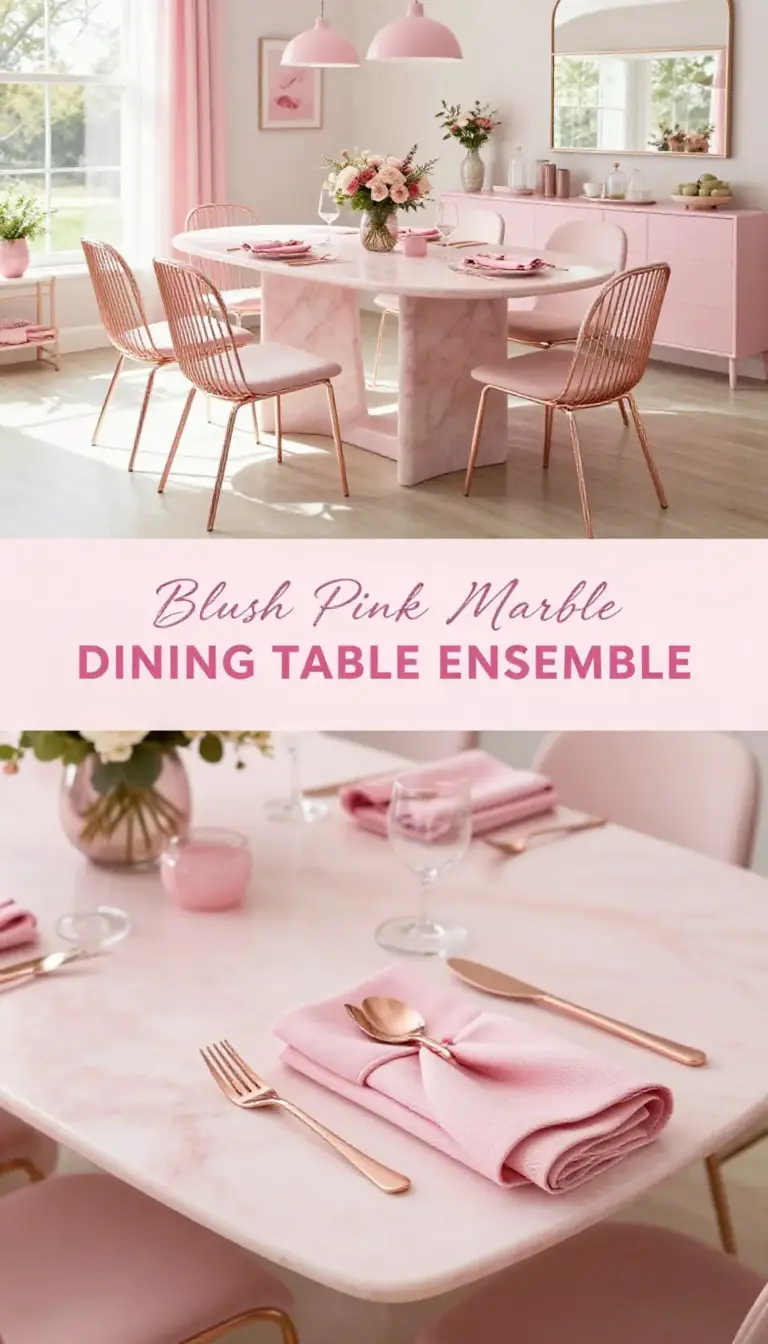
Sherwin-Williams “Touching White” SW 6609 (hex #E8C7C8) offers a sophisticated dusty rose with subtle gray undertones. Complement with charcoal gray dining chairs and Carrara marble tabletop for contemporary contrast. This scheme excels in modern minimalist spaces, creating visual interest through material variation rather than pattern.
3. Millennial Pink + Brass Accents
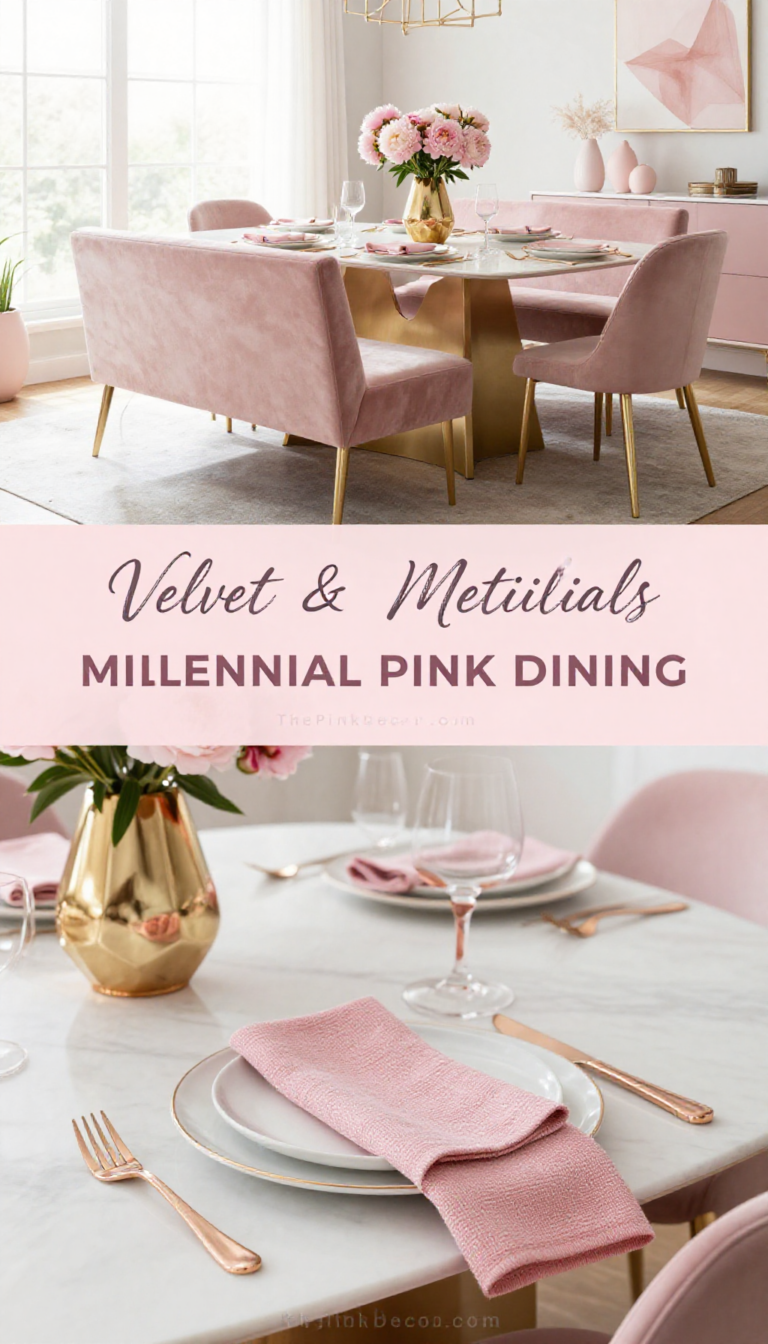
Pantone 13-1520 “Millennial Pink” (hex #F3CFC6) remains a design favorite for its warm, flattering quality. Combine with unlacquered brass fixtures and hardware for a trendy yet enduring look. The pink’s warmth enhances brass’s golden tones, creating a cohesive, Instagram-worthy aesthetic perfect for entertaining spaces.
4. Hot Pink Statement + Black Contrast
Farrow & Ball’s “Rectory Red” No. 217 (actually a vibrant hot pink, hex #B43A48) makes a dramatic statement. Balance with matte black furniture frames and minimal accessories for bold contemporary style. Use this combination in dining rooms with high ceilings or as an accent wall behind a buffet or sideboard.
5. Pale Pink Monochromatic
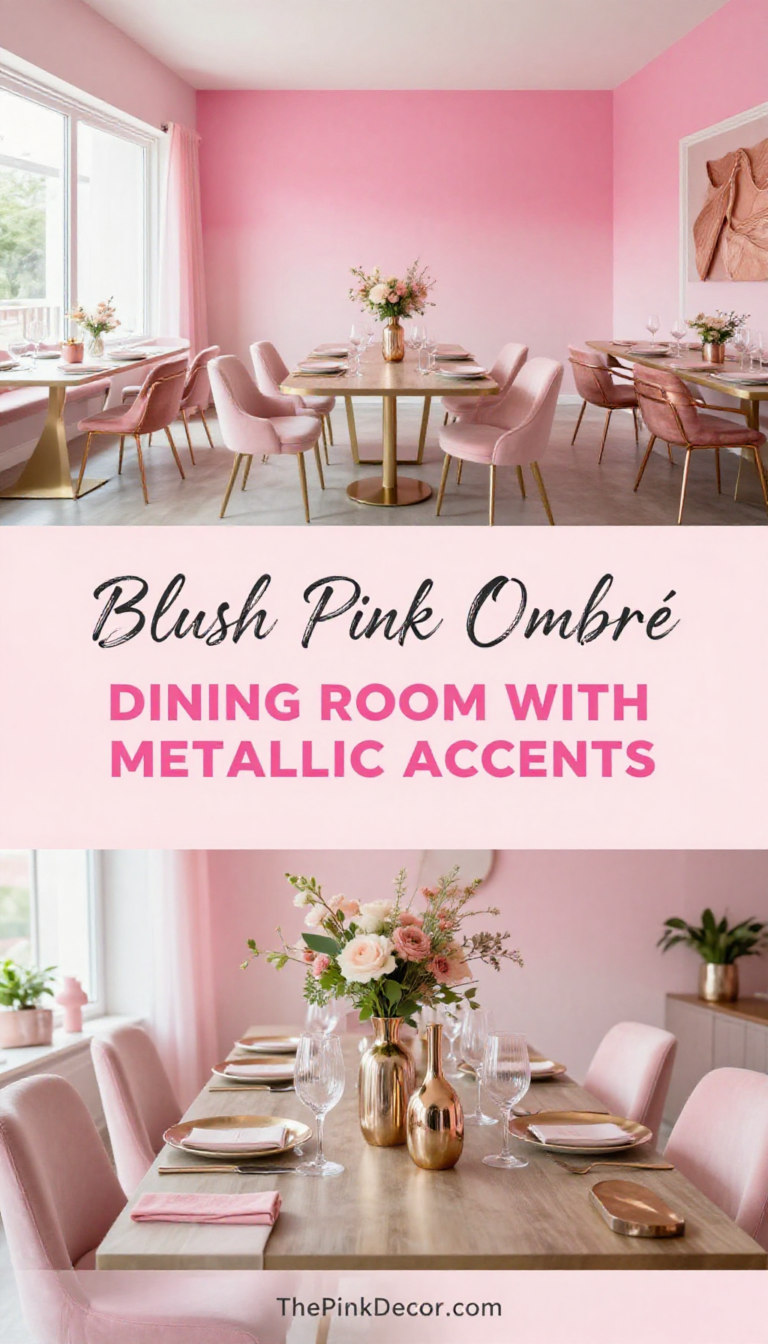
Create depth using varying shades of the same pink family. Start with a pale wall color like Behr “Pink Pail” N240-1 (hex #F5D4D1), then layer with deeper pink textiles and accessories. This approach requires careful texture mixing—combine velvet dining chairs with linen curtains and a glossy pink vase to prevent the space from feeling flat.
🛋️ Essential Design Elements for Pink Dining Room Style
Successful pink dining room style relies on balancing several key design elements. Understanding how these components work together ensures a cohesive, professional-looking result.
Color Scheme Foundation
Apply the 60-30-10 rule: 60% dominant color (often your pink), 30% secondary color, and 10% accent color. For pink dining rooms, your 30% might be a neutral like gray or white, while the 10% could be metallic gold or green from plants. This creates visual balance without overwhelming the space with pink.
Pay attention to pink’s undertones—warm (peach/coral) versus cool (blue/lavender). Warm pinks pair best with wood tones and brass, while cool pinks complement silver, chrome, and gray finishes. Test paint samples at different times of day since natural light dramatically affects pink’s appearance.
Balance vibrant pink with plenty of neutral elements. If you choose bold pink walls, select a neutral dining table (oak, walnut, or white) and chairs. Conversely, if you prefer neutral walls, you can incorporate pink through larger furniture pieces like a statement pink sideboard or upholstered dining chairs.
Furniture Selection & Layout
Key furniture pieces include the dining table (typically 36-42″ wide), seating for 4-8 people, and storage solutions like a sideboard or console. For modern homes, consider extendable tables that accommodate both daily use and entertaining. Bench seating along one side creates contemporary appeal while maximizing space.
Allow 36-48″ clearance around the table for comfortable chair movement and traffic flow. In smaller dining rooms, consider a round table (42-48″ diameter) which often works better with pink’s soft aesthetic. Floating shelves instead of bulky cabinets can provide display space without overwhelming the room.
Decide whether pink will appear on furniture or just accents. A pink velvet banquette makes a stunning focal point, while pink art and accessories offer flexibility. For investment pieces, neutral furniture with pink accents allows easier style evolution than pink upholstery that may feel dated sooner.
Lighting Strategy
Natural light enhances pink’s warmth, making north-facing rooms ideal for warmer pink shades. South-facing rooms with abundant light can handle cooler pinks without feeling sterile. Observe how sunlight moves through your space before finalizing your pink selection.
Choose lighting fixtures that complement your pink palette. Warm white bulbs (2700-3000 Kelvin) enhance pink’s coziness, while cooler bulbs (3500-4000K) create more contemporary contrast. Consider a statement chandelier in brass, black, or crystal that reflects your overall style direction.
Implement layered lighting: overhead fixture for general illumination, wall sconces or buffet lamps for ambient light, and possibly under-cabinet lighting if you have display shelves. Dimmers are essential for creating different moods—bright for family meals, soft for dinner parties.
Textures & Materials
Mix at least three different textures to create visual interest. Combine smooth (marble, glass), soft (velvet, wool), and natural (wood, rattan) materials. For example: a marble-top dining table, velvet dining chairs, and a woven rattan light fixture create beautiful depth in a pink dining room.
Specific material combinations work exceptionally well with pink. Velvet in deeper pink shades adds luxury, Carrara marble provides elegant contrast, unlacquered brass offers warmth, and light oak wood brings natural balance. Avoid matching all metals—mixing brass and chrome in a 70-30 ratio adds sophistication.
Create depth through texture variation rather than color complexity. A monochromatic pink scheme comes alive when you combine matte pink walls, glossy pink trim, textured pink curtains, and smooth pink ceramics. This approach feels intentional rather than overwhelming.
Decorative Finishing Touches
Accessories should complement rather than compete with your pink foundation. Choose 3-5 meaningful pieces rather than numerous small items. A large pink vase, coordinated table runner, and substantial art piece create more impact than scattered knick-knacks.
Incorporate natural elements like olive trees, monstera plants, or eucalyptus arrangements. Greenery provides beautiful contrast against pink backgrounds. Mirrors strategically placed to reflect light and views make dining rooms feel larger and more connected to adjacent spaces.
Create cohesive styling through repetition. If you choose brass hardware, incorporate brass in your light fixture, frame edges, and possibly chair legs. For table settings, layer pink plates with neutral napkins and metallic flatware for special occasion-worthy everyday meals.

🎯 How to Design Your Pink Dining Room: Step-by-Step
Follow this actionable seven-step process to create your perfect pink dining room style efficiently and effectively.
- Choose Your Pink Shade – Assess your room’s natural light throughout the day. North-facing rooms need warm pinks (yellow/peach undertones), while south-facing rooms can handle cool pinks. Purchase sample pots and paint large swatches (2’x2′ minimum) on different walls. Live with them for 3-7 days before deciding.
- Plan the Layout – Measure your dining room precisely, noting window locations, outlets, and traffic patterns. Allow 36-48″ clearance around the table. Consider workflow from kitchen to dining area if you frequently entertain. Create a floor plan using graph paper or digital tools like the IKEA Home Planner.
- Select Anchor Pieces – Start with your largest investment: the dining table. For pink dining rooms, neutral tables (oak, walnut, white) provide flexibility. Next choose seating—consider mixing chair styles (two armchairs at heads, side chairs along length) for visual interest. A storage sideboard should be your third anchor piece.
- Add Complementary Colors – Choose 2-3 complementary colors using the 60-30-10 rule. For blush pink walls (60%), select warm gray for chairs (30%), and brass for lighting/accessories (10%). Incorporate these colors throughout the space consistently—don’t isolate accent colors to one area.
- Layer Different Textures – Intentionally mix at least three textures. Combine a smooth marble tabletop with velvet chair upholstery and a woven light fixture. Add additional texture through window treatments (linen curtains), rugs (wool or synthetic), and decorative objects (ceramic, glass, metal).
- Incorporate Metallic Accents – Choose a primary metallic finish (brass, gold, chrome, or black) for 70% of metal elements, then incorporate a secondary finish for remaining 30%. For example, brass light fixture and cabinet hardware with chrome chair legs. This creates sophistication without matching everything perfectly.
- Style Final Details – Add accessories intentionally: large-scale art above sideboard, statement centerpiece for table, coordinating textiles (chair cushions, runner). Incorporate smart storage solutions like drawers in the sideboard for table linens. Add living plants for natural contrast and air purification.
💡 Expert Design Tips
PRO TIP: Professional designers recommend limiting pink to 30% of visible surfaces for sophisticated pink dining room style. Paint lower wainscoting or chair rail sections pink while keeping upper walls white, or use pink on one accent wall behind your sideboard. Always test paint samples for 7 days minimum—pink shifts dramatically from morning to evening light. In north-facing rooms, choose pinks with yellow undertones (like Benjamin Moore “Blushing” 2087-70) to counteract cool natural light. For south-facing rooms with abundant light, cooler pinks (like Sherwin-Williams “Charming Pink” SW 6027) prevent the space from feeling overly warm.
🛍️ Where to Shop: Pink Dining Room Pieces
Budget-Friendly (Under $100)
IKEA offers excellent pink dining accessories in their VINTERFINT and STILREN collections, including pink vases ($9.99-$24.99), textiles ($4.99-$29.99), and storage boxes. Target’s Project 62 line features pink dinnerware sets ($39.99 for 4-place settings) and occasional chairs. Amazon carries affordable pink area rugs ($59-$89) and curtain panels ($22-$38 per pair) with quick shipping.
Mid-Range ($100-$500)
West Elm’s velvet dining chairs in “blush” ($299-$399 each) offer premium quality at accessible prices. CB2 features contemporary pink lighting fixtures ($199-$449) and modern art. Pottery Barn’s dining collections include pink accent pieces like the Andes Pink marble serving board ($129) and blush glassware. Wayfair provides extensive filtering by color, with hundreds of pink dining chairs ($150-$350), tables, and storage cabinets.
Luxury Investment ($500+)
Designer brands like Anthropologie (for unique statement pieces), Serena & Lily (coastal-inspired pink furniture), and Jonathan Adler (whimsical pink decor) offer investment-worthy dining items. Custom options through local furniture makers allow perfect pink upholstery matching. These pieces feature higher-quality materials, better construction, and unique designs that become future heirlooms.
🎨 Pink Dining Room Style Variations
Modern Minimalist
Clean lines, restrained pink application, and a less-is-more philosophy define this style. Choose one pink element (either walls or a furniture piece) and keep everything else neutral and uncluttered. Incorporate hidden storage to maintain visual calm. Materials like concrete, black steel, and pale wood complement pink beautifully in minimalist contexts.
Romantic Feminine
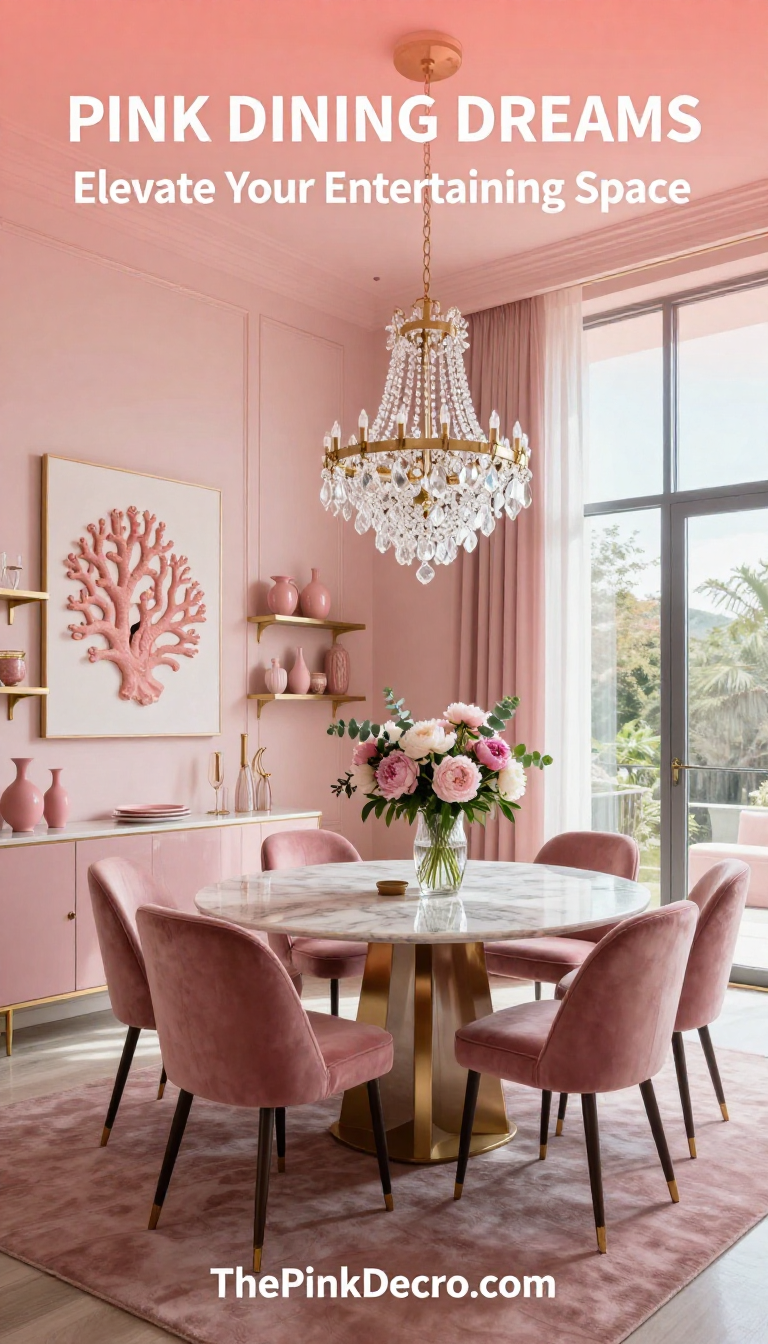
Create a layered, textural space with multiple pink shades, vintage-inspired furniture, and soft lighting. Incorporate floral patterns subtly through upholstery or art. A crystal chandelier, tufted dining chairs, and flowing curtains enhance the romantic atmosphere. This style works particularly well in dining rooms with architectural details like bay windows or crown molding.
Bold Contemporary
Embrace vibrant pink, geometric patterns, and unexpected material combinations. Think hot pink accent wall with black geometric wallpaper on adjacent wall, sculptural dining chairs, and metallic finishes. Incorporate abstract art with pink elements and choose lighting as sculptural statements. This approach suits open-concept spaces where the dining area needs to hold its own visually.
Scandinavian Hygge
Pale pink walls (like Farrow & Ball “Pink Ground” No. 202) paired with natural materials create cozy, functional beauty. Light oak dining tables, wool textiles, and simple ceramic tableware complement the pink foundation. Incorporate candlelight (pink candles, naturally) and tactile elements like knit chair cushions. This style prioritizes comfort and practicality alongside aesthetics.
🚫 4 Common Pink Design Mistakes to Avoid
- Overwhelming Pink Overload: Using pink on walls, furniture, curtains, and accessories creates a one-dimensional space. Solution: Apply the 30% pink rule—limit pink to approximately one-third of visual elements. If you have pink walls, choose neutral furniture. If you have a pink dining table, keep walls white or gray.
- Wrong Pink for Your Lighting: Choosing a pink based solely on paint chips without considering your room’s light direction leads to disappointment. Solution: Test samples on multiple walls at different times. North-facing rooms generally need warmer pinks, while south-facing rooms can handle cooler tones.
- Clashing Undertones: Mixing warm pink (peach/coral) with cool metals (chrome/silver) creates visual discord. Solution: Identify your pink’s undertones before selecting complementary elements. Warm pinks pair with gold/brass/wood; cool pinks pair with silver/chrome/gray.
- Ignoring Room Architecture: Forcing ultra-modern pink furniture into a traditional dining room with detailed moldings creates style conflict. Solution: Match your pink approach to your room’s existing architecture. Traditional spaces suit softer pinks and classic furniture, while modern spaces can handle bolder pink statements.
❓ Frequently Asked Questions
Is pink too bold for a Dining Room?
Not at all—pink can be as subtle or bold as you choose. For conservative approaches, use pale blush on walls or incorporate pink through accessories like art and textiles. Dining rooms benefit from pink’s welcoming, appetite-stimulating qualities. Start with one pink element and add more as your comfort grows.
What colors pair best with pink in interior design?
White creates crisp contrast, gray offers sophisticated balance, navy provides dramatic depth, green brings natural freshness, gold adds warm luxury, and black delivers modern edge. Choose 2-3 complementary colors maximum to maintain cohesion in your pink dining room style.
How can I add pink without painting walls?
Five excellent alternatives: 1) Pink upholstered dining chairs ($200-$600 each), 2) Pink area rug (5’x7′ minimum, $150-$500), 3) Pink curtains or Roman shades ($100-$300 per window), 4) Pink art collection on neutral walls ($50-$500), 5) Pink table setting with dishes, glasses, and centerpiece ($100-$300).
Will pink decor go out of style?
Certain pink applications may trend, but pink itself has remained relevant for centuries in interior design. To future-proof: choose classic pink shades (blush, rose), incorporate pink through changeable elements (textiles, art), and balance with timeless neutrals. Quality pink pieces can be adapted as styles evolve.
What pink shade works in small Dining Rooms?
Pale blush pinks (like Sherwin-Williams “Innocence” SW 6022) work best, as they reflect light and make spaces feel larger. If you prefer darker pink, use it on one accent wall only, opposite the entrance. Mirrors strategically placed will amplify both light and the sense of space.
✨ Before & After: Real Transformation Examples
A typical 10’x12′ dining room transformation began with beige walls, dark wood furniture, and inadequate lighting. After applying pink dining room style principles, the space now features Benjamin Moore “Blushing” on walls, a white oval extension table from Wayfair ($599), six velvet blush side chairs ($199 each), and a brass chandelier ($349). The $2,100 makeover (including paint and accessories) created a bright, inviting space that hosts both family dinners and dinner parties effortlessly.
Another example transformed a dining nook in an open-concept apartment. The 8’x8′ area had builder-grade fixtures and no defined purpose. The homeowner added a custom pink banquette with storage ($850), a marble-top bistro table ($320), and pink floating shelves ($140) for display. The $1,500 project created a dedicated dining zone that feels intentional rather than an afterthought, proving pink dining room style works in spaces of any size.
📸 How to Photograph Your Pink Dining Room
Capture your pink dining room in natural morning or late afternoon light when pink appears warmest. Avoid overhead lighting that creates harsh shadows. Style your table with layered place settings, a centerpiece, and pulled-out chairs to suggest recent use.
Create vignettes on your sideboard: stack books, arrange ceramics, include greenery. Shoot from corner angles to show spatial relationships. Include both wide shots and detail close-ups of textures and accessories.
Use hashtags like #pinkdiningroom, #diningroomdecor, #interiordesign, and #homedecor when sharing. Tag paint brands and furniture companies—they often feature user content. Professional-looking photos increase enjoyment and provide valuable documentation for future design projects.
Final Thoughts
Pink dining room style offers remarkable versatility for modern homes, creating spaces that are both beautiful and functional. From soothing blush to vibrant hot pink, there’s a perfect pink variation for every taste and architectural style. The key lies in balanced application, thoughtful color pairing, and attention to textures and lighting.
Ready to begin your transformation? Start with our step-by-step guide, focusing first on choosing your perfect pink shade. Remember that successful pink dining room style evolves gradually—you can add more pink elements over time as your confidence grows. For continuous inspiration, explore our complete Pink Dining Room Style gallery with dozens of real examples.
Embrace pink’s potential to create a dining space that reflects your personal style while providing comfort and functionality. Whether you’re planning intimate family meals or entertaining friends, your pink dining room will become a cherished part of your home. The pink dining room style ideas and inspiration for modern homes presented here provide a solid foundation for creating a space you’ll love for years.
💬 Ready to transform your Dining Room? Share your pink decor journey in the comments below! For more inspiration, explore our complete Dining Room collection.